
Grease Traps in Cost Segregation: What Does the System Actually Serve?
Sep 24, 2026A grease trap looks like a plumbing component, but “plumbing” is a construction trade, not a depreciation classification. For a cost segregation engineer, the more important question is what the grease trap and the connected system actually serve. A restaurant grease waste system can exist because of a specific food-service operation, while other piping in the same property provides general building services. That functional distinction is exactly why engineers cannot classify every pipe, drain, trap, and connection the same way. Grease traps provide a useful look at how engineering turns a familiar building component into a much deeper asset-classification question.
Wondering how much tax you could save with cost segregation? Let’s find out. Schedule a Cost Segregation Strategy Call today.
Key Takeaways
- A grease trap is more than a plumbing trade label when engineers evaluate its function.
- Engineers trace what the grease waste system serves and how its components work together.
- Function can distinguish business-serving plumbing from general building-serving plumbing.
- Restaurants and other food-service properties can contain several plumbing systems with different functions.
- Drawings, photographs, invoices, and field observations can help support the engineering conclusion.
- Two pipes in the same kitchen can require very different engineering questions.
- The lesson is simple: classify the system by what it does, not by the trade that installed it.
What Is a Grease Trap From a Cost Segregation Perspective?
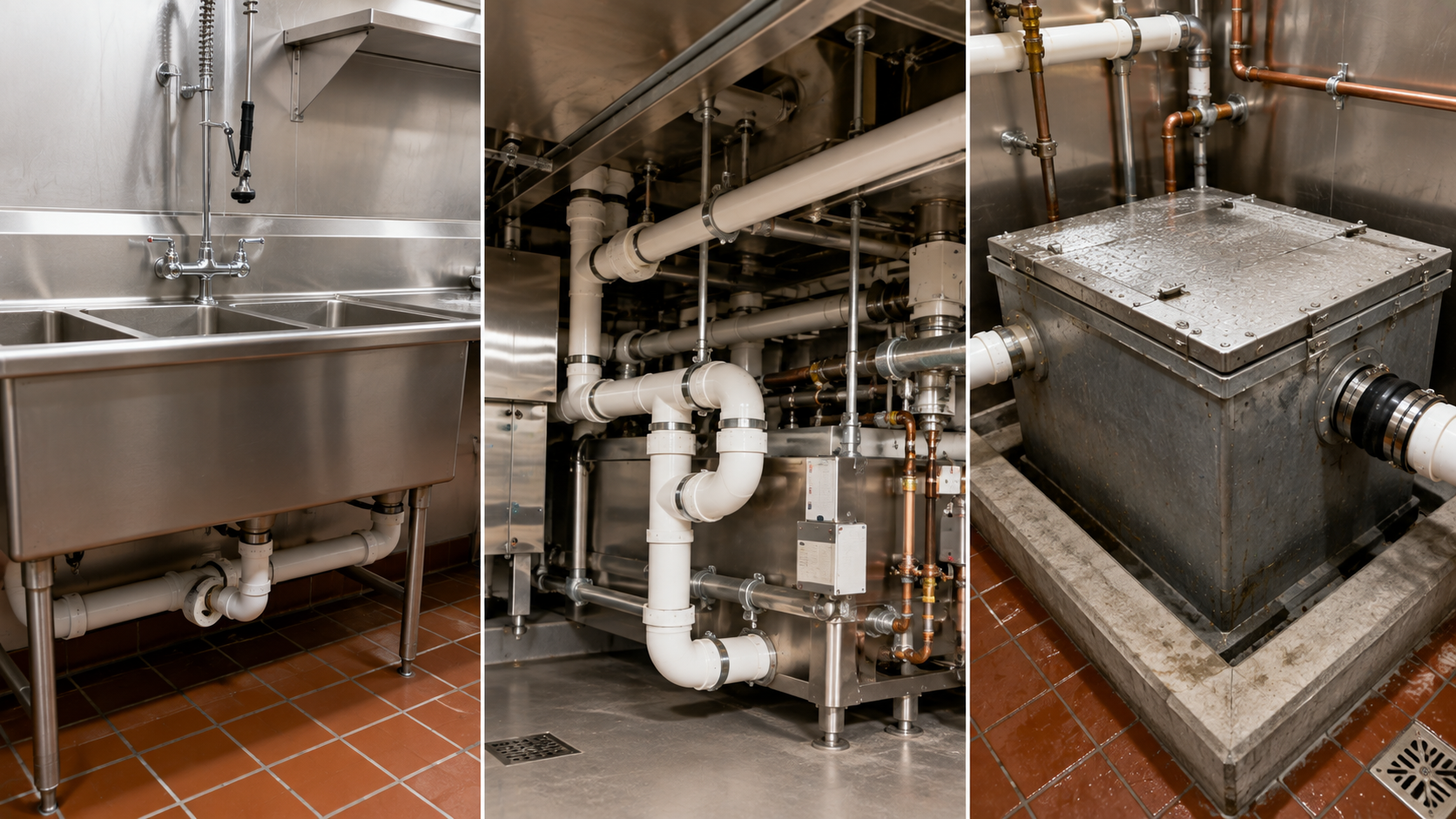
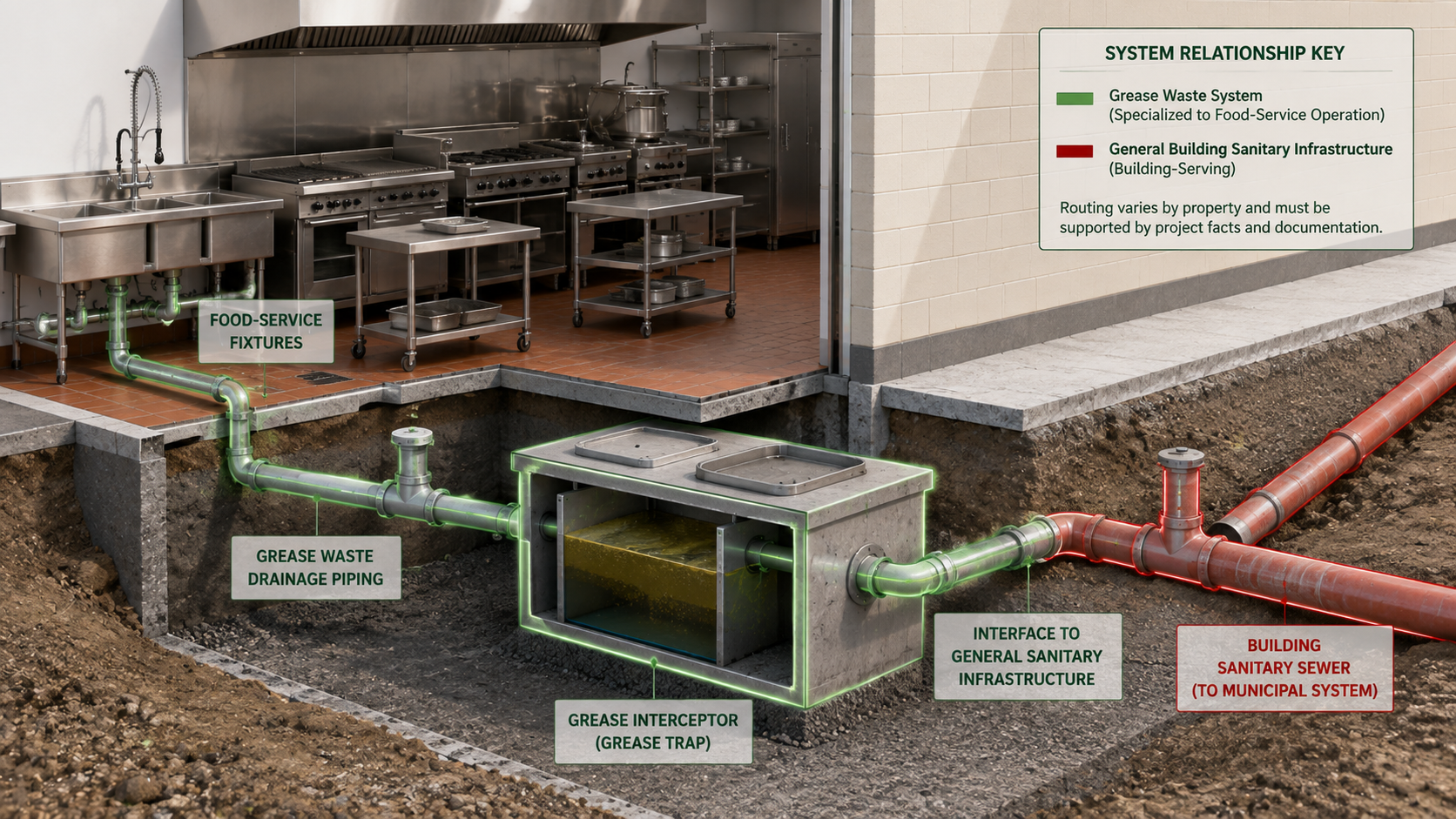
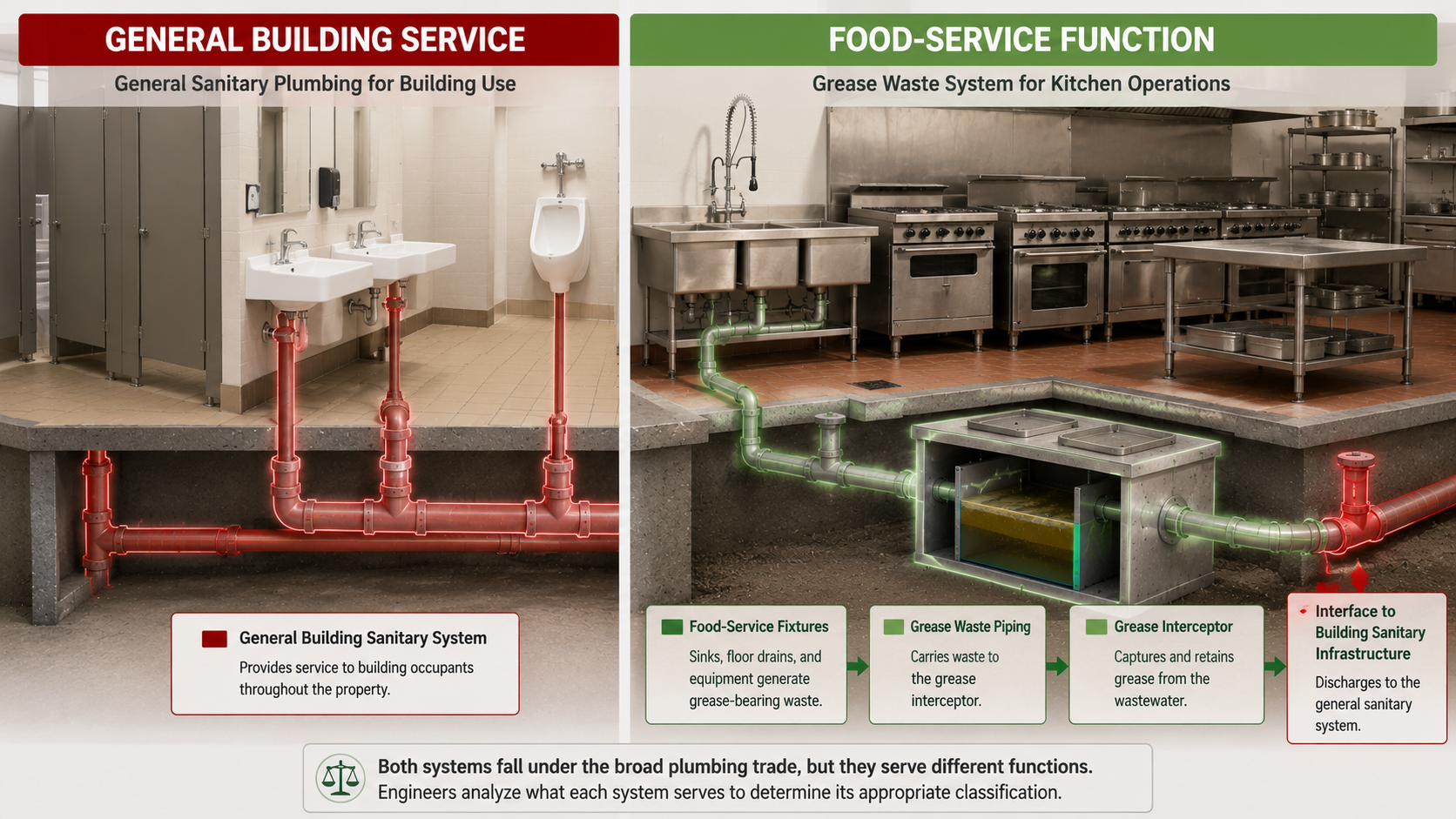
A grease trap or grease interceptor is part of a system designed to handle grease-bearing waste associated with food-service activity. From an engineering perspective, looking at the interceptor alone can miss much of the story. CostSegRx engineers may need to understand the fixtures or equipment feeding the system, the associated waste piping, the interceptor itself, and where the system interfaces with broader sanitary infrastructure.
This is where functional asset analysis becomes important. The engineering question is not simply whether a contractor installed an item under Division 22 plumbing. The analysis asks what the asset does, what it serves, how it is installed, and how it relates to the operation of the property.
The 2025 IRS Cost Segregation Audit Technique Guide includes kitchen water piping, grease trap systems, kitchen drainage systems involving grease traps, and a kitchen grease trap among assets addressed in § 1245 property cases. The same ATG also recognizes that general building plumbing can be § 1250 property.
That contrast is the engineering lesson. A trade label does not finish the classification analysis.
How Engineers Analyze the Grease Waste System
A grease interceptor usually should not be viewed as an isolated object sitting underground or beneath a kitchen fixture. Engineers want to understand the system around it.
Imagine starting inside a commercial kitchen. Certain food-service fixtures discharge waste. That waste may travel through associated drainage piping toward a grease interceptor before ultimately connecting with the property's sanitary waste infrastructure. The exact arrangement varies by property, which is why engineers should not assume the routing or configuration before reviewing the available evidence.
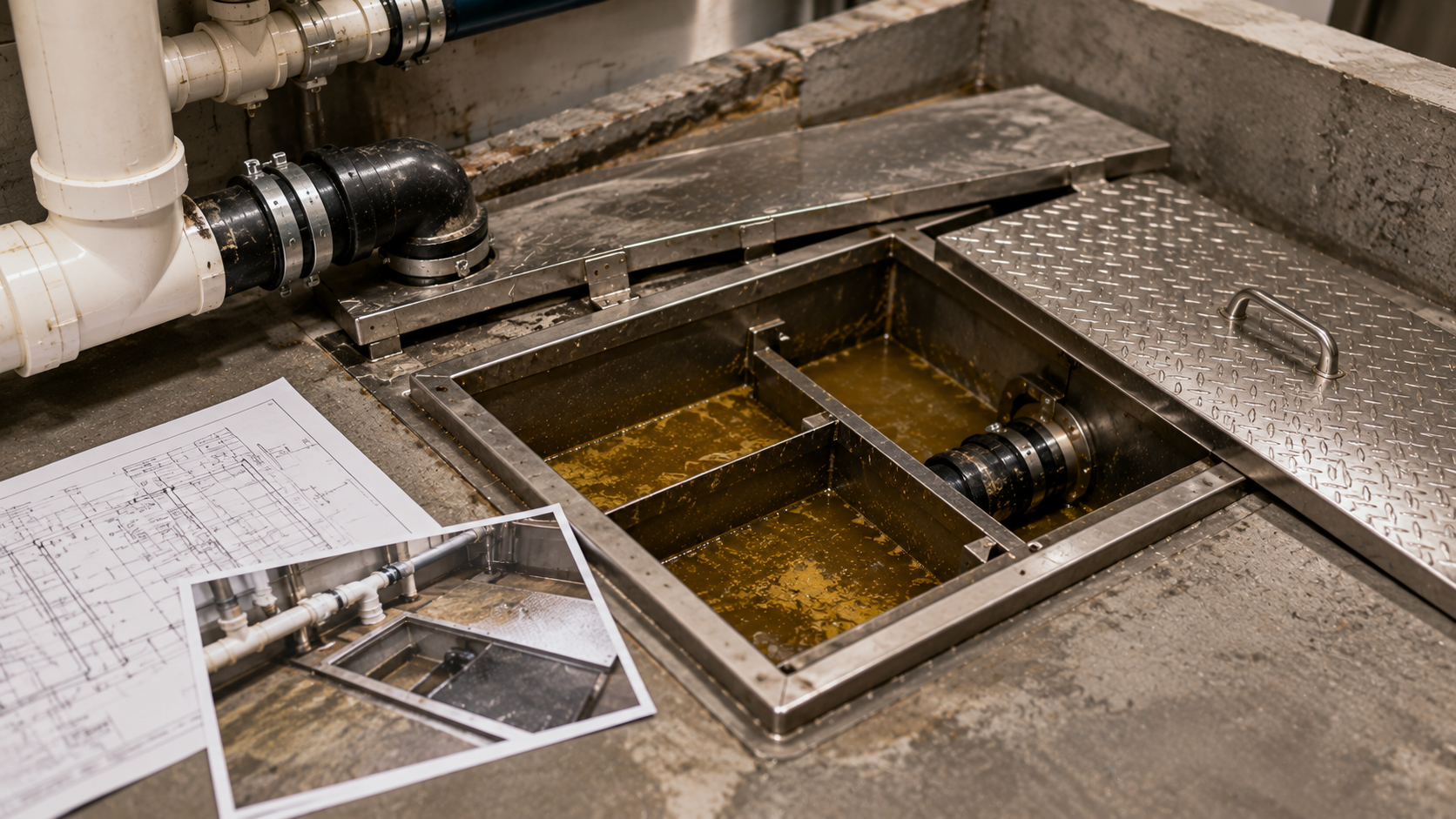
CostSegRx engineers may use plumbing drawings, construction documents, equipment information, photographs, site observations, contractor records, and other available documentation to understand that relationship. This follows the broader engineering cost segregation process, where the objective is to understand individual assets and their functions rather than classify an entire building by appearance.
The 2025 ATG illustrates why this distinction matters. In its discussion of plumbing systems, building plumbing includes systems serving the operation or maintenance of the building or providing general building services. By contrast, the ATG describes process plumbing in its applicable industry context as separate plumbing systems necessary to and used directly with specific machinery, equipment, or a process, while excluding systems of general building applicability and accessibility.
That does not mean every grease-related pipe automatically becomes § 1245 property. It means function, system boundaries, facts, documentation, and applicable authority have to be evaluated.
Why the Plumbing Distinction Matters to Investors
A restaurant can contain a surprising amount of plumbing infrastructure. Restroom plumbing, domestic water distribution, general sanitary drainage, kitchen water, equipment connections, floor drainage, and grease waste systems can all appear on the same construction documents.
Treating the entire plumbing scope as one asset category can overlook those functional differences. Treating all restaurant plumbing as shorter-life property can create the opposite problem by pushing general building-serving infrastructure into a classification the facts do not support.
That is why MEP systems cost segregation requires more than reading mechanical, electrical, and plumbing cost codes. General building-serving plumbing is commonly associated with 39-year nonresidential real property, while a supported § 1245 conclusion requires a different factual and legal basis. The ATG itself notes that studies allocating estimated costs between § 1245 and § 1250 property, particularly electrical or plumbing component systems, typically require an engineer experienced in construction and construction estimating.
For investors, the benefit of that work is not simply accelerated depreciation. It is a better-supported engineering inventory of what is actually inside the property.

Where Grease Waste Systems Appear
Restaurants are the obvious application, but the underlying engineering lesson is broader than a single property label. Commercial kitchens may appear in restaurants, hotels, entertainment facilities, institutional properties, and other properties with food-service operations.
The physical arrangement can also vary. An interceptor may be located inside or outside the building depending on the property and system design. The connected drainage may serve identified food-service fixtures before ultimately interfacing with general sanitary infrastructure. Engineers therefore need to determine the actual configuration rather than assume that every property uses the same design.
This is one reason restaurant cost segregation can become engineering-intensive. The valuable question is often not what can be seen in the dining room. It is what systems exist behind walls, below floors, above ceilings, and outside the building to support the food-service business.
A grease interceptor makes that concept easy to see. The visible or accessible component may represent only one part of a larger functional system.

Investor Strategy: Preserve the Engineering Story
When acquiring, renovating, or constructing a property with a commercial kitchen, preserve the records that explain how the grease waste system was designed and installed.
Plumbing drawings can help establish system relationships. Contractor scopes and invoices may help identify what work was performed. Equipment schedules and kitchen plans can provide context about the food-service operation. Photographs taken during construction may reveal piping that becomes concealed later. Site observations can then help reconcile the documents with the property that actually exists.
The 2025 ATG emphasizes documentation in quality cost segregation studies and recommends contemporaneous records to verify costs, descriptions, and functional use. It also describes cost segregation as a factually intensive determination involving complex tax law and engineering analysis.
For an owner, that makes documentation part of asset management. When a kitchen is renovated or a grease interceptor is replaced, retaining the engineering and cost history can make future classification work more supportable.
Example: Two Drainage Systems, Two Engineering Questions
Consider a restaurant with restroom sanitary plumbing and a separate grease waste system serving the commercial kitchen.
At first glance, both scopes can appear under the same broad plumbing trade. Both may contain piping, fittings, drains, traps, and connections. If an investor stopped at the contractor category, there would be little reason to examine them differently.
An engineer looks deeper.
The restroom sanitary system provides a general building service. The grease waste system exists in connection with the property's food-service operation. The engineer investigates what feeds that system, how the components relate to one another, where the grease interceptor sits in the drainage path, how the system connects to the broader sanitary infrastructure, and what documentation supports those conclusions.
The distinction does not come from the word “pipe,” “drain,” or even “grease trap.” It comes from function and the facts surrounding the system.
The ATG's case-law tables reinforce why that investigation is relevant. They separately identify general plumbing systems and several specialized kitchen plumbing items, including grease trap systems and kitchen grease traps, in the § 1245 and § 1250 classification history summarized by the guide.
No arbitrary percentage is needed to teach the lesson. The engineering itself explains why the assets deserve separate analysis.
The Grease Trap Is Only the Beginning
Grease traps demonstrate one of the most important principles in engineering-based cost segregation: engineers classify assets, not contractor trades.
Calling something “plumbing” tells you who may have installed it. It does not necessarily tell you what the asset serves or how it should be classified for tax purposes.
A strong analysis follows the physical system, understands its function, reviews the supporting documentation, identifies where specialized infrastructure ends and general building infrastructure begins, and then applies the appropriate tax authority. That approach is also fundamental to an audit-ready cost segregation report, where classifications should be supported by engineering facts and documented reasoning.
For commercial real estate investors, a grease trap is therefore more than a piece of kitchen plumbing. It is a useful reminder that the most important cost segregation question is often the simplest engineering question: What does this asset actually serve?
Do you have a question about Cost Segregation?
Let us know how we can help
Your information is secure. We only use your details to answer your direct inquiry.