
Commercial Plumbing Cost Segregation: More Than Pipes and Fixtures
Sep 08, 2026Commercial plumbing can look like one construction category on a contractor's schedule, but that does not mean every component has the same function for cost segregation. A restroom sink, a connection serving restaurant equipment, specialized infrastructure in a medical office, and plumbing supporting car wash equipment may all involve pipes, valves, drains, and fittings, yet their roles within the property can be very different. That distinction is why commercial plumbing cost segregation begins with engineering rather than the trade label. CostSegRx engineers look at what the plumbing serves, how it is installed, and how it relates to the operation of the property. For investors, the important question is not simply, "Is this plumbing?" but, "What does this plumbing actually do?"
Wondering how much tax you could save with cost segregation? Let’s find out. Schedule a Cost Segregation Strategy Call today.
Key Takeaways
- Commercial plumbing is not automatically one depreciation classification.
- Engineers trace plumbing by function, connection, and the property it serves.
- Separating building service from dedicated business use can change the analysis.
- Kitchens, medical offices, and car washes show how plumbing function can differ.
- Owners can preserve better plumbing documentation throughout the property lifecycle.
- The same plumbing trade can contain components serving very different purposes.
- Function before classification is the central lesson for commercial plumbing.
What Commercial Plumbing Means in Cost Segregation
Plumbing is a construction trade. Cost segregation, however, classifies assets based on the applicable facts and tax treatment, not simply on which contractor installed them. This is part of the broader principle behind MEP systems cost segregation: mechanical, electrical, and plumbing systems cannot be assigned a depreciation class from their trade name alone.
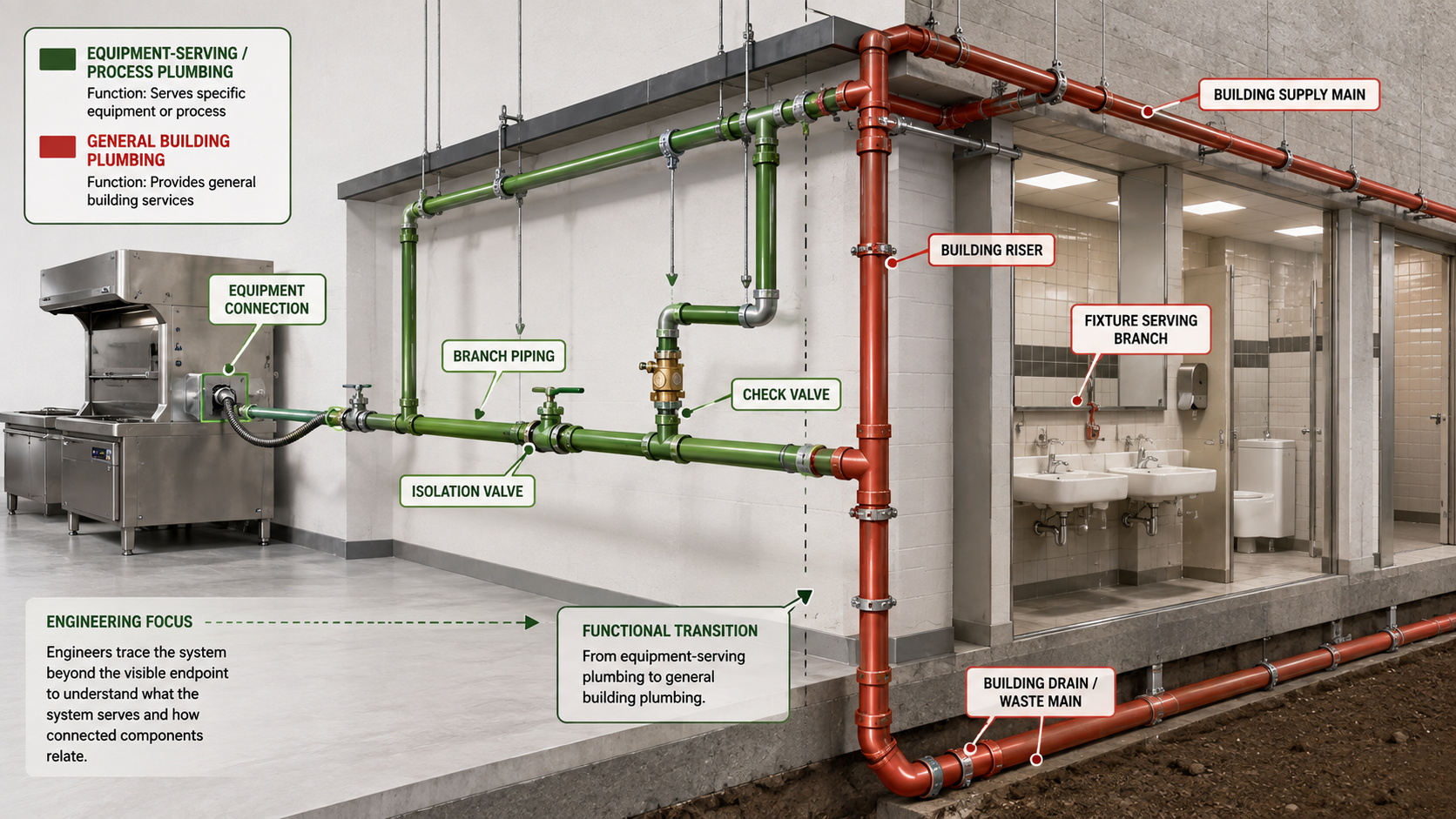
ATG 2025 provides a useful engineering distinction. In its applicable industry guidance, building plumbing includes systems that provide general building services, such as hot and cold water distribution, waste removal, and plumbing components serving the operation or maintenance of the building. Those systems can include fixtures, piping, fittings, valves, traps, drains, supports, and insulation and can remain part of 39-year nonresidential real property.
ATG 2025 also recognizes fact patterns in which plumbing serves a specific item of machinery, equipment, or process rather than providing general building service. For example, the auto dealership matrix distinguishes general plumbing from special plumbing connections necessary to and used directly with specific machinery or equipment. Its examples specifically include dedicated piping, valves, and hook-ups serving a car wash system.
That does not mean dedicated-looking plumbing automatically becomes 5-year property. Classification remains dependent on function, installation, documentation, project facts, engineering analysis, and established tax treatment. That is the same functional approach discussed in what makes an asset §1245 property.
How Engineers Follow the Plumbing System
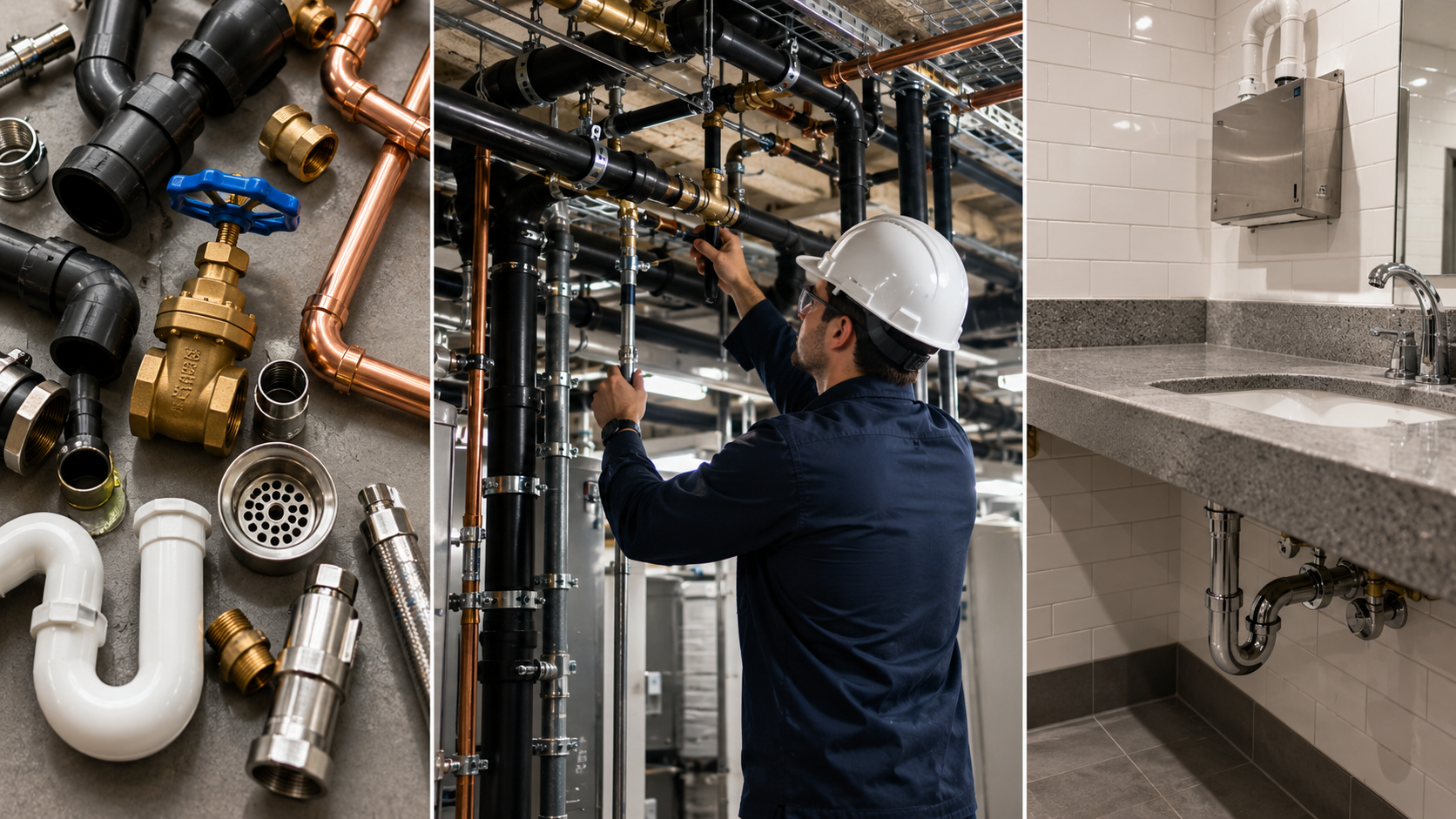
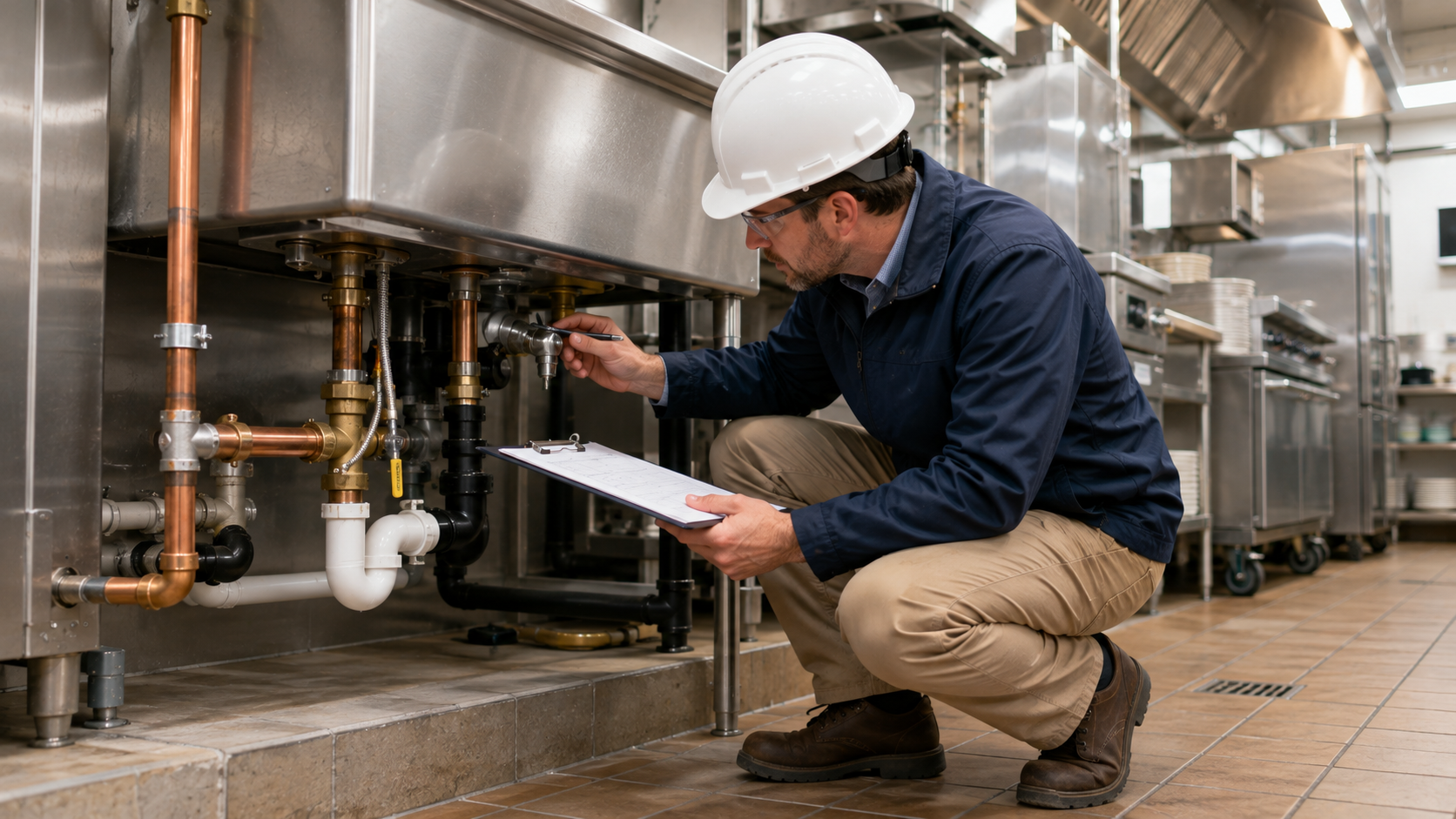
A normal property walkthrough often shows only the endpoint. You may see a sink, piece of equipment, floor drain, valve, or hose connection. An engineering analysis asks what exists beyond that visible component.
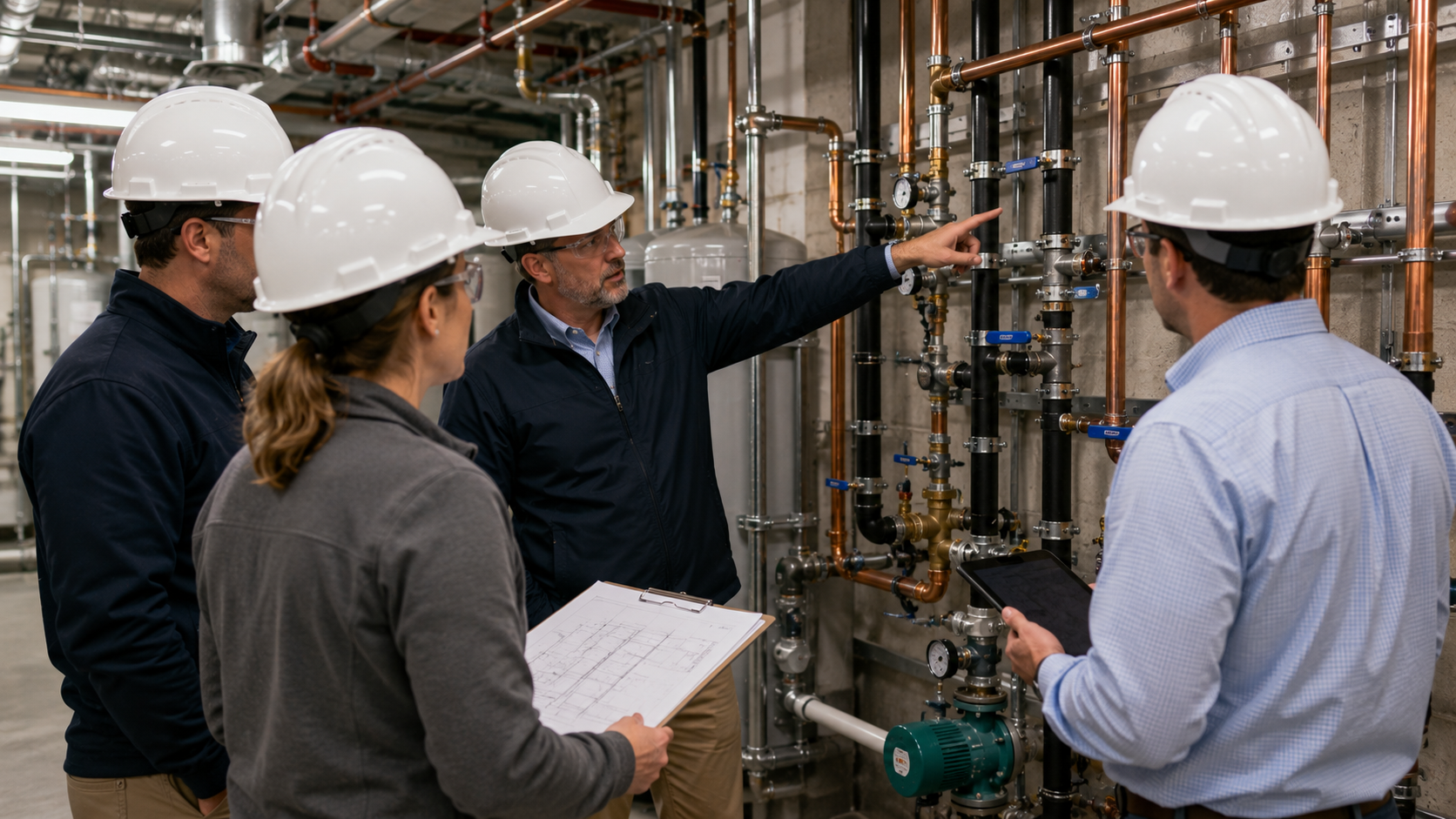
CostSegRx engineers may examine available plumbing drawings, construction documents, equipment schedules, photographs, invoices, and field conditions. The goal is to understand the physical relationship between the visible asset and the infrastructure supporting it. Documentation matters because a cost segregation conclusion should be based on supportable facts rather than assumptions about what a pipe probably serves.
The investigation can follow a simple sequence of questions:
- What is the plumbing component?
- What does it serve?
- Is it providing a general building function?
- Is it associated with a specific item of equipment or business activity?
- Where does the relevant connection begin and end?
- What piping, valves, drains, fittings, or other components are associated with that function?
- What documentation supports the conclusion?
This is why the engineering cost segregation process goes deeper than reading a contractor's plumbing line item. Engineers classify assets, not contractor divisions.
Why the Function of the Plumbing Matters
Imagine reviewing a commercial building and seeing $300,000 labeled "plumbing" in the construction records. That number tells you what trade performed the work. It does not tell you enough about what was installed or how individual components function.
Some plumbing may provide ordinary building service. Other components may be associated with equipment or specialized business operations. Treating the entire plumbing package as one undifferentiated asset category can hide those functional distinctions.
The opposite mistake is equally important. An investor should not assume that plumbing becomes 5-year property simply because it is near specialized equipment. ATG 2025 distinguishes systems serving general building needs from dedicated or process relationships in specific fact patterns. It also cautions that classification is factually intensive and should be supported by corroborating evidence.
For an investor, better analysis means understanding what was actually purchased. A building is not just walls surrounding rent-producing space. It is an operating business supported by physical systems, and plumbing can be part of that operational story.
Where Plumbing Function Shows Up: Kitchens, Medical Offices, and Car Washes
Commercial Kitchens
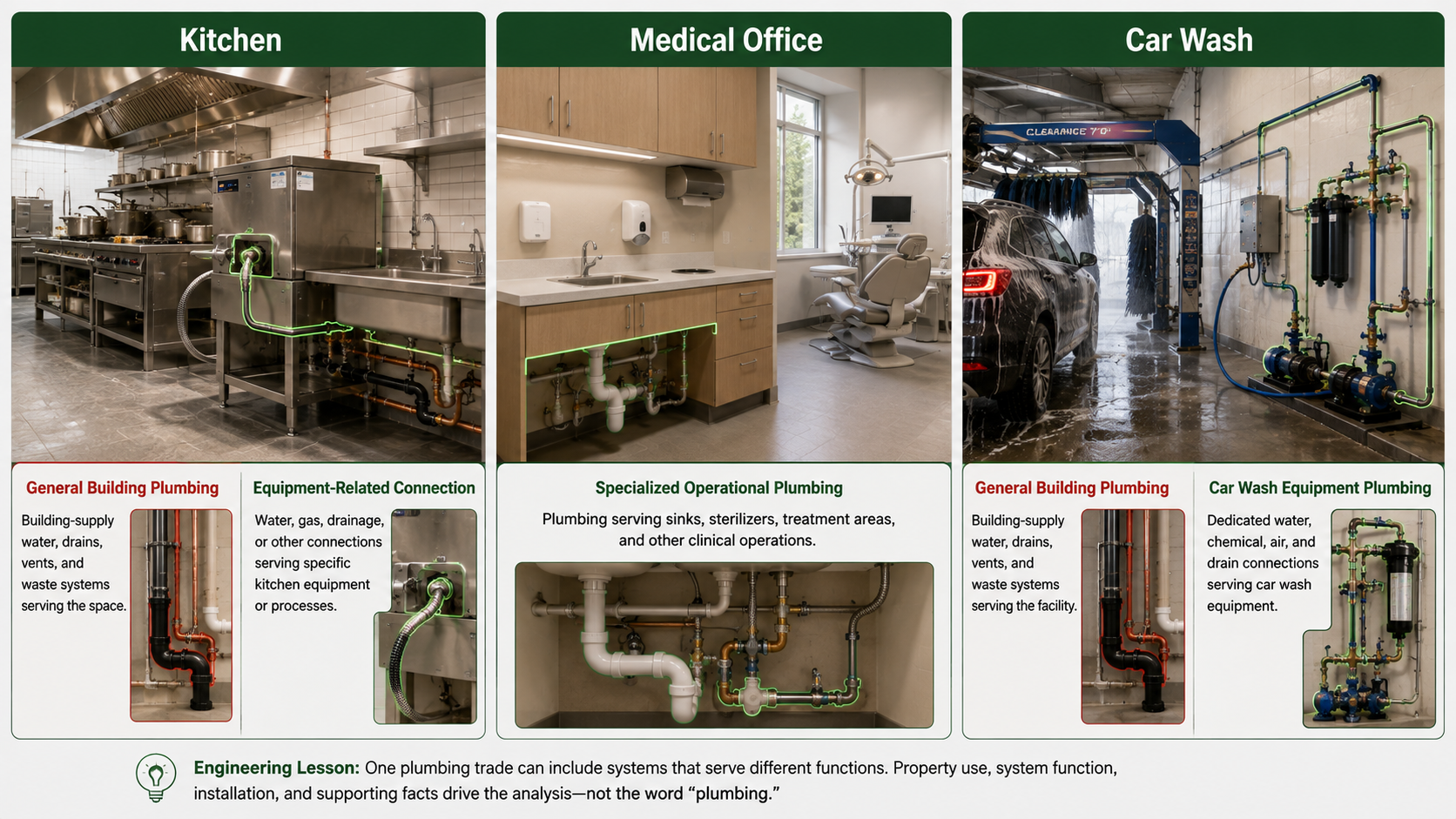
Restaurants make the distinction easy to visualize. A restaurant needs ordinary building plumbing, but it may also contain connections associated directly with kitchen equipment and restaurant operations.
ATG 2025's restaurant guidance distinguishes general building plumbing from certain plumbing directly associated with appliances or equipment. The restaurant matrix identifies general building plumbing such as restroom plumbing and other building-system components separately from items including water, gas, or refrigerant hook-ups directly connected to appliances or equipment, kitchen drainage, and a kitchen hot water heater.
That is one reason restaurant cost segregation often requires looking behind the kitchen doors rather than concentrating on dining-room finishes. The engineering question is what each system supports.
Medical Offices
Medical offices provide a second way to understand the principle. A medical office can contain ordinary building plumbing alongside infrastructure associated with specialized operational spaces.
The important point is not to assume that plumbing in a treatment room, procedure area, or other specialized space automatically receives a particular classification. The CostSegRx engineering standard specifically requires classification to depend on function, installation, documentation, project facts, engineering analysis, and established tax treatment.
For CostSegRx engineers, the investigation therefore begins with the actual medical-office configuration. What equipment or activity does the plumbing support? Is the system part of general building service, or is there a separately identifiable relationship to specialized operations? What drawings and construction records document that relationship?
The medical office is the teaching environment. The engineering principle remains function before classification.
Car Washes
Car washes make the relationship between plumbing and business operations especially visible. Water-handling infrastructure is central to the operation, but that still does not mean every pipe on the property receives the same treatment.
ATG 2025's auto dealership guidance provides a specific example. General building plumbing is distinguished from special plumbing connections necessary to and used directly with machinery or equipment. The guidance specifically includes plumbing hook-ups to a car wash system as an example of dedicated piping, valves, and hook-ups associated with equipment, while excluding hook-ups of general applicability and accessibility.
The property can also contain other asset categories outside the plumbing analysis, which is why a car wash study should consider the whole engineering environment. Investors exploring those broader property characteristics can also review cost segregation for land improvement heavy businesses.
A Better Plumbing Strategy for Property Owners
The best time to understand commercial plumbing is not years after construction, when drawings are missing and nobody remembers why a particular line was installed.
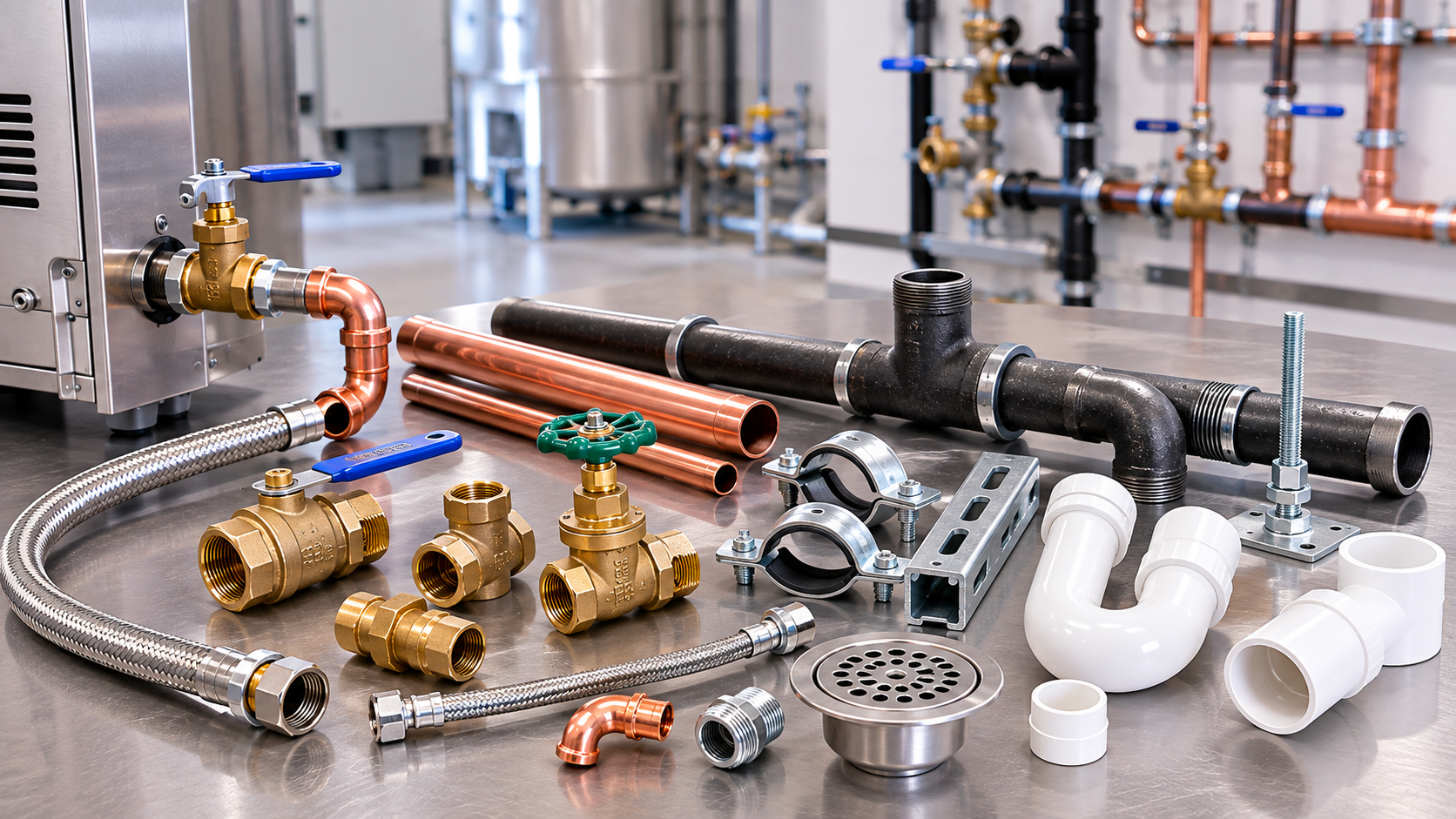
During acquisition, construction, or renovation, retain plumbing drawings, equipment schedules, contractor scopes, change orders, invoices, and photographs of rough-in conditions when available. When specialized equipment is installed, preserve records that explain what the associated plumbing serves. When plumbing is replaced or modified later, include the work in the property's capital improvement history.
This creates a better engineering record for future analysis. Instead of asking an engineer to reconstruct the property from a single line labeled "plumbing," the owner can provide information showing how systems connect to the building and its operations.
The strategy is straightforward: document function while the evidence is available.
Example: Three Properties, One Plumbing Trade, Different Questions
Consider three hypothetical properties with plumbing work appearing in their construction records.
Restaurant: The records include ordinary restroom plumbing plus plumbing associated with kitchen operations. The engineer does not classify the entire plumbing contract together. The analysis separates the general building function from supported equipment-related or kitchen-specific relationships based on the actual components and documentation.
Medical office: Plumbing exists throughout the property, including ordinary building areas and specialized operational spaces. The engineer reviews the actual installation and supporting documentation rather than assuming that location inside a medical office determines classification.
Car wash: The property contains general building plumbing along with dedicated piping, valves, and hook-ups associated with car wash equipment. ATG 2025 specifically recognizes this type of distinction in its auto dealership guidance.
All three projects involve plumbing. The engineering questions are different because the businesses operating inside the real estate are different.
That is the point of functional analysis. The pipe itself does not tell the entire story. Its purpose, connection, installation, and supporting documentation help determine how the asset should be evaluated.
Commercial Plumbing Is an Engineering Story
Commercial plumbing cost segregation is more than identifying pipes and fixtures. It requires understanding the system behind what is visible and, most importantly, what that system serves.
General building plumbing can remain part of 39-year nonresidential real property, while ATG-supported fact patterns show that certain dedicated plumbing relationships associated with equipment or business operations can require different treatment. Those conclusions should come from engineering analysis and supporting facts, not from the plumbing trade label alone.
Kitchens, medical offices, and car washes make the principle clear: similar physical components can perform very different jobs.
Function comes before classification.