

The Whiteco Factors: How Engineers Test Property Permanence
Aug 27, 2026A piece of property can be bolted down and still require a deeper classification analysis. That idea sits at the center of Whiteco Industries, Inc. v. Commissioner, 65 T.C. 664 (1975), a landmark Tax Court case involving outdoor advertising signs. The case produced six questions that became known as the Whiteco factors, a framework for evaluating whether property is inherently permanent for cost recovery purposes. The IRS Cost Segregation Audit Technique Guide still discusses these factors when explaining the distinction between tangible personal property and inherently permanent property. For commercial real estate investors, the important lesson is simple: attachment is evidence, not the entire answer.
Wondering how much tax you could save with cost segregation? Let’s find out. Schedule a Cost Segregation Strategy Call today.
Key Takeaways
- Whiteco was a Tax Court case involving outdoor advertising signs that produced a six-factor permanence analysis.
- The Whiteco factors examine movement, design, intended duration, removal, damage, and manner of attachment.
- An asset is not classified simply because it is bolted down or theoretically movable.
- The framework can help analyze real property assets when permanence is part of the classification question.
- Strong engineering documentation helps establish how an asset is actually installed and intended to function.
- A classification decision can materially affect depreciation timing, making supportable analysis important.
- The lasting Whiteco lesson is to study the facts of the asset instead of relying on appearances.
What Are the Whiteco Factors?
The name comes directly from Whiteco Industries, Inc. v. Commissioner, 65 T.C. 664 (1975). Whiteco Industries was dealing with outdoor advertising signs, or billboards. The Tax Court considered whether the property qualified as tangible personal property for purposes of the investment tax credit rules then in effect. The IRS ATG identifies Whiteco as the seminal case involving the determination of whether an asset is inherently permanent and lists the outdoor signs involved in the case as §1245 property.
That history matters because "Whiteco factors" can sound like an abstract tax term until you understand where the name came from. It was a real dispute about real physical property and a basic classification problem: When does something attached to land become inherently permanent?
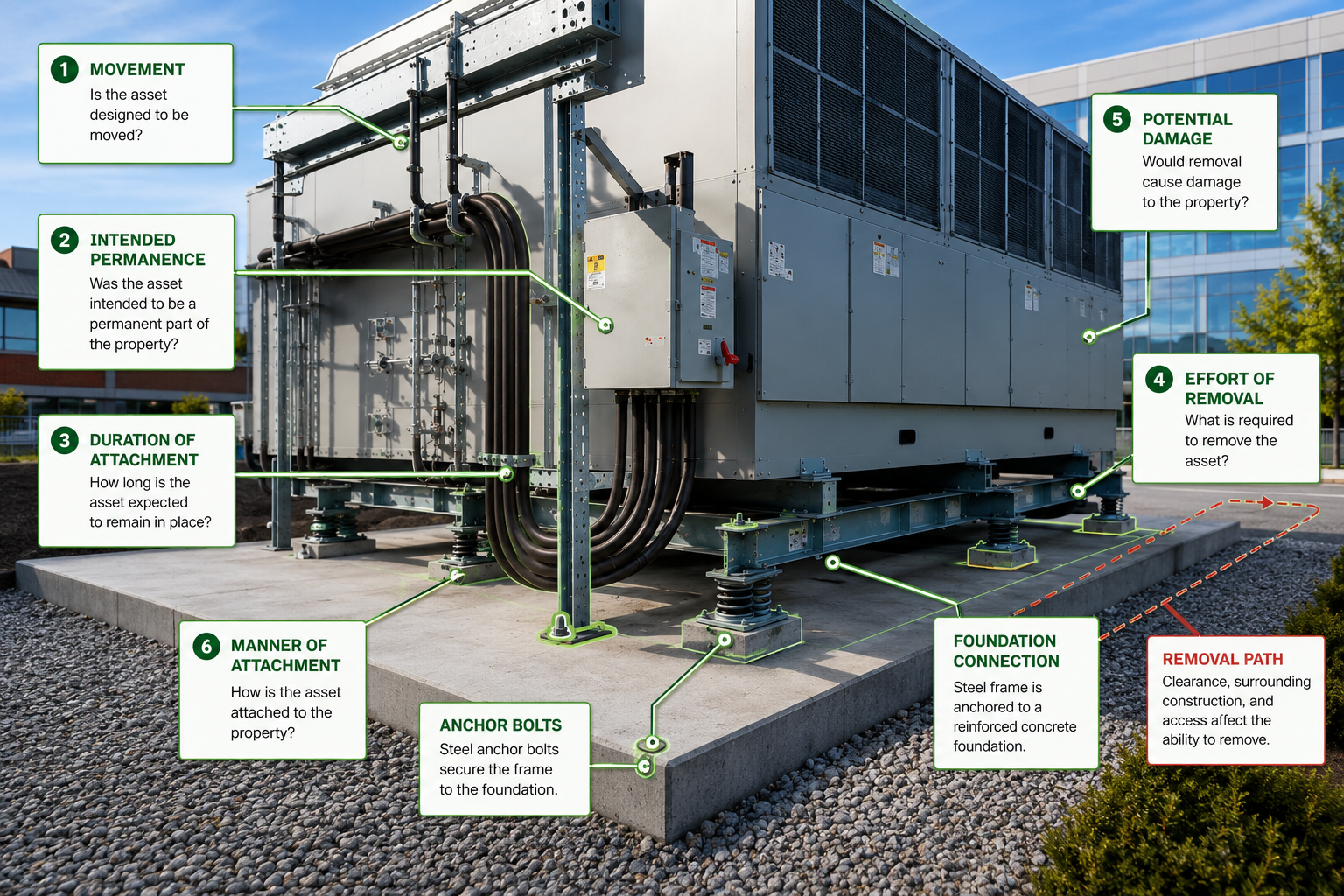
Based on its analysis of prior case law, the Tax Court developed six questions:
- Is the property capable of being moved, and has it actually been moved?
- Is the property designed or constructed to remain permanently in place?
- Do the circumstances indicate how long the property is expected or intended to remain attached?
- How substantial and time-consuming is removal, and is the property readily removable?
- How much damage will the property sustain if removed?
- How is the property attached to the land?
Those questions remain important because cost segregation requires more than identifying an asset by name. As explained in our guide to engineering asset classification, CostSegRx engineers evaluate the actual property facts before reaching a classification conclusion.
The Whiteco factors give that investigation a useful legal framework.
How Engineers Apply the Whiteco Factors
The six factors work best when viewed together rather than as six independent pass-or-fail tests.
Imagine an engineer examining a large piece of commercial property equipment attached to a concrete pad. Seeing bolts does not finish the analysis. The engineer needs to understand the complete installation.
Factor 1: Can it move, and has it moved before?
Actual movement can provide useful evidence. An asset that has historically been relocated between operating locations presents a different factual picture from an asset constructed in place and never intended to leave.
But movability alone does not decide the issue. The ATG specifically notes that movability is not determinative.
Factor 2: Was it designed to remain permanently?
Here, design matters. Engineers may review drawings, foundations, structural connections, equipment specifications, installation details, and the relationship between the asset and surrounding construction.
An asset designed around permanent building infrastructure may tell one engineering story. An asset designed for replacement, relocation, or operational reconfiguration may tell another.
Factor 3: How long is the attachment expected to last?
Intent needs evidence.
Plans, equipment schedules, leases, construction documents, owner interviews, operational requirements, and the history of similar assets may help establish whether the installation was intended to remain indefinitely or whether relocation or replacement was contemplated.
Factor 4: What does removal actually require?
This is where field analysis becomes especially useful.
Does removal require ordinary tools and a small crew? Does it require cranes, demolition, structural modifications, utility shutdowns, or reconstruction? How much time, equipment, labor, and expense would realistically be involved?
These are engineering questions before they become classification conclusions.
Factor 5: What gets damaged during removal?
Engineers consider both the asset and the surrounding property. If removal would destroy the asset, significantly damage the building, or require major reconstruction, that fact can support a different conclusion than an installation designed to be disconnected and reused.
Factor 6: How is the asset attached?
Bolts, welds, embedded foundations, gravity, utility connections, brackets, anchors, and structural framing all tell part of the story.
The key word is part.
The Whiteco court held that attachment to land does not automatically exclude property from tangible personal property. Conversely, the ATG cites later case law showing that theoretical movability does not automatically establish that something is not inherently permanent.
That is why an engineering cost segregation process examines physical conditions rather than starting with a desired tax result.

Why Permanence Matters in Cost Segregation
Cost segregation separates a property into individual assets or asset groups so the appropriate depreciation treatment can be determined. One of the central classification questions is whether an asset is §1245 property or §1250 property.
There is no universal bright-line rule that resolves every asset classification. The ATG describes these determinations as factually intensive and dependent on the particular facts and circumstances.
That is exactly why Whiteco remains useful.
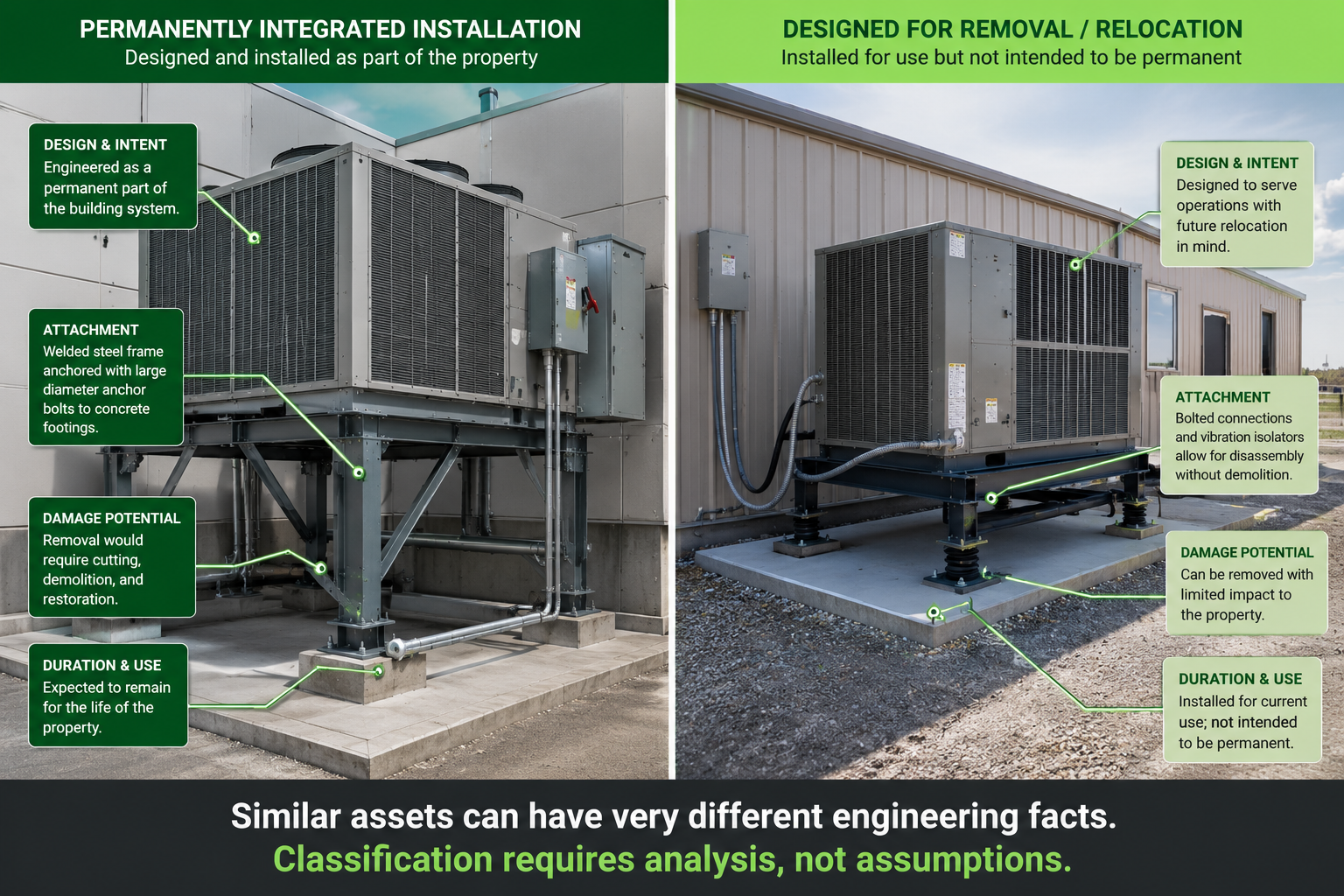
Consider two assets that look nearly identical in photographs. Both might be steel. Both might sit outdoors. Both might be connected to concrete. Both might even use similar anchors.
Yet one could have been engineered as a permanent part of the property, while the other was designed to be removed, replaced, or relocated as business needs changed.
The name of the asset does not answer that question.
Neither does the contractor division that installed it.
CostSegRx engineers instead examine function, construction, installation, documentation, and the asset's relationship to the property and business operations. That same facts-first approach is important when investors want a quality cost segregation study with strong supporting documentation.
The broader lesson is that permanence is an engineering fact pattern, not a visual assumption.
Where the Whiteco Analysis Can Appear
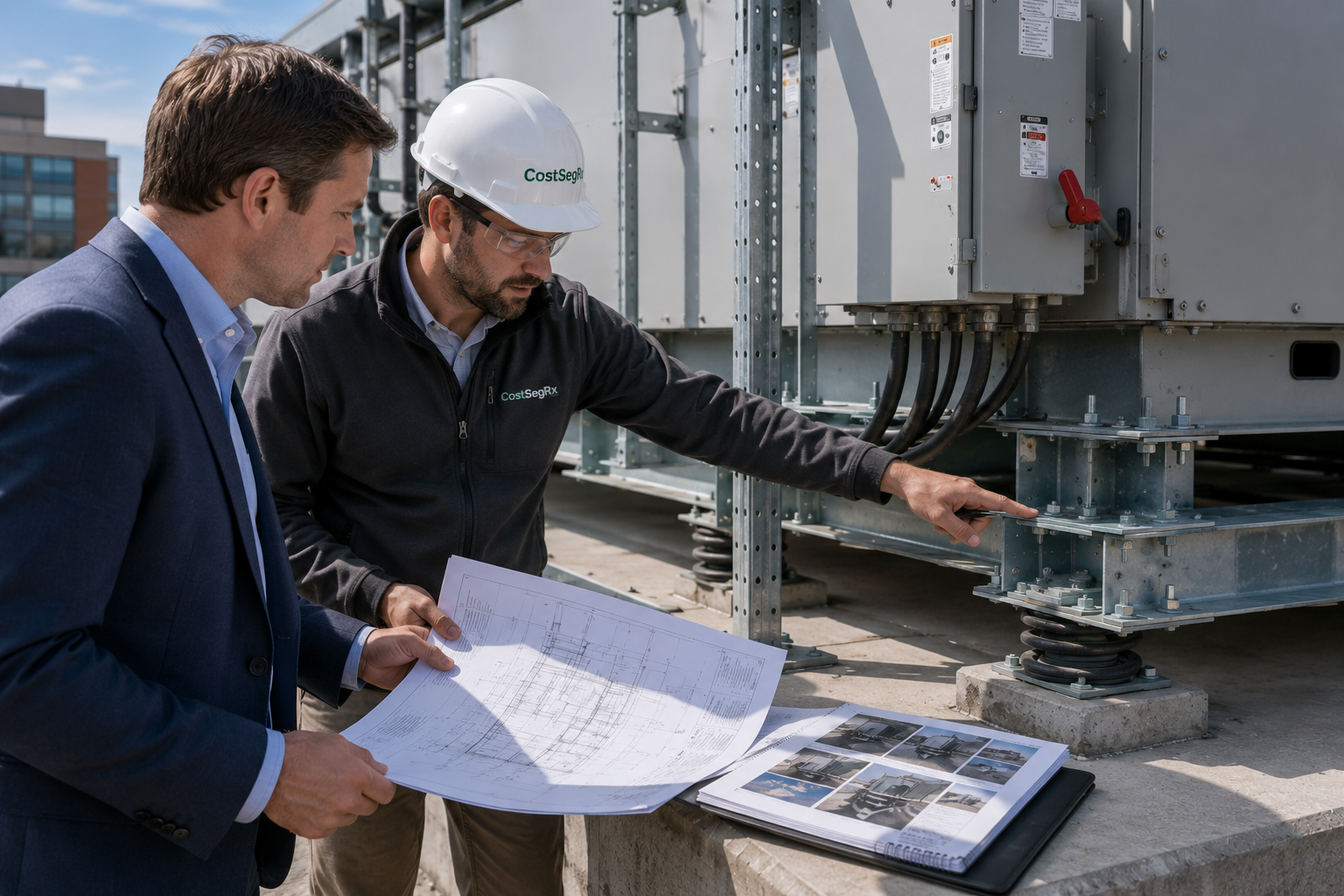
The Whiteco case itself involved outdoor advertising signs, but the permanence question can arise in many commercial real estate environments.
Think about equipment platforms, specialty structures, certain exterior assets, modular installations, operational equipment, specialty electrical components, removable systems, or property attached to concrete foundations.
The analysis should not begin by saying, "This type of asset is always personal property."
Instead, the engineer asks what actually exists.
How is it connected?
Why was it installed?
Was it designed to remain?
Could it realistically be removed?
What would removal involve?
Would the asset survive?
Would the building or site be damaged?
Has this type of asset historically been relocated?
Those questions can become especially important when evaluating complex systems. For example, the IRS ATG's issue-specific guidance for electrical distribution systems instructs examiners to begin by determining whether components are inherently permanent using the six-factor Whiteco test before moving into the functional allocation analysis. Investors interested in that application can read more about electrical distribution systems in cost segregation.
There is also an important limitation.
The ATG explains that the inherently permanent analysis used for cost recovery under §168 and former §48 is not the same analysis used under other Code provisions such as §263A or former §199. The governing tax context matters.
So Whiteco should not become a universal permanence test applied indiscriminately to every tax question.
Turn the Six Factors Into Better Documentation
For investors, the practical value of Whiteco extends beyond memorizing six questions.
It provides a roadmap for documentation.
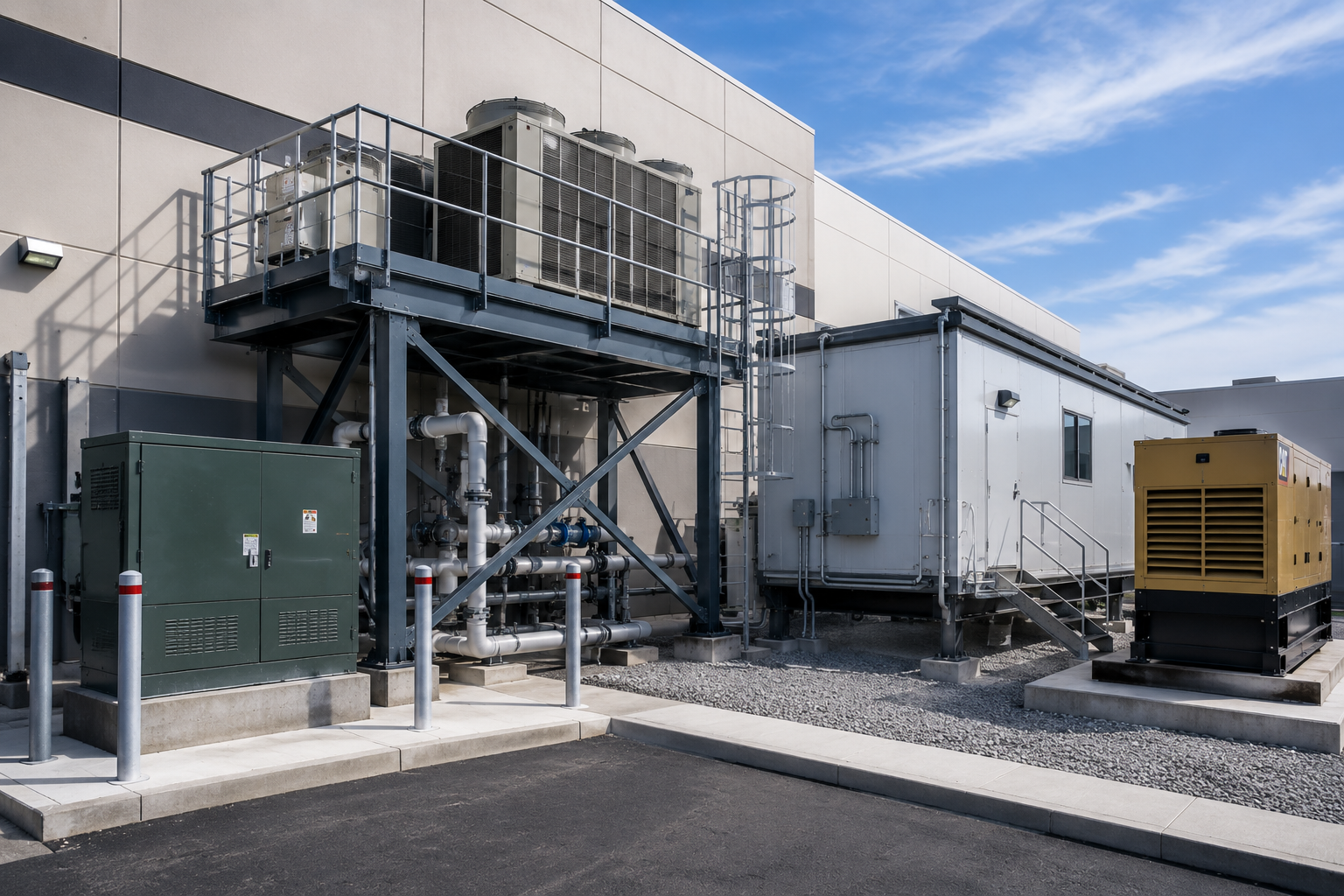
When acquiring, constructing, renovating, or improving commercial property, preserve records that explain what was installed and why. Construction drawings, architectural plans, equipment specifications, photographs, invoices, site plans, equipment schedules, installation manuals, contractor documentation, and owner interviews can all help establish the engineering facts.
If an asset was specifically designed to be relocated, documentation showing that design can matter.
If an asset has actually been moved between locations, preserve that history.
If removal requires specialized equipment or substantial reconstruction, document those conditions too.
If the manner of attachment is important, photographs and construction details can show more than a generic line item on a fixed asset schedule.
This is one reason CostSegRx views cost segregation as an engineering inventory rather than simply a depreciation calculation. Good records help engineers understand the property as it actually operates.
They also help prevent the opposite mistake: assuming that every attached asset should receive accelerated treatment. A careful analysis may support §1245 property in one situation and §1250 property in another.
The objective is not to force the Whiteco factors toward a preferred answer.
The objective is to build a supportable answer from the property facts.
A Financial Example: Why the Classification Analysis Matters
Illustrative example only. Figures shown are estimated for demonstrative purposes only. Actual land allocations, asset classifications, depreciation, and tax results depend on the specific property, supporting documentation, engineering analysis, and taxpayer circumstances.
Suppose an investor acquires a commercial property and the engineering study identifies a $100,000 installed asset whose classification requires a permanence analysis.
At first glance, the asset appears permanent because it is anchored to concrete.
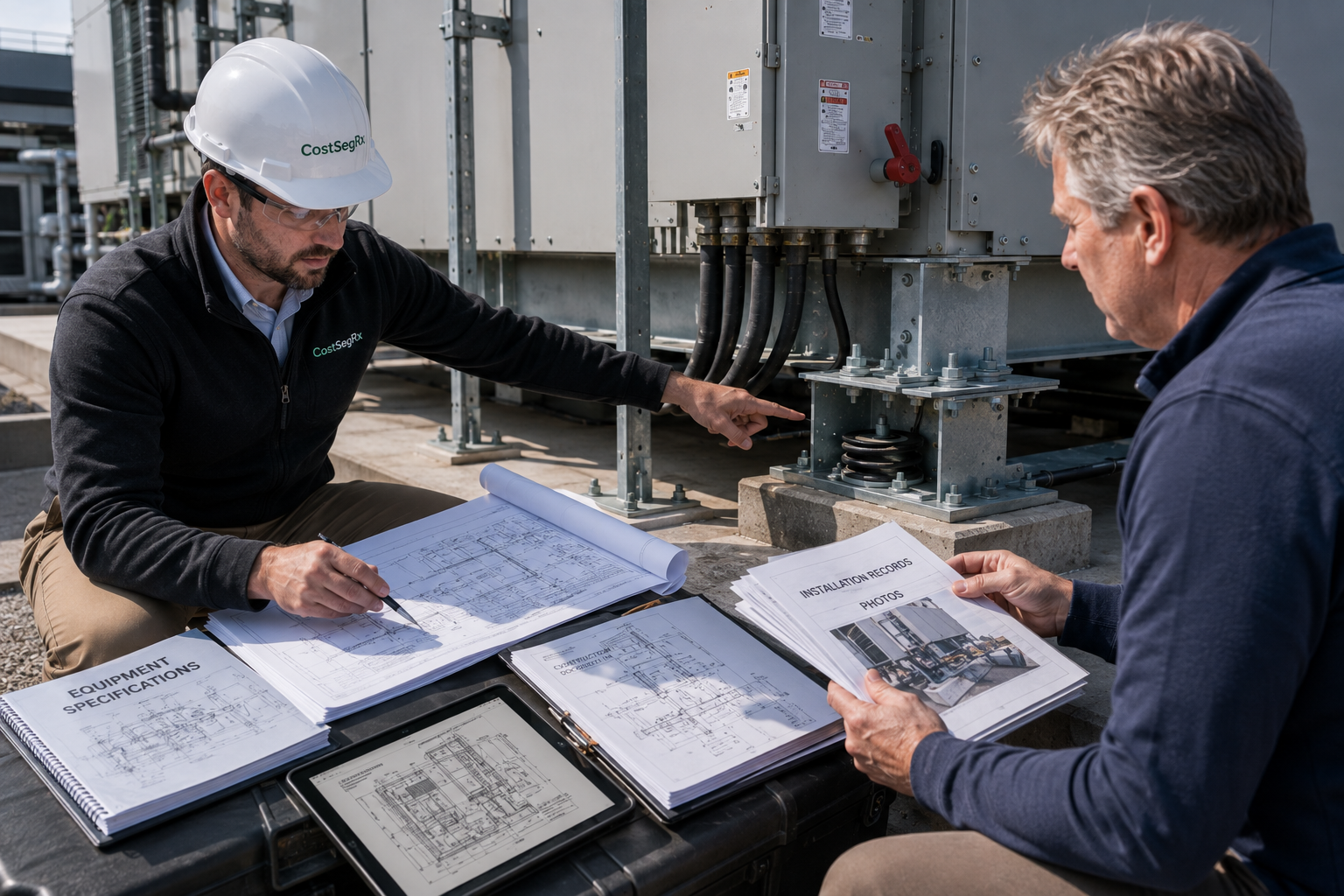
An engineering review goes further. The team examines the installation drawings, photographs the connections, reviews how the asset is used, studies its removal requirements, and evaluates the relevant Whiteco factors.
Assume the complete facts and applicable tax analysis support classification as 5-year property rather than treating the cost as part of 39-year nonresidential real property.
The important lesson is not the $100,000 allocation itself.
The lesson is why the classification can be supported.
Without the engineering analysis, someone might classify the asset based entirely on appearance. Another person might make the opposite mistake and assume that because the asset could theoretically be unbolted, it automatically qualifies as tangible personal property.
Neither approach reflects the Whiteco framework.
A supportable study documents the facts, applies the relevant classification standards, and lets the depreciation treatment follow the engineering conclusion. Investors who understand that distinction are less likely to view cost segregation as simply maximizing allocations to 5-year property.
Whiteco's Lasting Engineering Lesson
Whiteco Industries, Inc. v. Commissioner gave the cost segregation world more than a famous case name. It provided six practical questions for examining the physical reality of an asset.
Can it move?
Was it designed to remain?
How long is it expected to stay?
What does removal require?
What damage would removal cause?
How is it attached?
No single answer should replace the complete analysis.
That is the memorable lesson behind Whiteco: do not classify an asset because it looks permanent or because someone says it can move. Study how it was designed, installed, used, and documented.
For CostSegRx engineers, that principle fits naturally with engineering-based cost segregation. Engineers classify assets, not labels. The property facts come first, and the tax treatment follows the engineering.
Do you have a question about Cost Segregation?
Let us know how we can help
Your information is secure. We only use your details to answer your direct inquiry.