
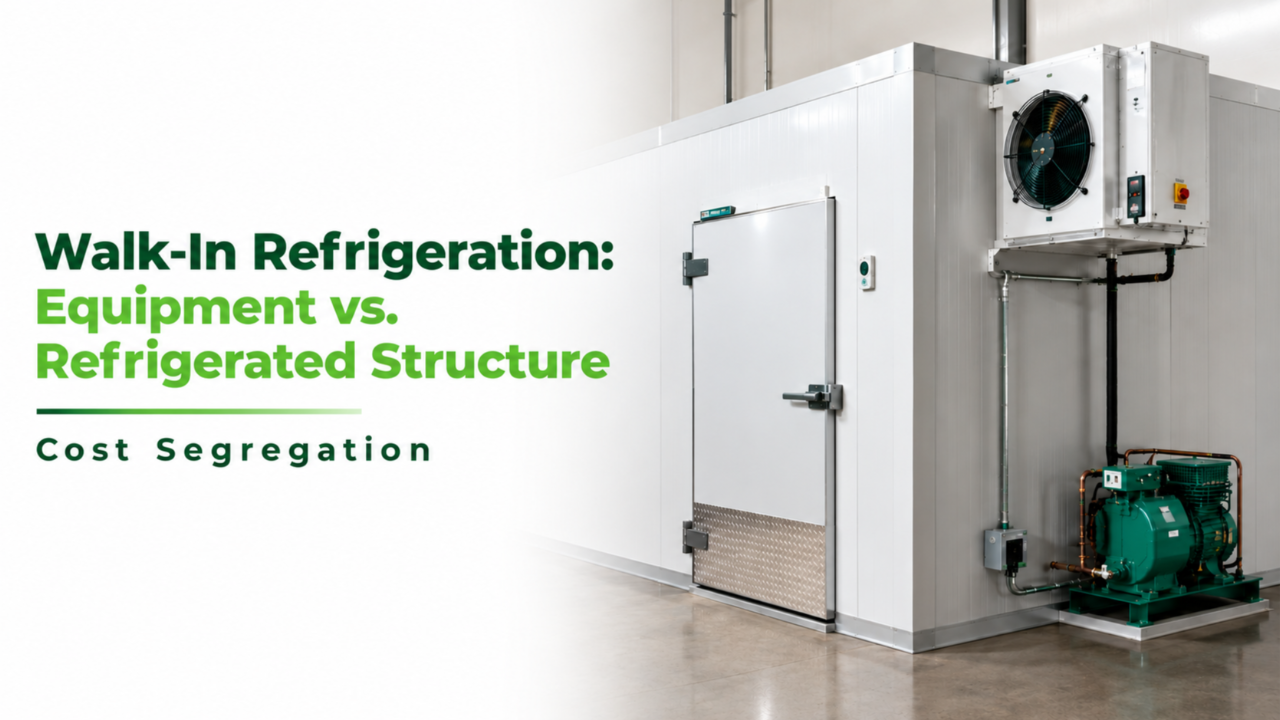
Walk-In Refrigeration: Equipment vs. Refrigerated Structure
Oct 13, 2026A walk-in cooler may operate as one system, but an engineer does not necessarily classify it as one asset. The refrigeration machinery, associated piping and wiring, insulated enclosure, floor, and equipment connections can raise different classification questions. ATG 2025 provides especially useful distinctions for refrigeration equipment and refrigerated structures in retail and restaurant settings. It also provides a useful residential comparison involving refrigerators, dedicated electrical branches, and water connections for icemakers. The engineering task is to identify the physical components first, understand what each component serves, and then apply the supported recovery period.
Wondering how much tax you could save with cost segregation? Let’s find out. Schedule a Cost Segregation Strategy Call today.
Key Takeaways
- A walk-in cooler can contain refrigeration equipment and structural components with different recovery periods.
- Engineers identify the refrigeration machinery, connections, enclosure, and other physical components before classification.
- ATG 2025 identifies qualifying refrigeration equipment as 5-year property while certain refrigerated structures remain 39-year nonresidential real property.
- Residential refrigerators show how an appliance, dedicated electrical branch, and dedicated water connection can each require identification.
- The engineering study should establish the physical boundary between equipment, dedicated connections, and building components.
- A commercial walk-in cooler illustrates how 5-year property and 39-year nonresidential real property can exist within one operating installation.
- Refrigeration classification starts with the components and their functions, not the name of the complete system.
What Is Actually Part of a Walk-In Refrigeration System?
When someone says “walk-in cooler,” they may be referring to the entire cold room. From an engineering perspective, however, that description can combine several different physical assets.
There is equipment that creates and maintains the refrigerated environment. There is an enclosure that defines the refrigerated space. There may also be electrical, plumbing, refrigerant, drainage, and other connections associated with the equipment.
That distinction is consistent with the broader principle behind engineering asset classification: the asset name alone does not determine its classification.
ATG 2025's retail industry guidance separately identifies “Refrigeration Equipment” and “Refrigerated Structures.” Refrigeration equipment includes refrigeration units, condensers, compressors, accumulators, coolers, pumps, connecting pipes, and associated wiring. In that retail fact pattern, the ATG identifies this equipment as § 1245 Asset Class 57.0, or 5-year property.
The refrigerated structure is a separate question.
The same retail guidance describes structural components such as walls, floors, ceilings, and insulation used to construct a climate-controlled structure, room, or facility, including a walk-in freezer or cooler. That condition is identified as 39-year nonresidential real property.
So a walk-in cooler should not automatically be placed into one recovery-period bucket.
How Engineers Separate the Cold-Making Equipment From the Room
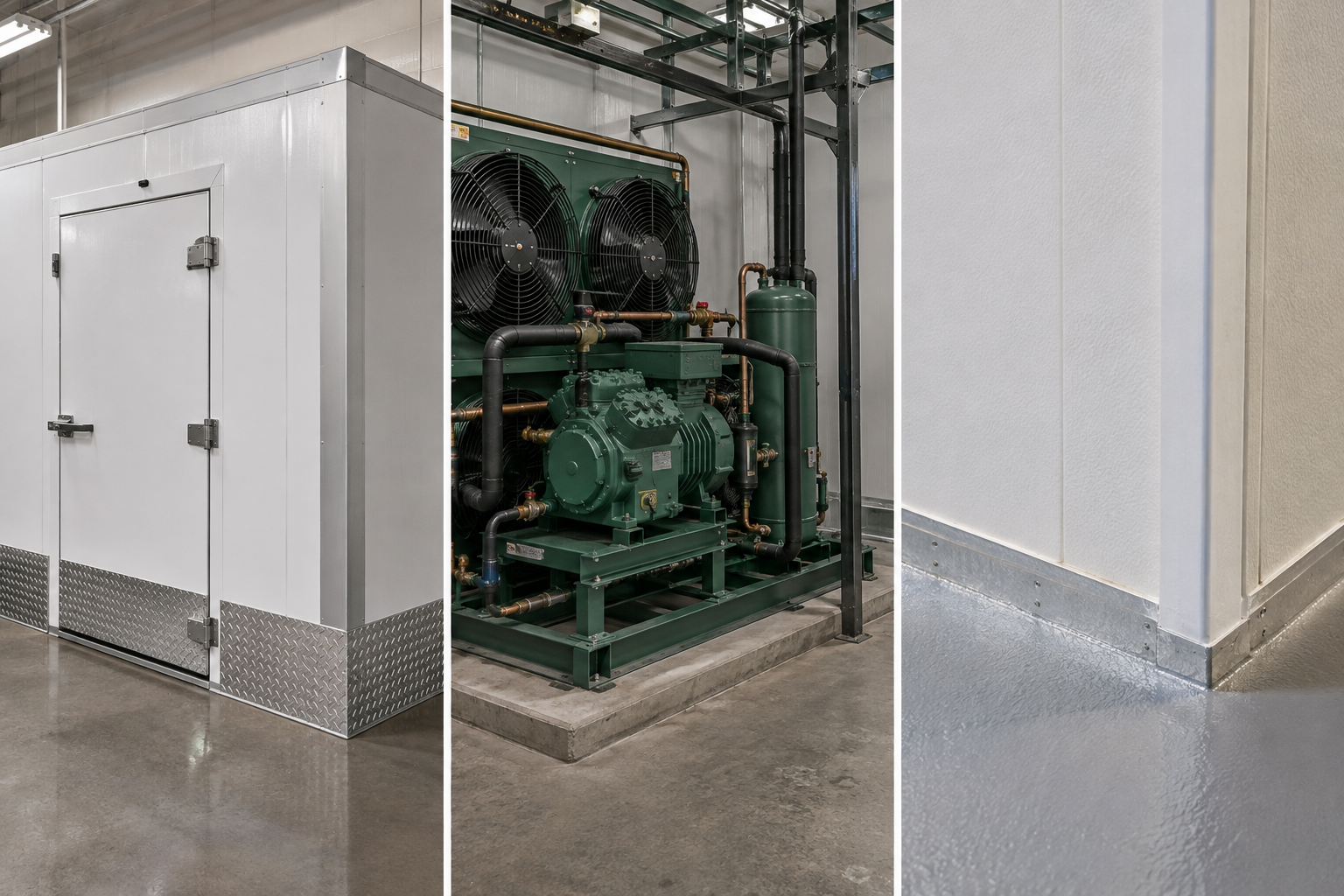
The engineering analysis starts by identifying what physically creates the refrigerated environment and what physically creates the room.
On the equipment side, ATG 2025's retail guidance expressly includes refrigeration units, condensers, compressors, accumulators, coolers, pumps, connecting pipes, and associated wiring within refrigeration equipment classified as 5-year property.
Restaurant guidance provides a similar distinction. It identifies certain separate kitchen HVAC equipment meeting the applicable sole-justification condition and specifically includes refrigeration units, condensers, compressors, accumulators, coolers, pumps, connecting pipes, and wiring for mechanical equipment serving climate-controlled rooms such as walk-in freezers and coolers. Under that restaurant fact pattern, the ATG identifies the qualifying equipment as 5-year property.
This is where detailed MEP systems cost segregation becomes important. An engineer should not see a compressor, insulated wall, electrical connection, and floor and assume they all follow the same classification merely because they contribute to one refrigerated space.
The physical boundary matters.
The equipment that performs the refrigeration function is evaluated as equipment. The walls, floor, ceiling, and insulation forming the refrigerated room are evaluated as structural components. Connections are evaluated according to what they serve and the applicable guidance.
That component-level approach is what allows the classification to follow the physical facts.
Why 5-Year Refrigeration Equipment Does Not Make the Entire Walk-In 5-Year Property
The opportunity for 5-year property is significant, but the boundary is equally important.
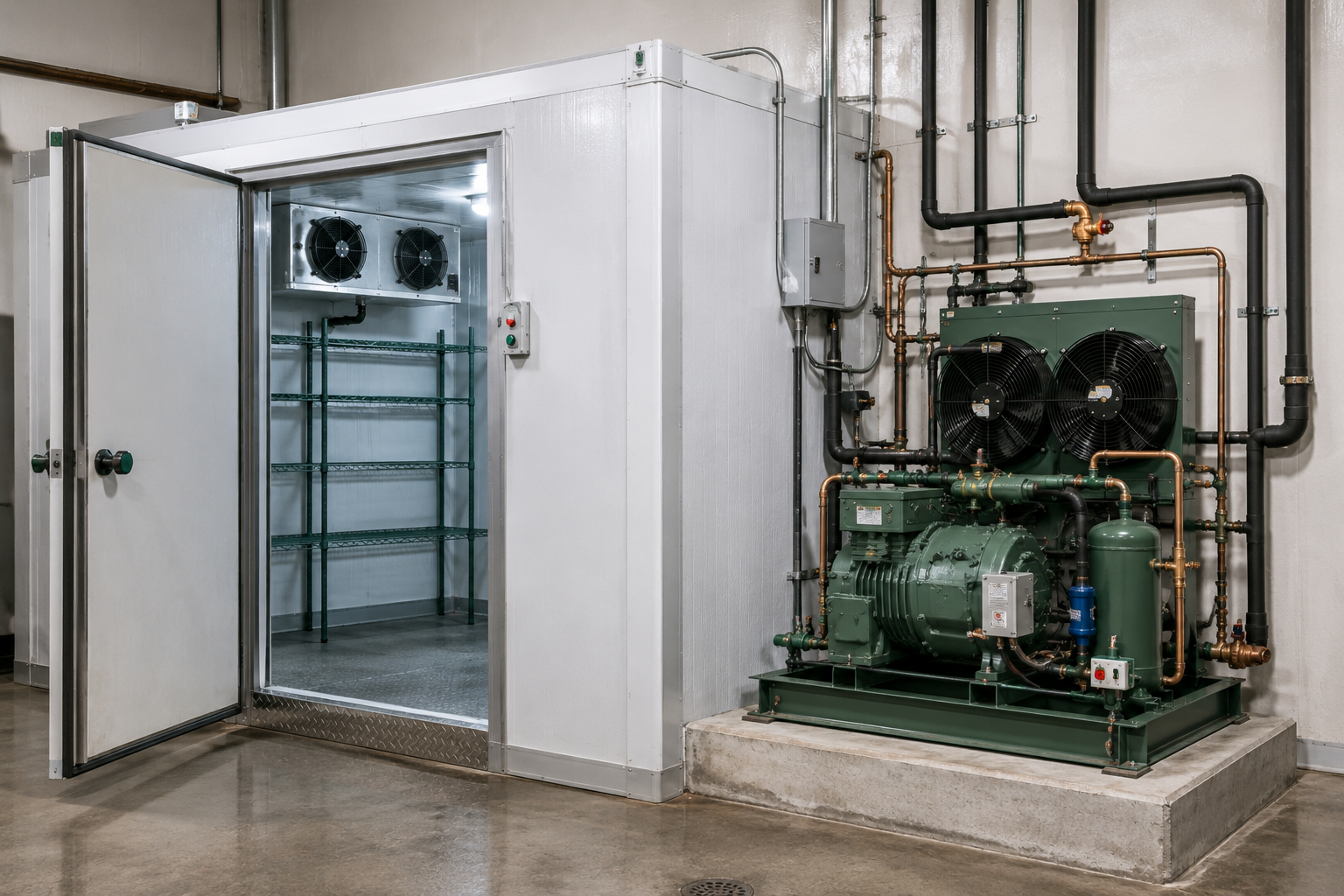
ATG 2025 is quite direct in the retail matrix. Refrigeration equipment fitting its described condition is 5-year property. Yet the walls, floors, ceilings, and insulation used to construct a refrigerated room are separately identified as 39-year nonresidential real property.
That means an engineering study should not simply identify a walk-in freezer on a construction schedule and classify the entire cost from the equipment name.
There is another important condition to recognize.
The retail matrix separately addresses a portable refrigerated structure installed inside a building. The ATG describes this as prefabricated panels mounted on a movable framework, with the structure designed so it can be disassembled and moved. That specific condition is identified as § 1245 Asset Class 57.0 and 5-year property.
This distinction illustrates why construction details matter.
A refrigerated room whose structural walls, floor, ceiling, and insulation form the climate-controlled structure is not the same fact pattern as a portable prefabricated structure designed for disassembly and movement.
The engineering question is therefore not simply, “Is this a walk-in cooler?”
It is, “What exactly was installed?”
From Residential Refrigerators to Commercial Walk-Ins
The same component-by-component thinking appears in residential rental property.
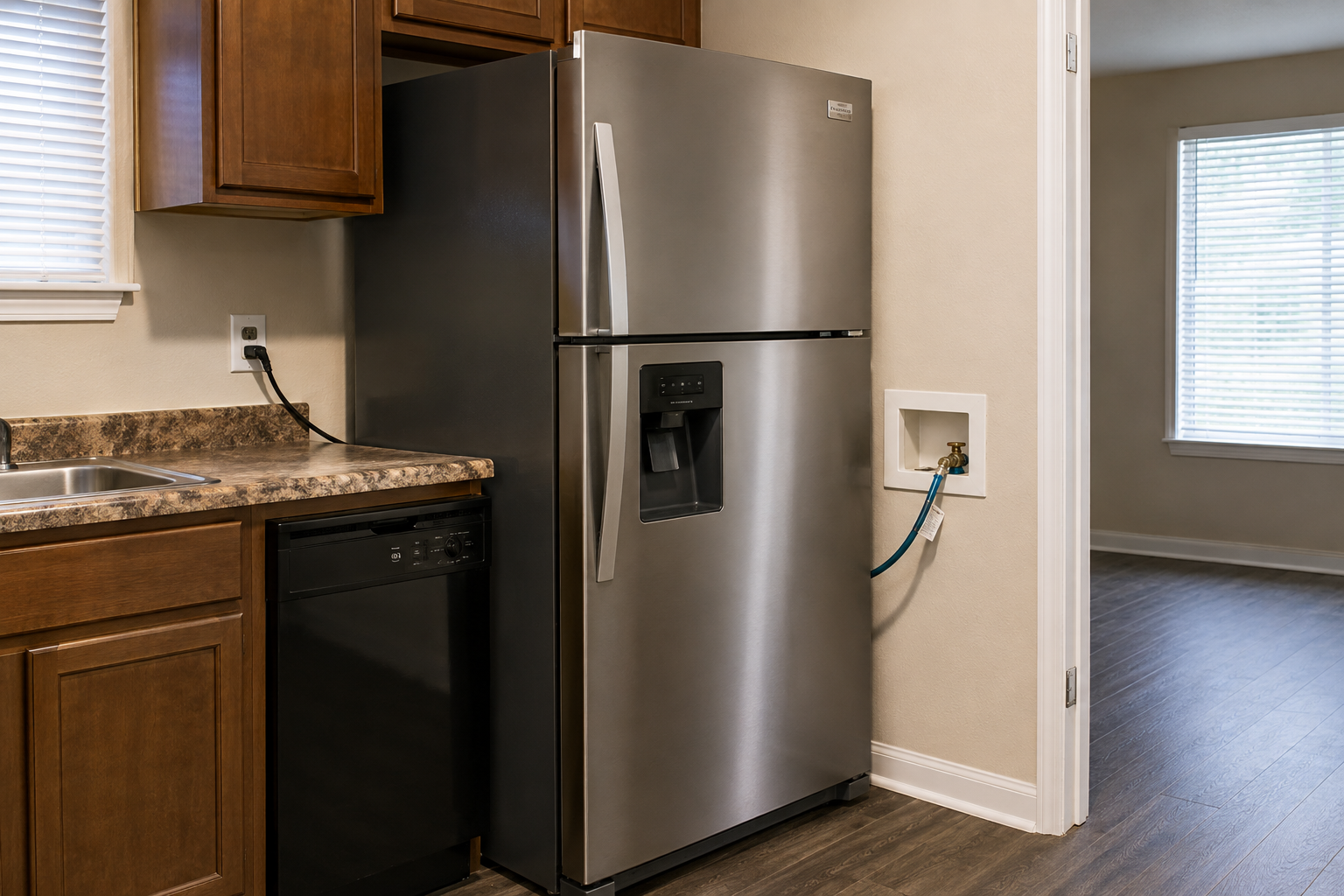
ATG 2025 provides an unusually clear example because it separately addresses the refrigerator, electrical service, and plumbing connection.
Refrigerator and Icemaker
The residential rental matrix lists kitchen appliances including the stove/oven, refrigerator, icemaker, microwave, and dishwasher. It identifies those appliances as § 1245 Asset Class 57.0, or 5-year property.
So, under that ATG residential rental fact pattern, the refrigerator itself is 5-year property.
General Kitchen Outlets
Now move from the refrigerator to the wall.
ATG 2025 identifies general kitchen wiring, outlets, and switches as § 1250 property with a 27.5-year residential rental property recovery period.
A general-use outlet therefore should not be classified as 5-year property simply because someone happens to plug a refrigerator into it.
Dedicated Refrigerator Electrical Branch
The analysis changes when the electrical service is specifically dedicated to the appliance.
The residential matrix separately identifies wiring and outlets dedicated to a range, dishwasher, refrigerator, or built-in microwave. It classifies that dedicated branch condition as § 1245 Asset Class 57.0, or 5-year property.
The broader electrical guidance reinforces the principle. Electrical outlets of general applicability and accessibility are building property, while hook-ups and branch circuits supplying dedicated machinery and equipment can follow the appropriate recovery period of the equipment they serve when the functional allocation is properly supported.
The physical distinction is not merely “outlet versus appliance.”
It is general building electrical service versus supported dedicated appliance service.
Icemaker Water Connection
The water line creates a similar boundary.
General kitchen plumbing, including piping and other components not specifically identified elsewhere, is listed as 27.5-year residential rental property. But the residential matrix separately identifies a dedicated water or gas branch hook-up directly connected to an appliance, specifically giving a refrigerator/icemaker as an example. That dedicated branch is identified as § 1245 Asset Class 57.0, or 5-year property.
That means the entire building water system does not become 5-year property because a refrigerator has an icemaker.
The relevant engineering work is identifying the supported dedicated branch connection.
Trace the Physical Boundary Before Assigning the Recovery Period
A quality study should document enough of the physical installation to explain why each component received its classification.
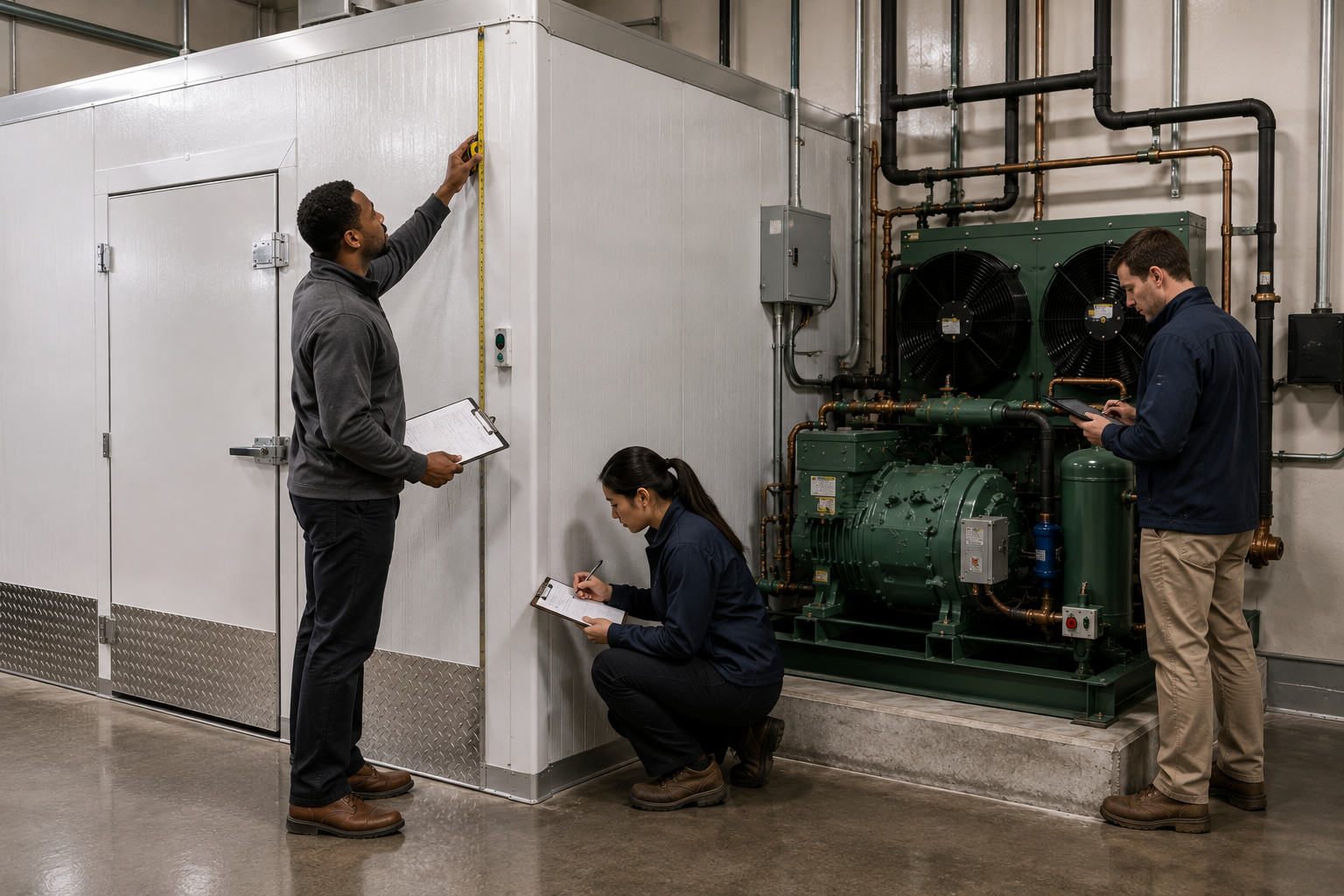
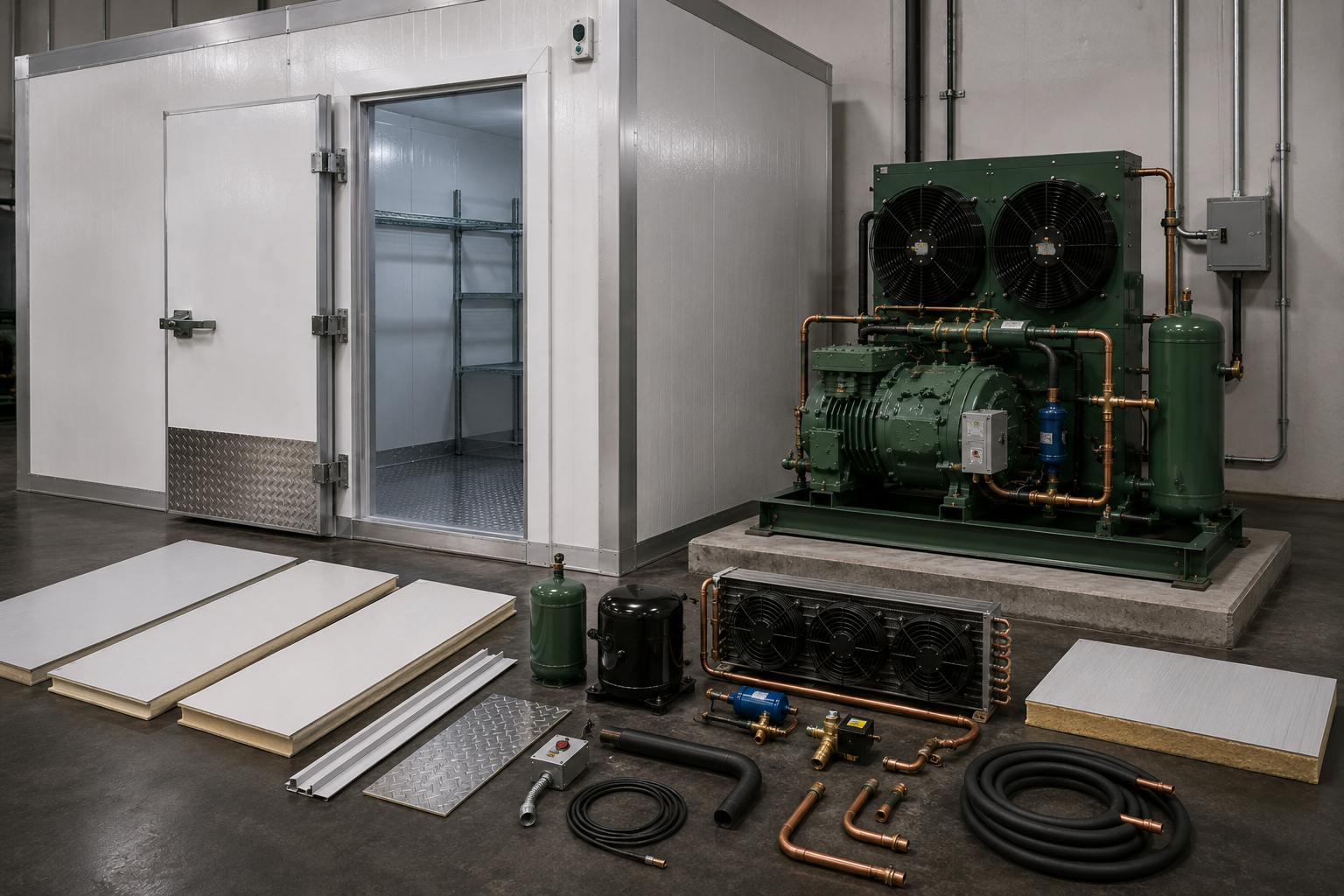
For walk-in refrigeration, CostSegRx engineers may need to identify the refrigeration machinery, enclosure construction, visible piping and wiring, equipment connections, floor condition, and whether the enclosure is structural or fits another specifically supported condition.
For a residential refrigerator, the inspection question can be more focused. Is the electrical outlet general-use or a supported dedicated branch? Does an icemaker have a dedicated water branch directly connected to the appliance? Where does that dedicated branch separate from general building plumbing?
Those are physical questions before they are depreciation questions.
The same principle supports cost segregation audit readiness. A schedule that simply says “walk-in cooler, 5-year” provides much less engineering explanation than one that identifies the components and documents the classification boundary.
The objective is not to move every possible component into 5-year property. It is to identify the components that the physical facts and applicable authority actually support.
Example: One Walk-In Cooler, Two Major Recovery Periods
Consider a commercial retail property with a walk-in cooler.
The engineer first identifies the equipment responsible for refrigeration. The installation includes refrigeration components falling within the ATG retail description, such as the refrigeration unit and applicable associated mechanical components. Under the retail guidance, the supported refrigeration equipment is 5-year property.
The engineer then evaluates the enclosure separately.
Assume the walls, floor, ceiling, and insulation are structural components constructing the refrigerated room and do not satisfy the ATG's separate portable-structure condition. Under the retail refrigerated-structure guidance, those components are 39-year nonresidential real property.
The result is not a contradiction.
The walk-in cooler functions as one refrigerated environment, but its physical components do not necessarily share one recovery period.
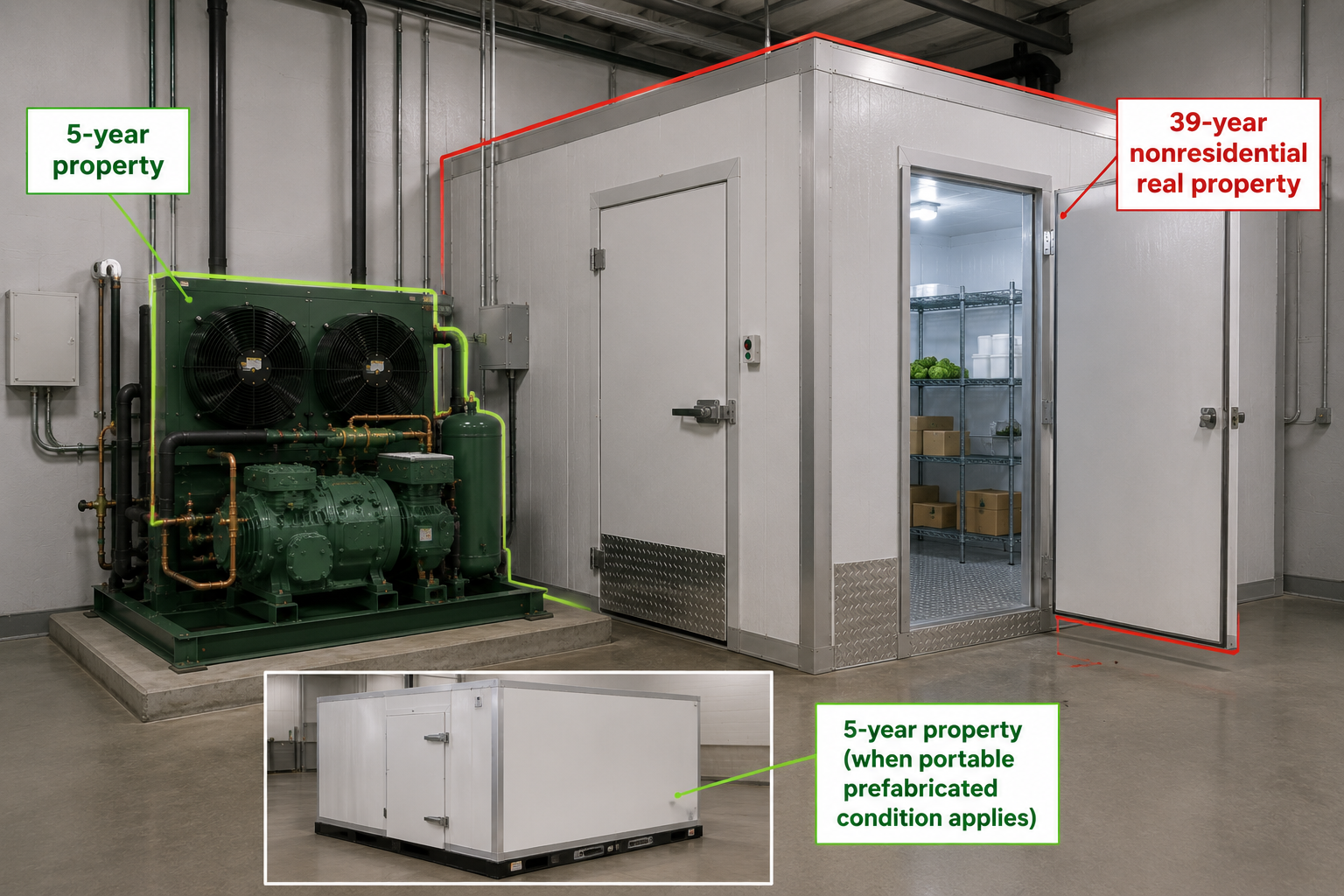
If the enclosure were instead a portable structure installed inside the building, consisting of prefabricated panels on a movable framework and designed to be disassembled and moved, the ATG retail matrix provides a different result for that supported fact pattern: 5-year property.
That is exactly why the engineer must establish the construction condition before assigning the recovery period.
Refrigeration Is a Component-Level Classification Question
Walk-in refrigeration demonstrates what engineering contributes to cost segregation.
The refrigeration equipment may be 5-year property. The structural refrigerated room may remain 39-year nonresidential real property. A qualifying portable prefabricated refrigerated structure may receive different treatment. In residential rental property, the refrigerator, dedicated electrical branch, and dedicated refrigerator/icemaker water branch can be 5-year property, while general kitchen electrical and plumbing remain 27.5-year residential rental property under the ATG fact patterns discussed above.
Those distinctions cannot be established by calling everything “refrigeration.”
CostSegRx engineers identify the equipment, connections, enclosure, and building systems separately, then apply the recovery period supported by the physical facts and applicable authority.
That is how one operating system becomes a defensible component-level cost segregation analysis.
Do you have a question about Cost Segregation?
Let us know how we can help
Your information is secure. We only use your details to answer your direct inquiry.