
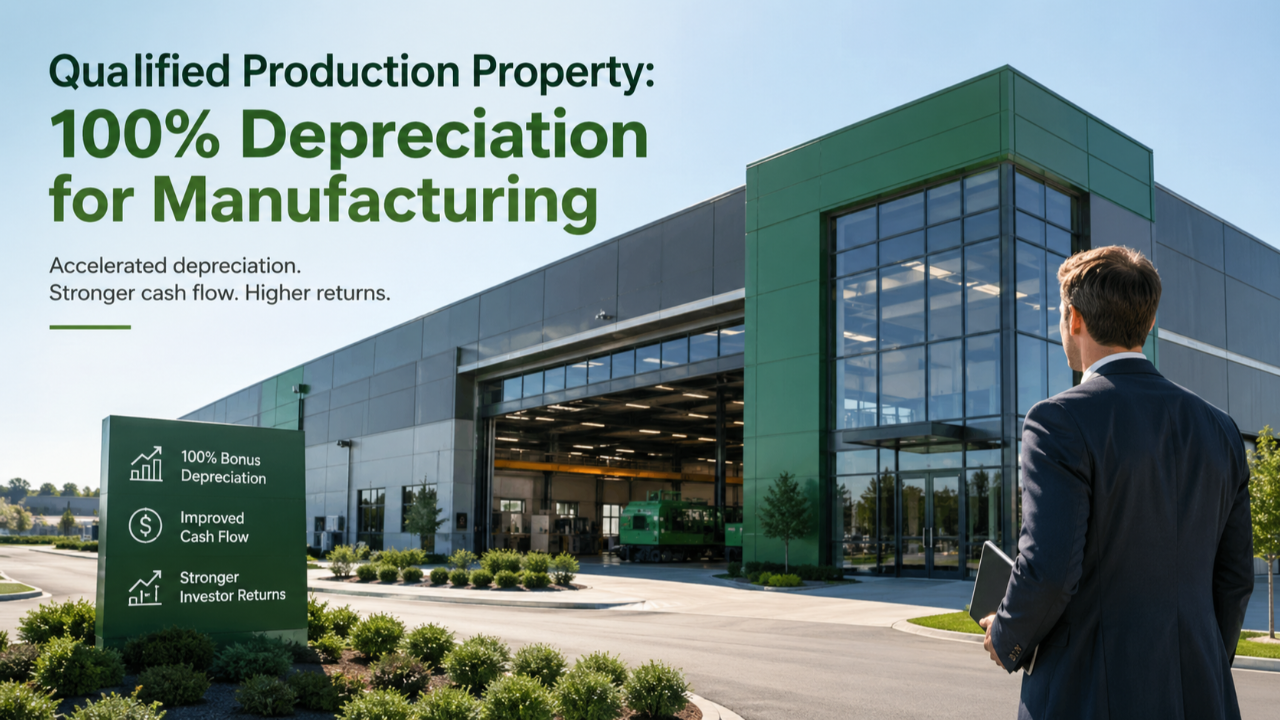
Qualified Production Property (QPP): 100% First-Year Depreciation for Manufacturing Facilities
Mar 17, 2026The One, Big, Beautiful Bill Act, enacted on July 4, 2025, added Internal Revenue Code Section 168(n) and created a new depreciation incentive for certain domestic production investment. Under this provision, a taxpayer that makes the required election may be able to claim 100% first-year depreciation on certain Qualified Production Property (QPP) placed in service in the United States.
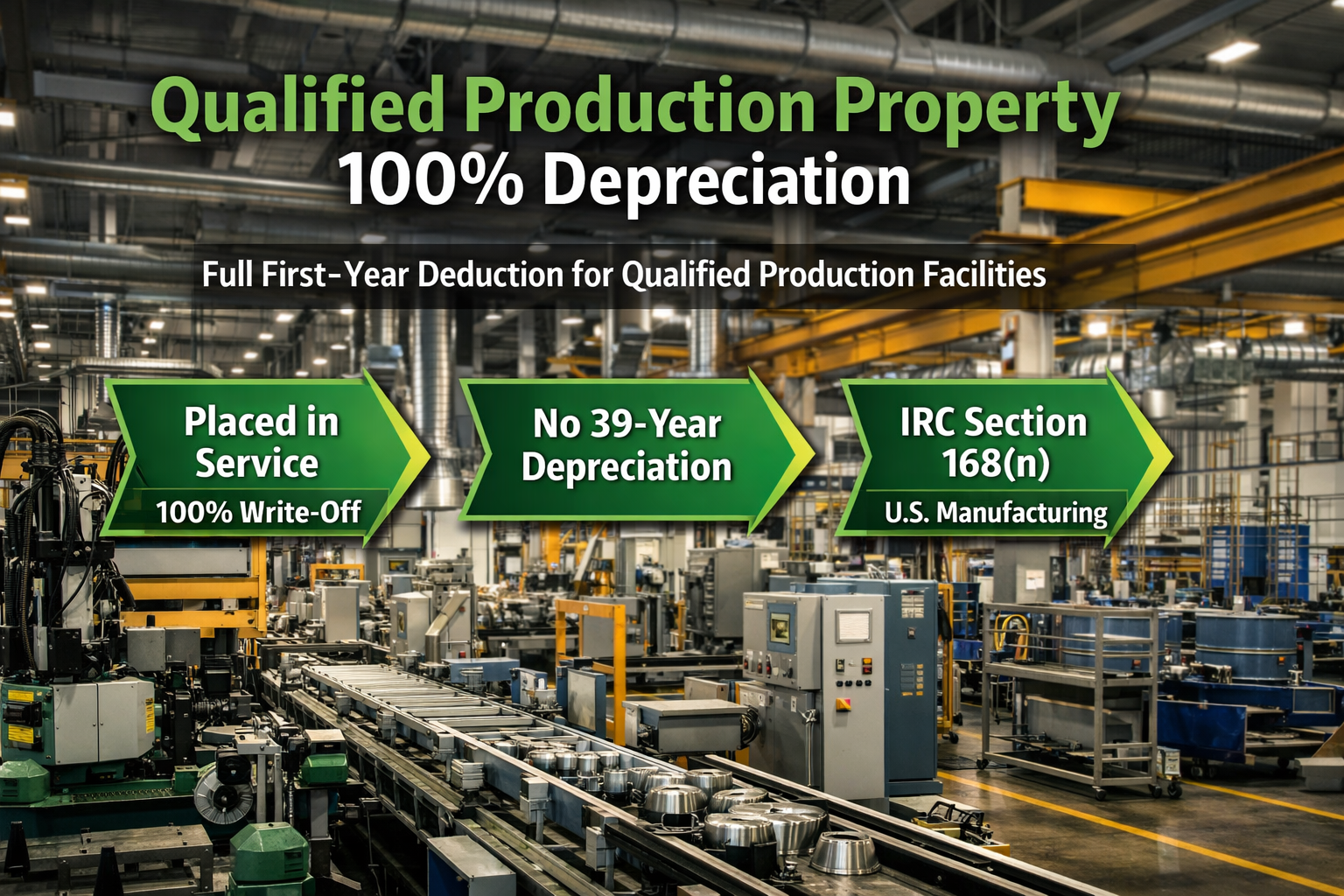
For eligible taxpayers, that can be a major timing benefit. Instead of recovering certain qualifying building costs over the normal 39-year recovery period for nonresidential real property, Section 168(n) may allow those costs to be deducted in the year the property is placed in service.
For manufacturers, processors, and other industrial operators, that timing difference may materially improve project cash flow, shorten payback periods, and increase the after-tax value of large capital projects.
It is also important to distinguish Qualified Production Property from Qualified Improvement Property (QIP). QPP generally applies to certain production-related nonresidential real property or portions of that property, while QIP applies to certain interior improvements made to existing nonresidential buildings. For more on QIP, see How Qualified Improvement Property Boosts Bonus Depreciation for Property Owners.
Key Takeaways
- Qualified Production Property may allow 100% first-year depreciation for certain domestic production facilities
- Construction start, acquisition, and placed-in-service dates generally determine eligibility
- Only certain production-focused nonresidential real property or qualifying portions of a facility may qualify
- Cost segregation studies still matter even when QPP applies
- Production facilities often include specialized components that require engineering-based analysis
- Early planning matters because excluded areas, election rules, and later changes in use can affect results
How Qualified Production Property Works
Section 168(n) provides a special depreciation allowance for certain nonresidential real property used by the taxpayer as an integral part of a qualified production activity. If the statutory requirements are met and the taxpayer properly designates the property under the election rules, the depreciation deduction for the year the property is placed in service may include an allowance equal to 100% of the adjusted basis of the qualified production property.
In practical terms, this means some new production facilities, upgrades, or qualifying portions of facilities may be depreciated immediately rather than over the standard 39-year period that normally applies to commercial buildings.
QPP is intended to support investment in U.S. production capacity, but qualification depends on the facts. The analysis may turn on how the building is used, whether the activity involves a qualifying production function, whether excluded areas are present, whether the taxpayer is the correct party to make the election, and whether the project satisfies the timing rules.
That is why QPP often requires a functional area analysis. If a qualified production activity takes place only within part of a property, only that portion may qualify unless a special rule applies. In some cases, if 95% or more of the physical space satisfies the integral-part requirement, the taxpayer may elect to treat the entire property as satisfying that requirement.
Construction, Acquisition, and Placed-in-Service Rules
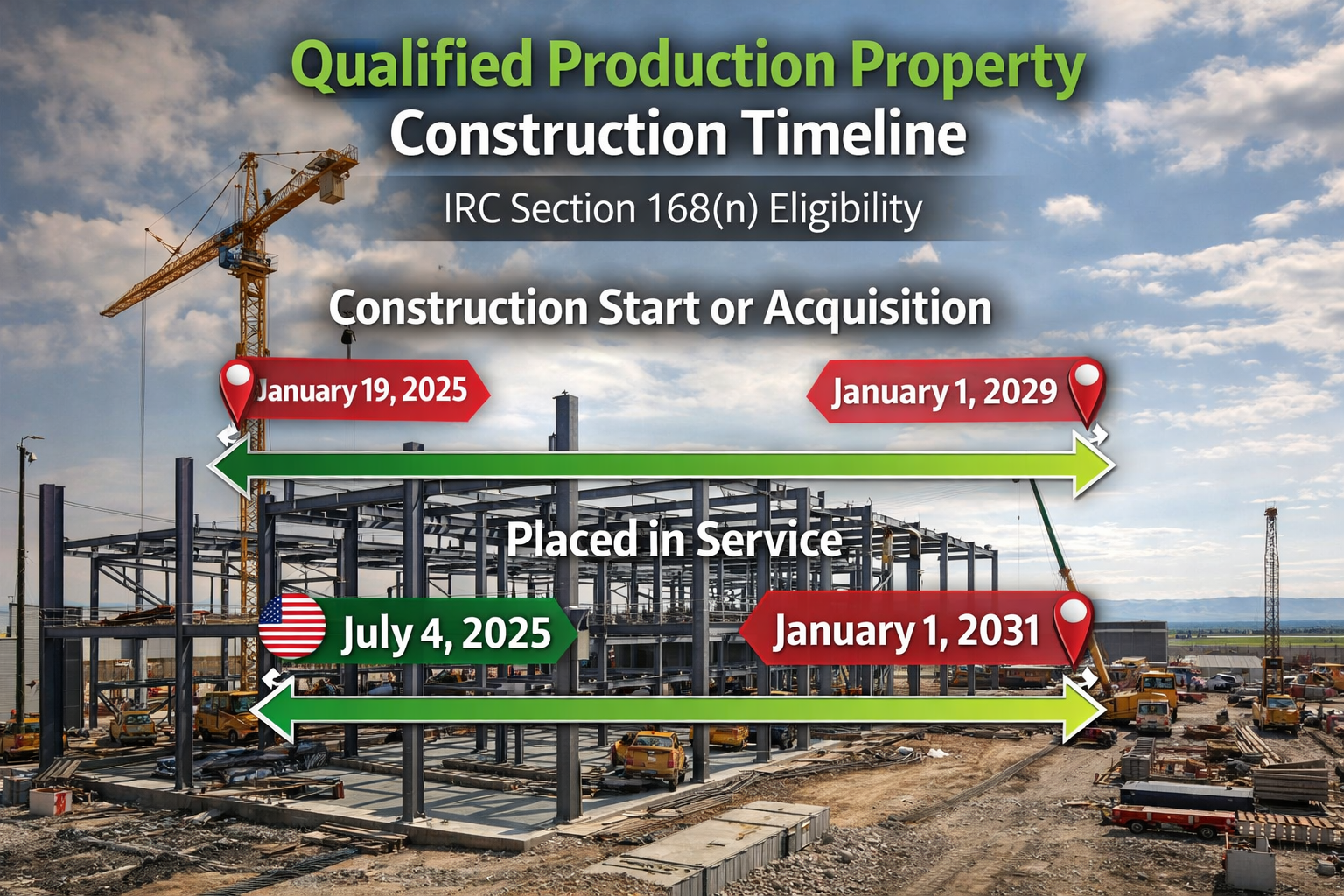
The timing rules are central to QPP eligibility.
To qualify, construction generally must begin after January 19, 2025, and before January 1, 2029. In the case of certain used property, the property generally must be acquired after January 19, 2025, and before January 1, 2029, and additional statutory conditions may apply.
The property generally must be placed in service after July 4, 2025, and before January 1, 2031.
The placed-in-service date is generally the date the property is ready and available for its intended production use, even if the facility has not yet reached full operating output.
Section 168(n) also contains additional technical rules that may affect qualification, including rules for certain used property, leased property, excluded portions of buildings, and recapture if the property later ceases to be used in a qualified production activity. Because of that, construction schedules, contracts, ownership structure, and intended use should be reviewed early in the project timeline.
What Buildings Can Qualify as Qualified Production Property
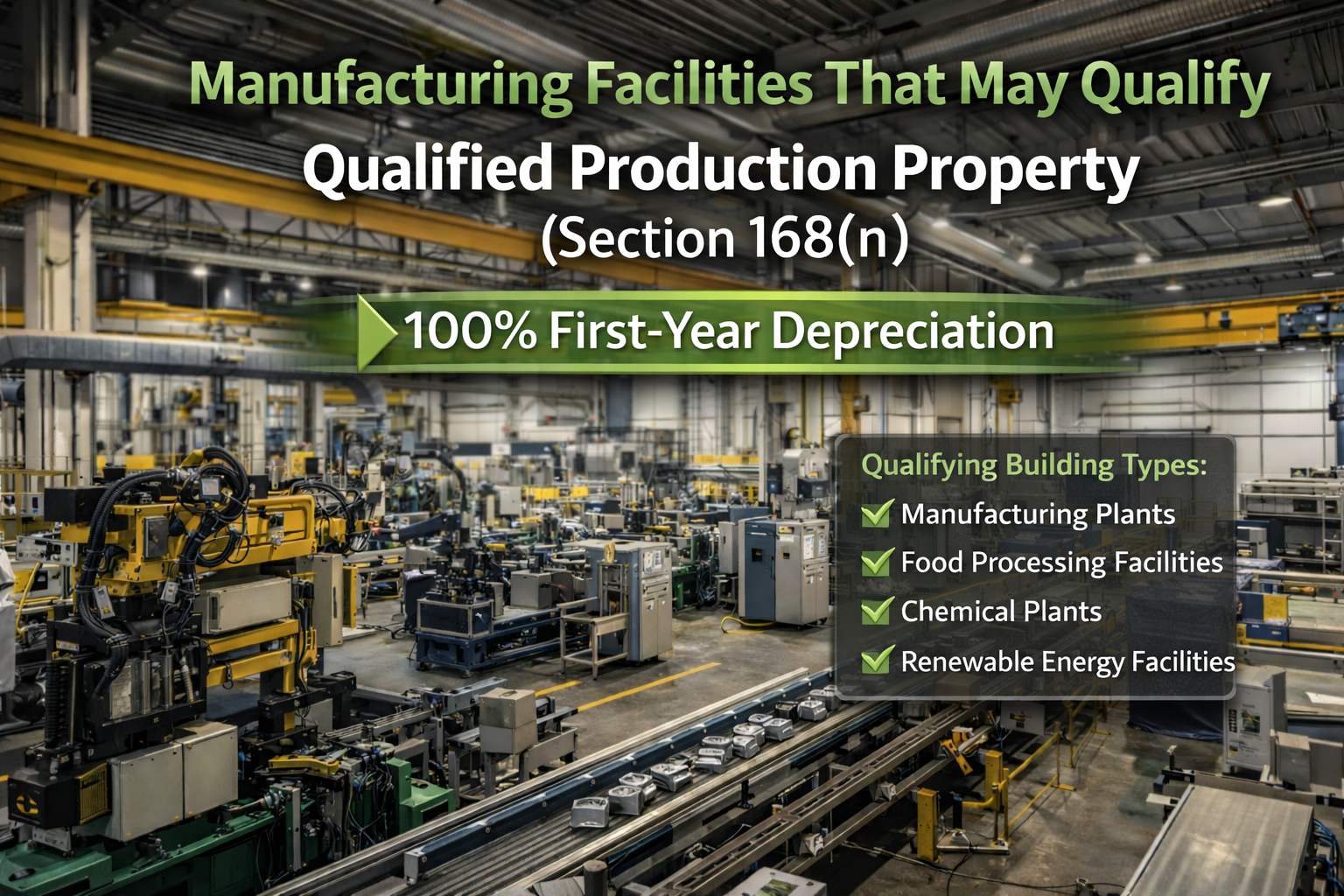
Qualified Production Property generally refers to the portion of nonresidential real property used as an integral part of a qualified production activity in the United States or a U.S. territory.
Depending on the facts, examples may include buildings or portions of buildings used directly for manufacturing, fabrication, food processing, chemical production, industrial assembly, or certain agricultural production activities covered by the statute.
The building must be tied to a qualifying activity involving the manufacturing, production, or refining of tangible personal property. At the same time, the statute excludes certain functions and areas from QPP treatment. Those excluded areas generally include portions used for offices, administrative services, lodging, parking, sales activities, research activities, software development, engineering activities, or other functions unrelated to production.
In addition, portions of property used to store finished products and certain other items may be ineligible. That means a facility may need to be analyzed by functional area rather than treated as entirely eligible or entirely ineligible.
Why Cost Segregation Still Matters for QPP
Even when a project may qualify for QPP treatment, a cost segregation study still plays an important role.
Cost segregation identifies assets and systems that fall into shorter recovery periods and separates them from structural building components. That analysis may still matter for basis allocation, excluded building areas, non-QPP portions of the facility, and assets that qualify under other depreciation rules.
Examples of shorter-life property often identified in a cost segregation study include specialty flooring, dedicated electrical systems for equipment, certain process-specific plumbing systems, millwork and cabinetry, and site improvements such as paving, sidewalks, curbing, and lighting.
For more detail on shorter-life classifications, see What Is 5-Year Property in Cost Segregation? and What Is 15-Year Property in Cost Segregation?.
Cost segregation also remains useful when modeling how QPP interacts with broader depreciation planning, including bonus depreciation, Qualified Improvement Property, and renovation planning.
Examples of Production-Specific Building Components
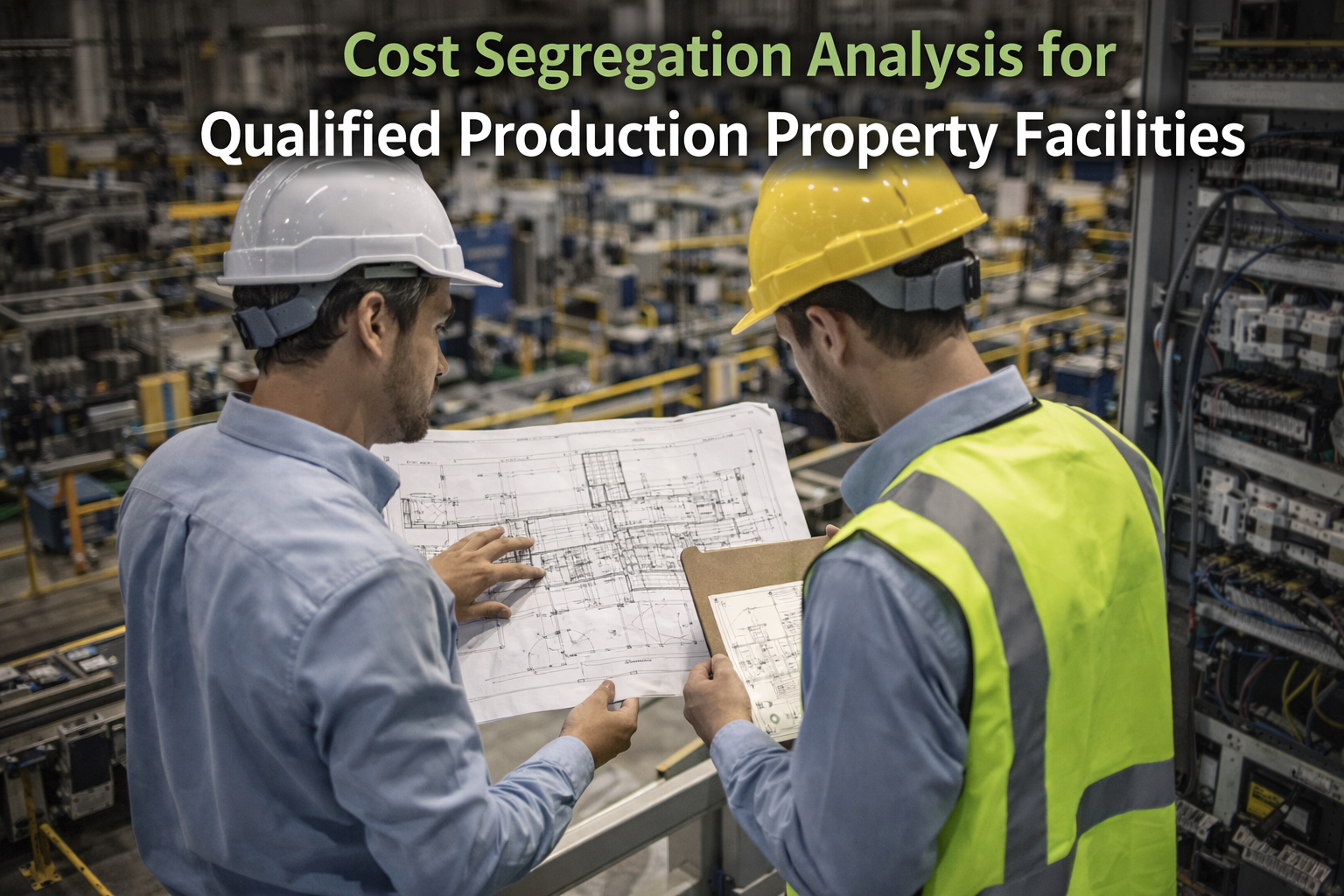
Production facilities often contain specialized building components designed to support industrial operations. These items may require engineering review to determine whether they are structural components, shorter-life assets, excluded areas, or part of a portion of the building that may qualify under Section 168(n).
Examples commonly reviewed include reinforced equipment foundations, specialized electrical infrastructure for machinery, industrial ventilation systems, process-specific plumbing systems, and heavy-load flooring or slab enhancements.
In many cases, these systems are too important to classify by assumption alone. Engineering-based documentation may help support a more precise allocation of costs across QPP, 5-year property, 15-year property, and 39-year property categories.
Planning Considerations Before a Project Is Placed in Service
Businesses planning a new production project should evaluate QPP eligibility early and coordinate that review with cost segregation, depreciation modeling, and documentation strategy.
That early review may help answer key questions such as which portions of the facility are tied directly to production, which areas are excluded, whether the election should be made, how basis should be allocated, and how future changes in use could affect recapture risk.
For owners developing or upgrading industrial property, QPP is not a blanket rule for every building. Eligibility can depend on the facility's function, excluded uses, construction timing, acquisition timing for certain used property, placed-in-service timing, election requirements, and later operational changes.
Conclusion
Qualified Production Property may create a powerful tax incentive for businesses investing in domestic manufacturing and industrial production facilities. When the rules are satisfied, Section 168(n) may allow a taxpayer to deduct qualifying costs far faster than the traditional 39-year schedule for nonresidential real property.
At the same time, QPP generally works best when it is analyzed together with cost segregation and broader depreciation planning. A well-documented study may help support classifications, separate excluded areas, identify shorter-life assets, and improve the overall tax model for a major capital project.
To compare related depreciation strategies, review our resources on bonus depreciation, Qualified Improvement Property, and cost segregation studies.
Do you have a question about Cost Segregation?
Let us know how we can help
Your information is secure. We only use your details to answer your direct inquiry.