
Is Cost Segregation Worth It? How Accelerated Depreciation Improves Cash Flow
Mar 17, 2026When property owners ask whether cost segregation is worth it, they are really asking one question:
Will this strategy meaningfully improve cash flow and financial position?
Cost segregation does not increase total depreciation. Instead, it accelerates when those deductions are realized. By identifying assets that qualify for shorter recovery periods such as 5, 7, and 15-year property, investors may be able to unlock earlier tax savings and improve liquidity.
If you are new to how assets are classified, review our guides on 5-year property and 15-year property to understand what commonly qualifies for accelerated depreciation.
Key Takeaways
- Cost segregation accelerates depreciation timing, not total deductions
- Earlier deductions may significantly improve near-term cash flow
- Engineering-based studies identify shorter-life assets within a building
- Renovations and improvements often increase tax savings opportunities
- Retroactive studies may allow missed depreciation to be captured
Why Depreciation Timing Matters for Investors
Real estate investors often focus on long-term appreciation, but tax timing can have a major impact on returns.
Cost segregation accelerates depreciation deductions into earlier years of ownership. Shorter recovery periods can produce larger upfront deductions, which may reduce taxable income in the near term and improve after-tax cash flow.
This additional liquidity is often used to reinvest in new acquisitions, fund property improvements, reduce leverage, or scale a portfolio more quickly.
For many investors, that timing advantage is the core reason cost segregation creates value. It is not about increasing total depreciation. It is about improving when those deductions are realized.

How Cost Segregation Actually Works
A common misconception is that a building must be depreciated entirely over 27.5 years for residential rental property or 39 years for commercial property. In reality, most properties contain multiple asset types with different recovery periods.
A cost segregation study uses engineering-based analysis to identify and reclassify qualifying components into shorter-life categories.
- Specialty flooring and finishes
- Dedicated electrical systems supporting equipment
- Process-specific plumbing systems
- HVAC components tied to business use
- Land improvements such as parking lots and site lighting
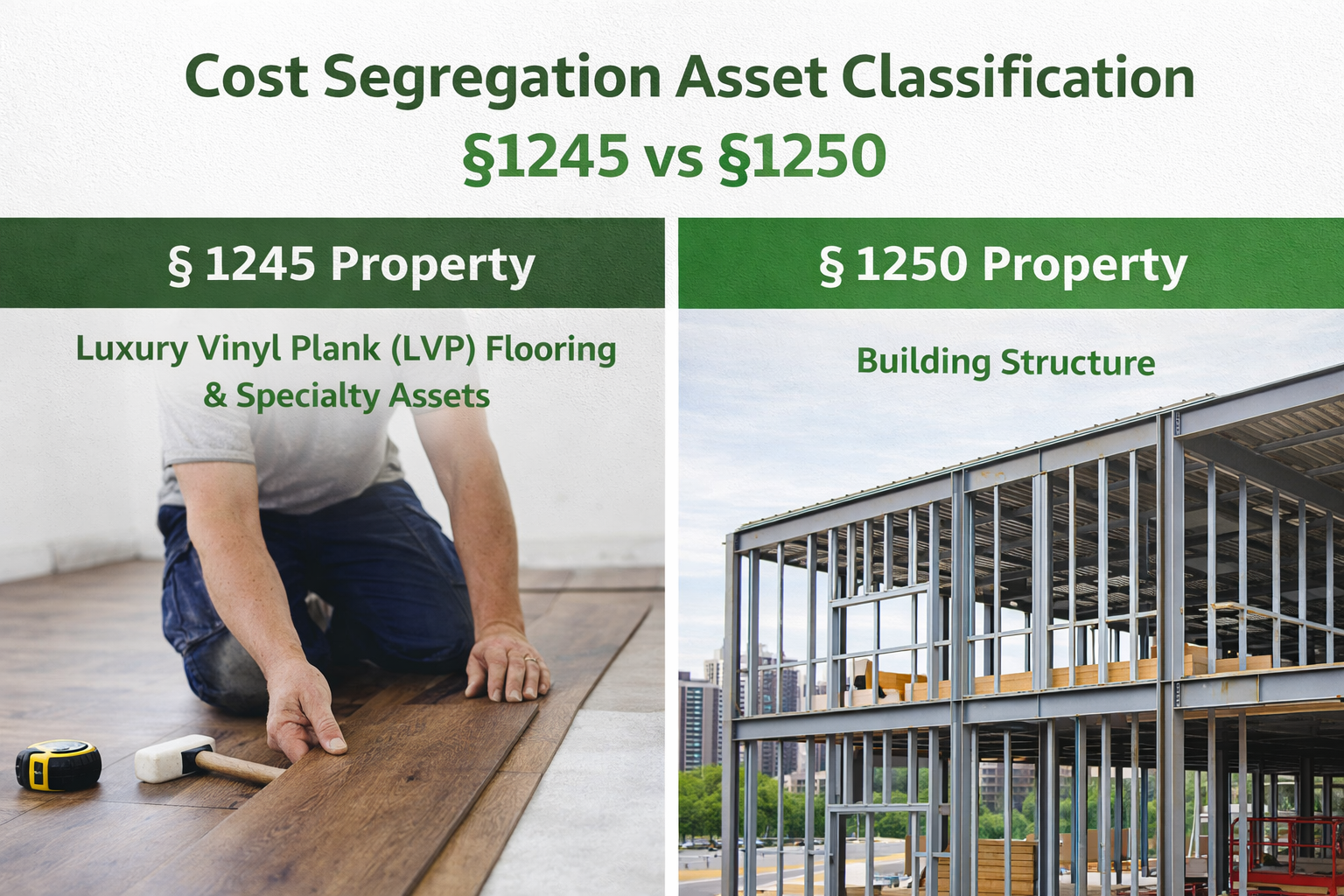
From a tax classification standpoint, this generally involves separating § 1245 property from § 1250 property. Because those determinations are highly fact-specific, documentation and methodology matter. If you want to understand where studies can go wrong, review our article on the risks of overestimating short-life assets.
When Cost Segregation Delivers the Most Value
Not every property produces the same level of benefit. However, cost segregation is often most valuable when:
- The property was recently acquired or constructed
- Significant renovations or improvements were completed
- The owner has substantial taxable income
- Bonus depreciation is available
- The hold period allows the owner to benefit from the accelerated timing of deductions
Renovation-heavy properties may create additional opportunities, especially where interior improvements may qualify under Qualified Improvement Property (QIP). Depending on the facts, combining QIP analysis with a cost segregation study may improve overall depreciation strategy.

Is It Too Late to Perform a Cost Segregation Study?
Many investors assume they missed the opportunity if a property has already been placed in service.
In many cases, that assumption is incorrect.
A cost segregation study can often be performed retroactively. Through IRS Form 3115, taxpayers may be able to capture missed depreciation without amending prior tax returns.
This is one reason timing is important, but not always limiting. If you are evaluating when to act, read more about when to perform a cost segregation study.

Conclusion
Cost segregation is not about creating new deductions.
It is about changing the timing of deductions to improve cash flow earlier in the life of the property.
That timing advantage may help investors increase liquidity, reduce current tax burden, improve reinvestment capacity, and grow a portfolio more efficiently.
For many owners, the better question is not whether cost segregation works.
The better question is whether the property is producing as much cash flow as it could.
If the answer is no, cost segregation may be one of the most effective tax strategies available to improve performance.
Do you have a question about Cost Segregation?
Let us know how we can help
Your information is secure. We only use your details to answer your direct inquiry.