
Irrigation Systems: What Belongs in the 15-Year Cost
Oct 20, 2026Landscape irrigation is easy to see operating but much harder to see as a complete physical asset. Sprinkler heads may be visible above grade, while piping, valves, wiring, and other portions of the system can be concealed below ground or inside enclosures. ATG 2025 identifies qualifying landscape irrigation and sprinkler systems as 15-year land improvements, including in residential rental property guidance. The engineering challenge is therefore not simply recognizing that irrigation exists, but determining what physical components belong to the supported site system. That becomes especially important when the original irrigation cost is buried inside a larger landscaping or site-work contract.
Wondering how much tax you could save with cost segregation? Let’s find out. Schedule a Cost Segregation Strategy Call today.
Key Takeaways
- Landscape irrigation can qualify as 15-year land improvements under applicable ATG guidance.
- An irrigation system can include more than the sprinkler heads visible above grade.
- Underground and bundled irrigation costs can be missed when engineers do not identify the complete physical system.
- Residential and commercial irrigation can share basic components while differing substantially in layout and equipment.
- Engineers should establish system boundaries and quantities before estimating an undocumented irrigation cost.
- A 1,000 SF base irrigation model shows how engineers can build a practical estimate from recurring distribution components plus system add-ons.
- A defensible irrigation cost begins with the actual site system, not an arbitrary percentage of landscaping cost.
What Actually Belongs to an Irrigation System?
An irrigation system is more than a row of sprinkler heads.
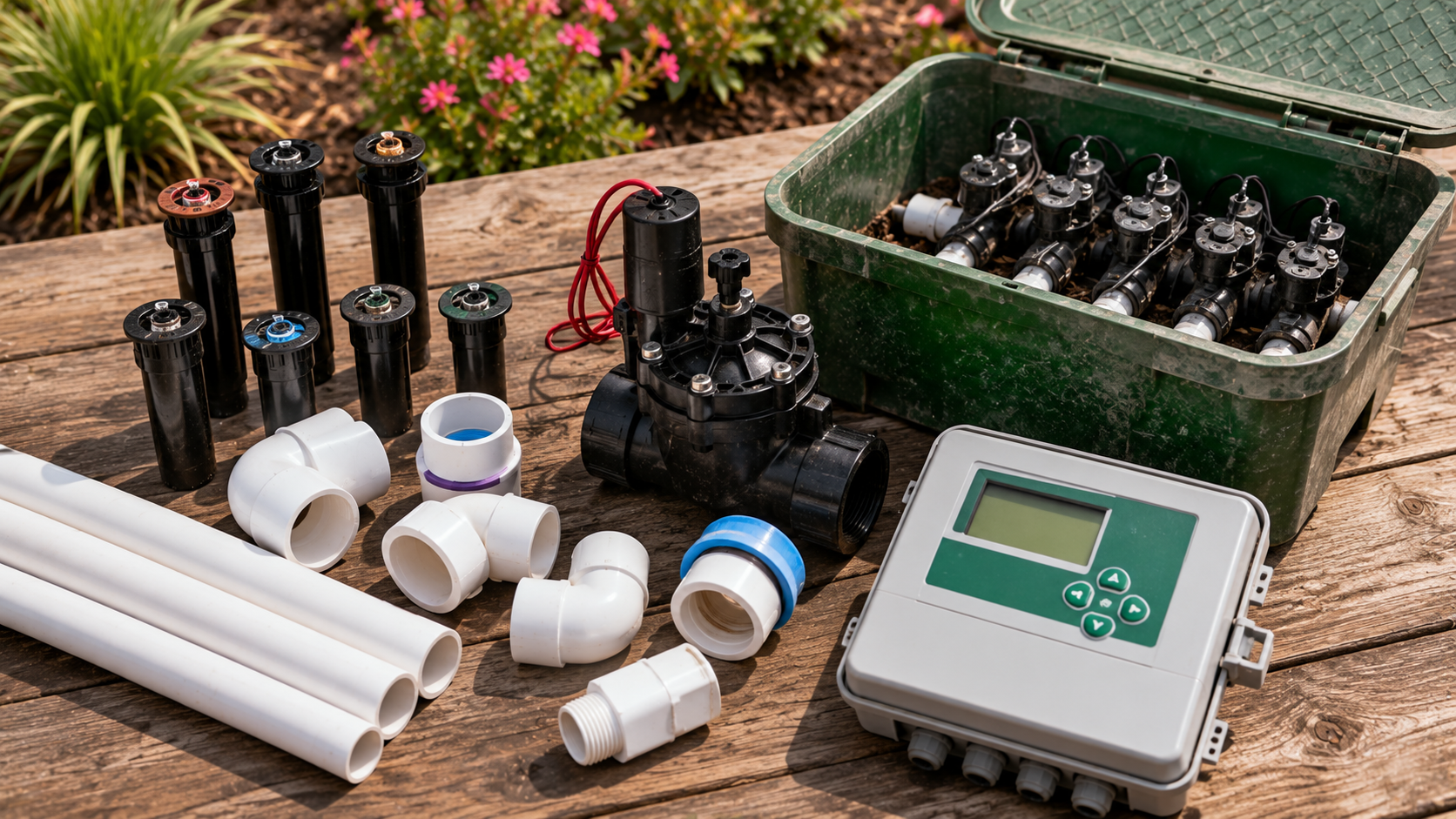
At a typical landscaped property, water must be distributed from an available source to the areas requiring irrigation. Depending on the actual installation, that can involve underground irrigation piping, valves, sprinkler heads or other distribution devices, controls, and associated system components.
ATG 2025 specifically identifies residential lawn and landscaping sprinkler systems as Asset Class 00.3, 15-year land improvements. The guidance describes underground systems used to distribute water for maintaining lawns and landscaping, including sprinkler heads.
The treatment is consistent with the broader concept behind land improvement heavy cost segregation. Depreciable improvements made directly to or added to land can fall into Asset Class 00.3 when the applicable facts and authority support that treatment.
But recognizing the classification is only the beginning.
An engineer still has to determine what physically belongs to that irrigation system.
Follow the Water Through the Site
A useful way to understand irrigation is to follow the system physically.
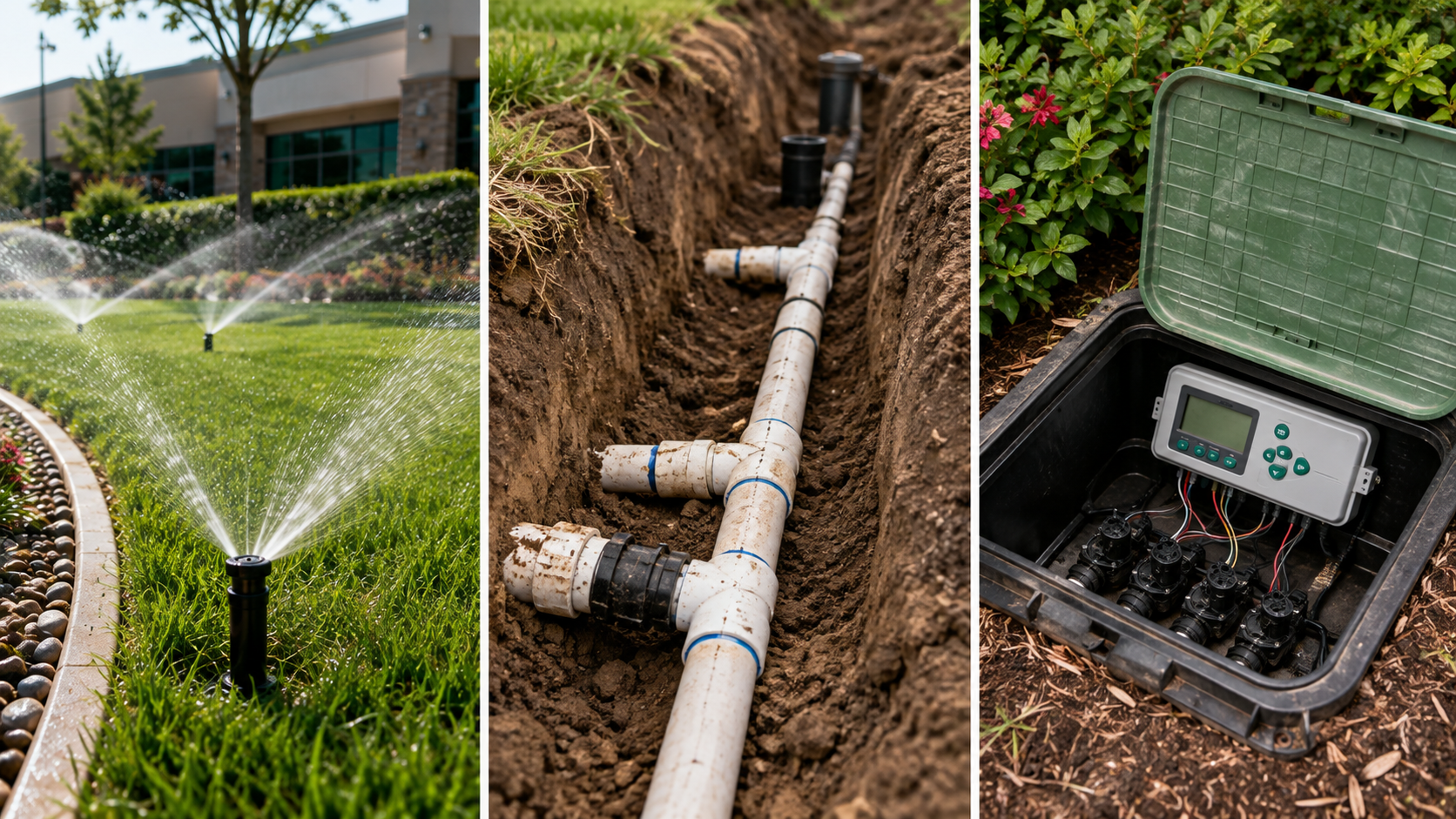
The water enters the irrigation system from an available source. From there, the installation may include controls and valves that divide the landscaped property into irrigation zones. Underground piping distributes water across those areas. Sprinkler heads or other supported distribution components deliver the water to the landscaping.
A larger commercial system may have a different physical configuration from a small residential rental system. The installation can involve more zones, different distribution requirements, additional controls, or pumping equipment where the actual property requires it.
That does not mean every irrigation system contains a pump.
A municipal-water-fed residential sprinkler system, for example, should not be assigned a pump merely because another irrigation installation uses one. Applicable industry guidance can also recognize irrigation site-water systems that include onsite wells, well pumps, and associated components when those conditions actually exist.
This is where the same engineering principles used in MEP systems cost segregation become useful at the site level. Engineers identify the physical components and determine what system they actually serve rather than building a classification from assumptions.
Why Irrigation Cost Can Disappear Inside Site Work
Irrigation presents a practical cost segregation problem because much of the asset may not have a convenient standalone cost.
A construction contract might contain a broad landscaping package. Site work may have been invoiced as a combined scope. An acquisition may provide no original irrigation invoice at all.
Yet the property can still contain a substantial physical irrigation system.
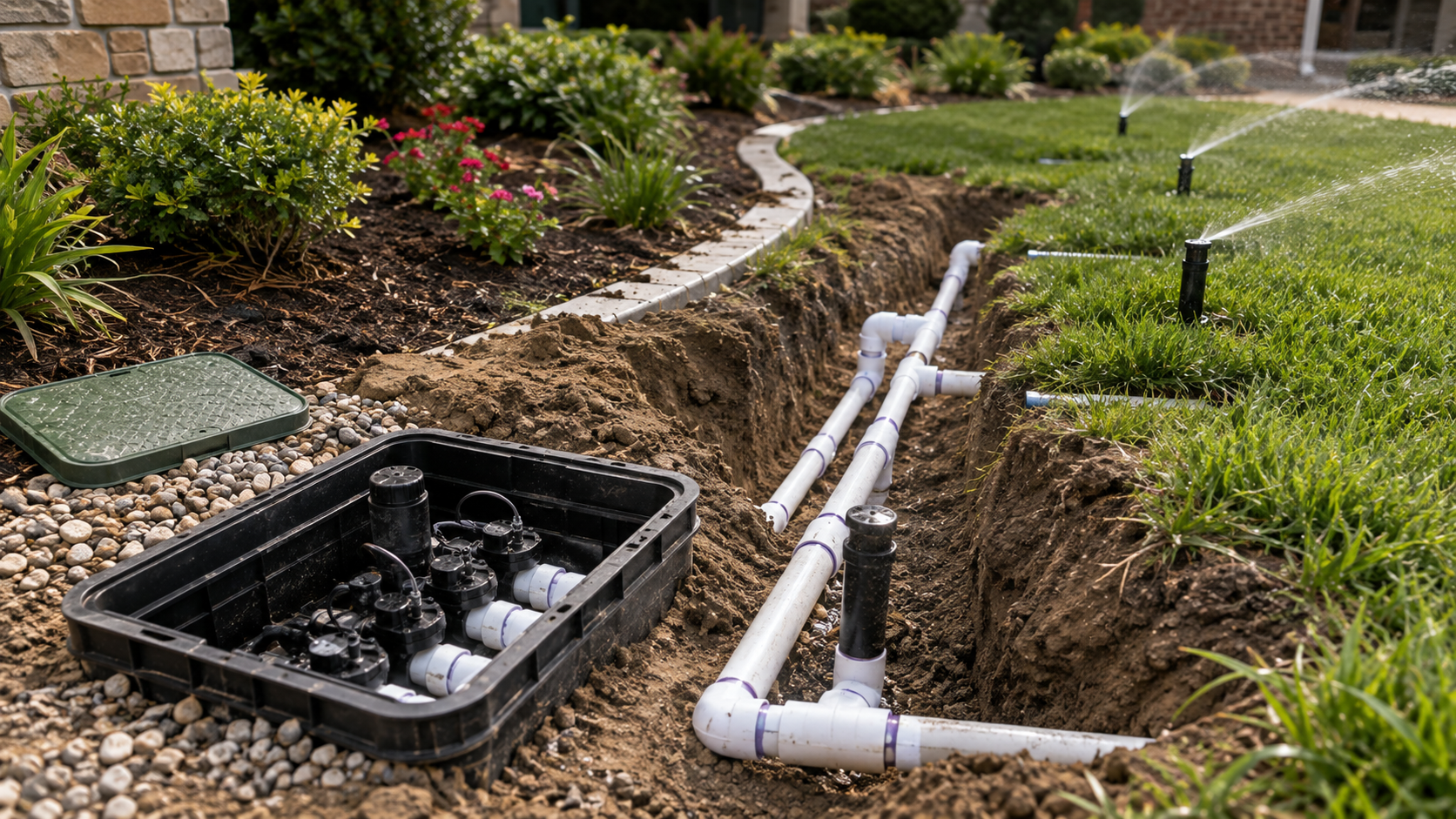
The visible sprinkler heads provide only part of the evidence. Underground piping may extend across landscaped areas. Valves and controllers may serve multiple zones. Other supported components may be present even though they are not obvious during a casual property walkthrough.
That creates two separate engineering questions.
First, what components actually exist?
Second, what cost can reasonably be associated with those components?
Those questions should be answered in that order.
Applying an arbitrary percentage to total landscaping cost skips the physical analysis. Likewise, assigning a generic irrigation cost per square foot without considering the system configuration can create false precision.
CostSegRx engineers can instead use available drawings, site observations, construction documents, equipment information, measured or estimated quantities, and appropriate professional cost-estimation data to develop a supportable estimate when original costs are unavailable.

Residential and Commercial Irrigation
The fundamental job of landscape irrigation is similar across many property types, but the physical installations can look very different.
Residential Rental Irrigation
A residential rental property may have a relatively straightforward lawn and landscape sprinkler system.
ATG 2025 specifically identifies the described lawn and landscaping sprinkler system as 15-year land improvements.
Depending on the actual property, the system may include underground irrigation piping, sprinkler heads, valves, controls, and associated components needed for the supported irrigation installation.
The important point is not to manufacture components that are not there.
If the system does not have a dedicated irrigation pump, a pump does not belong in the inventory or cost estimate.
Multifamily Irrigation
At a multifamily property, irrigation can extend through lawns, landscaped courtyards, perimeter planting areas, entrance landscaping, and other maintained site areas.
The engineering work may therefore involve identifying multiple irrigation zones and understanding how the visible distribution points relate to the broader landscaped site.
A large property also illustrates why sprinkler-head count alone may not capture the complete irrigation asset. The concealed distribution system can be an important part of the physical installation.
Commercial Irrigation
A commercial property can present another scale of site irrigation.
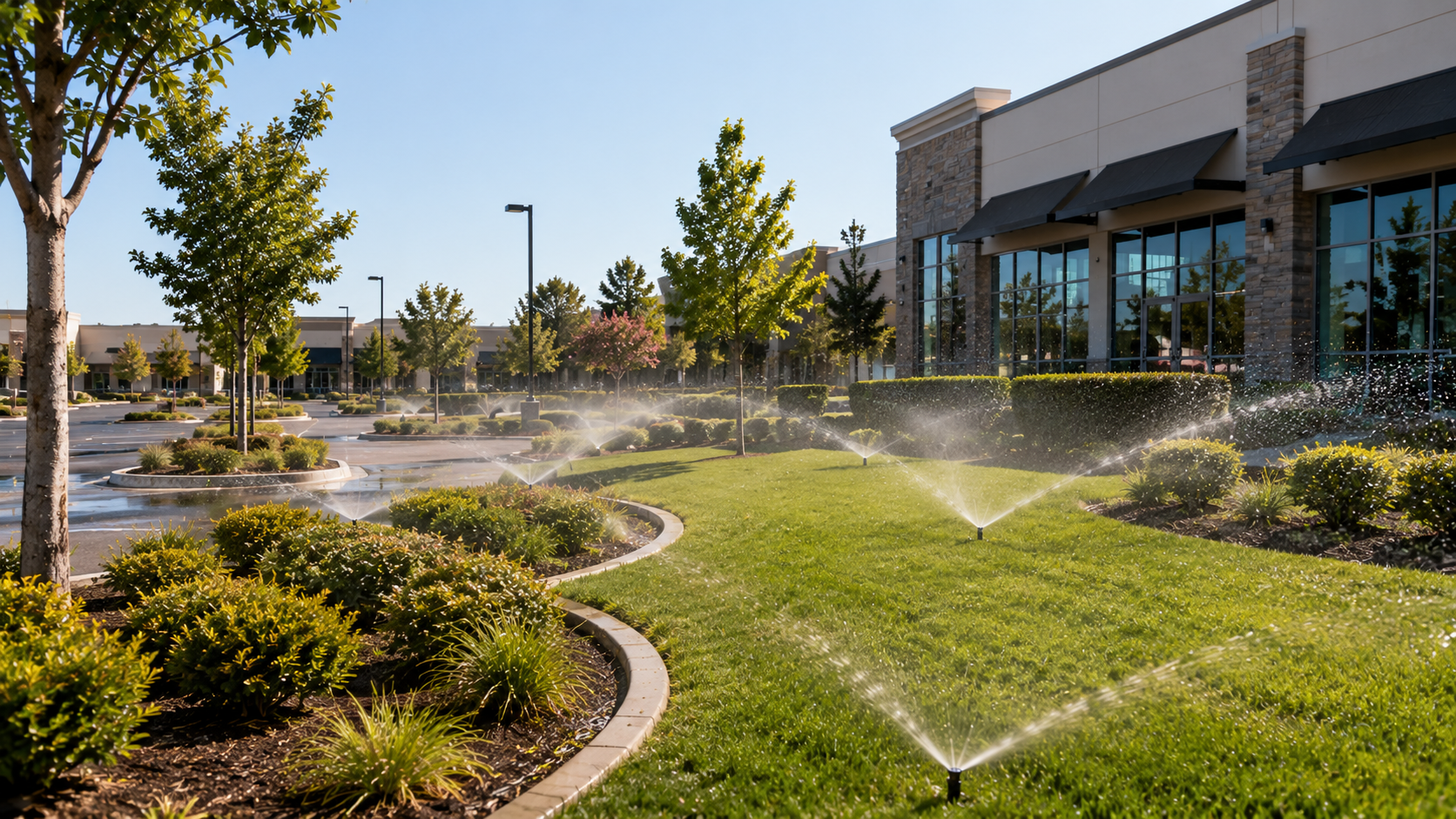
Retail centers, offices, hospitality properties, and other landscaped commercial sites may contain irrigation serving perimeter landscaping, islands, entrance features, lawn areas, and other maintained site improvements.
Where supported by the actual installation, commercial irrigation may also involve additional control or pumping equipment.
Again, those components should be identified because they physically exist, not because they make the estimate larger.
The engineering objective is to reconstruct the actual system as reasonably as the available evidence permits.
Build the System Before Building the Cost
When original irrigation invoices are available and adequately detailed, they can provide direct cost information.
When they are not, the engineer needs another method.
Professional cost-estimation resources such as RSMeans or Marshall & Swift can provide component or assembly pricing, but the engineer still has to decide what belongs in the estimate.
The process starts with the physical system.
For irrigation, CostSegRx engineers can identify the irrigated area, visible sprinkler or distribution devices, available piping information, valves, controls, pumping equipment, and other supported components. Plans and specifications can improve the estimate when available, while field observations and documented engineering assumptions can provide a reasonable basis when concealed quantities are not directly measurable.
Once the physical scope is established, the engineer can create a custom build-up using applicable cost-estimation assemblies and system-level add-ons.
This is consistent with cost segregation audit readiness. A defensible estimate should explain what was valued, which quantities were measured or modeled, and how those quantities relate to the actual property.
Example: A 1,000 SF Irrigation Cost Estimate
When the original irrigation cost is buried inside landscaping or site work, an engineer may need to reconstruct it.
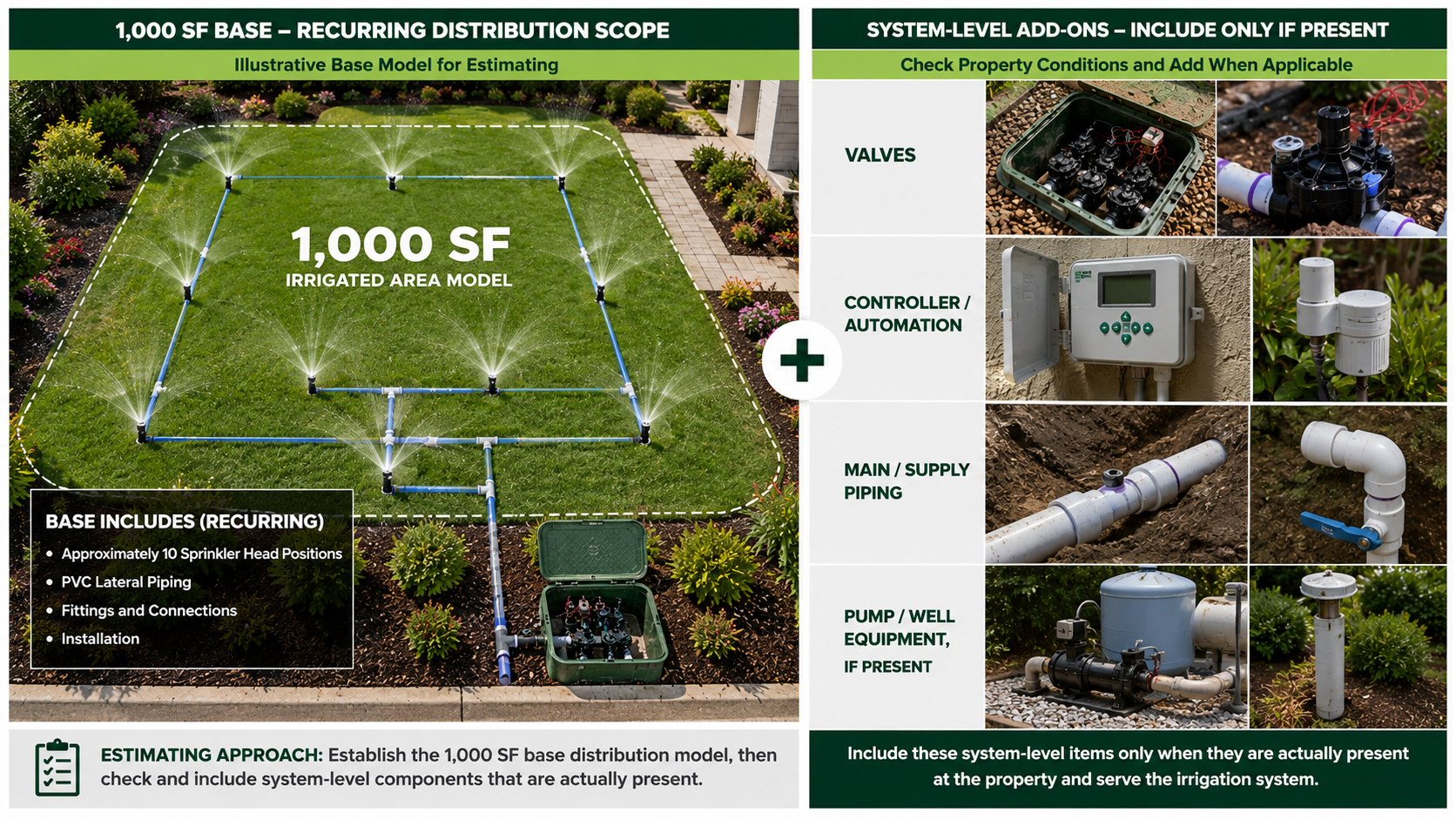
Instead of applying an arbitrary percentage to the landscaping contract, the engineer can build a 1,000 SF base irrigation model using professional cost-estimation data, such as RSMeans or Marshall & Swift, and then add the larger components that actually exist at the property.
The goal is simple: price the recurring distribution system first, then add the equipment that occurs by zone or by system.
1,000 SF Base Irrigation Model
For an illustrative conventional spray-head system, the starting checklist might include:
- Approximately 10 sprinkler head positions
- PVC lateral piping connecting and serving those heads
- PVC fittings and connections
- Installation costs associated with the recurring piping and sprinkler components
The sprinkler quantity is an estimating assumption, not a design requirement. Actual head count and spacing depend on the sprinkler type, landscape geometry, required coverage, pressure, planting conditions, and actual system design.
The PVC allowance should also reflect the modeled layout. If plans are available, the engineer can use actual or takeoff quantities. Otherwise, a reasonable pipe-length allowance can be developed from the selected cost-estimation assembly or a documented representative layout.
Then Check for System Add-Ons
The 1,000 SF base does not necessarily capture equipment that occurs once per zone or once per irrigation system. The engineer should check for:
- Main or supply piping
- Zone valves and valve boxes
- Irrigation controller or automation
- Control wiring
- Backflow or other irrigation-specific supply components, when applicable
- Irrigation pump, if present
- Well and well-pump equipment, if present
- Other irrigation-specific components actually installed
The estimating shortcut is therefore:
1,000 SF base irrigation distribution + applicable system add-ons
For example, a larger irrigated property can use multiple 1,000 SF base units as a starting point. For a smaller area, the engineer can scale the model down to 500 SF or another appropriate unit and adjust the physical quantities accordingly.
Cost Estimation Component Checklist
Before finalizing the estimate, ask:
Distribution
- How much area is actually irrigated?
- How many sprinkler heads are reasonably required?
- How much PVC lateral piping serves those heads?
- What fittings and recurring connections are included?
System
- How many zones and valves are present?
- Is there a controller or automated control system?
- Is separate main or supply piping required?
- Is there an irrigation pump?
- Is there a well or well pump?
- Are there other irrigation-specific components that need to be included?
Cost Support
- Are original invoices or irrigation plans available?
- Can quantities be measured or taken from drawings?
- Which professional cost-estimation components or assemblies best represent the actual installation?
- Are any quantities estimated rather than directly observed?
Cost Estimation Note: This checklist is a starting framework, not a standard irrigation design or universal cost-per-square-foot formula. Every irrigation estimate should be tailored to the system actually present at the property. Head count, pipe length, zones, controls, water supply, pumps, and other components can vary substantially. Engineers should use available plans, field observations, specifications, project documentation, and appropriate professional cost-estimation data to support the property-specific estimate.
The important shortcut is not “irrigation costs $X per square foot.”
It is:
Build a reasonable 1,000 SF distribution unit, multiply it across the irrigated area, add the system-specific equipment, and document the assumptions.
That gives the engineer a repeatable starting point without pretending every irrigation system is designed or priced the same way.
Start With the Irrigation System, Not a Percentage
Irrigation is a good example of how cost segregation combines classification with engineering cost development.
Applicable ATG guidance supports qualifying landscape irrigation as 15-year land improvements, including the residential lawn and landscaping sprinkler-system condition discussed above. But identifying the recovery period does not automatically tell an engineer how much cost belongs in that category.
The physical system still has to be identified.
Underground piping, sprinkler heads, valves, controls, and applicable pumping equipment can contribute to the irrigation scope when those components are actually present and supported. Original invoices and drawings may establish those costs directly. When they do not, CostSegRx engineers can develop an estimate from the physical system using documented quantities, reasonable modeling where necessary, and appropriate cost data.
A 1,000 SF base model is useful because it gives engineers a practical shortcut while still forcing them to think through the complete component list.
Identify the system first. Build the recurring distribution cost second. Add the system-specific equipment third.
That is a much stronger engineering basis than assigning an unsupported percentage to landscaping and calling it irrigation.
Do you have a question about Cost Segregation?
Let us know how we can help
Your information is secure. We only use your details to answer your direct inquiry.