
Decks: Attached vs. Freestanding
Oct 15, 2026Two decks can be built from similar lumber or composite materials, provide similar outdoor space, and still fall into different recovery periods. In residential rental property, ATG 2025 draws an important distinction between a deck attached to the residence or other building and an inherently permanent freestanding deck that is not attached to a building. That makes decks a good example of why exterior location and appearance alone do not establish 15-year land improvements. Engineers need to determine how the deck relates physically and functionally to the building. For CostSegRx engineers, the classification starts with that relationship, not with the word “deck.”
Wondering how much tax you could save with cost segregation? Let’s find out. Schedule a Cost Segregation Strategy Call today.
Key Takeaways
- An attached residential rental deck and a freestanding deck can have different recovery periods.
- The engineering analysis examines whether the deck is attached to the building or exists as a separate site improvement.
- ATG 2025 identifies the described attached deck as 27.5-year residential rental property and the described freestanding deck as 15-year land improvements.
- Second-story decks, stairs, ramps, freestanding decks, and patios help illustrate the building-to-site boundary.
- Engineers should document the actual physical configuration rather than classify a deck from its name or exterior location.
- Two similar-looking residential decks can receive different treatment when one is attached and the other is freestanding.
- For residential rental decks, the relationship to the building can change the classification.
What Kind of Deck Is Actually There?
A deck is usually easy to recognize physically. The classification question is more specific: what kind of deck is it, and how does it relate to the building?
ATG 2025's residential rental property matrix describes a deck as a platform typically made of lumber or composite that is attached to a residence or other building. The description notes that the deck often contains stairs or ramps extending from building-floor level to ground level. The matrix identifies that condition as § 1250 27.5-year residential rental property.
The same matrix has a separate entry for Decks/Gazebos (Freestanding). It describes inherently permanent decks and gazebos that are not attached to buildings and places that condition in Asset Class 00.3, 15-year land improvements.
That distinction illustrates a broader principle in land improvement heavy cost segregation: being outdoors does not automatically make something a land improvement.
The physical relationship to the building matters.
Attachment Creates an Important Engineering Boundary
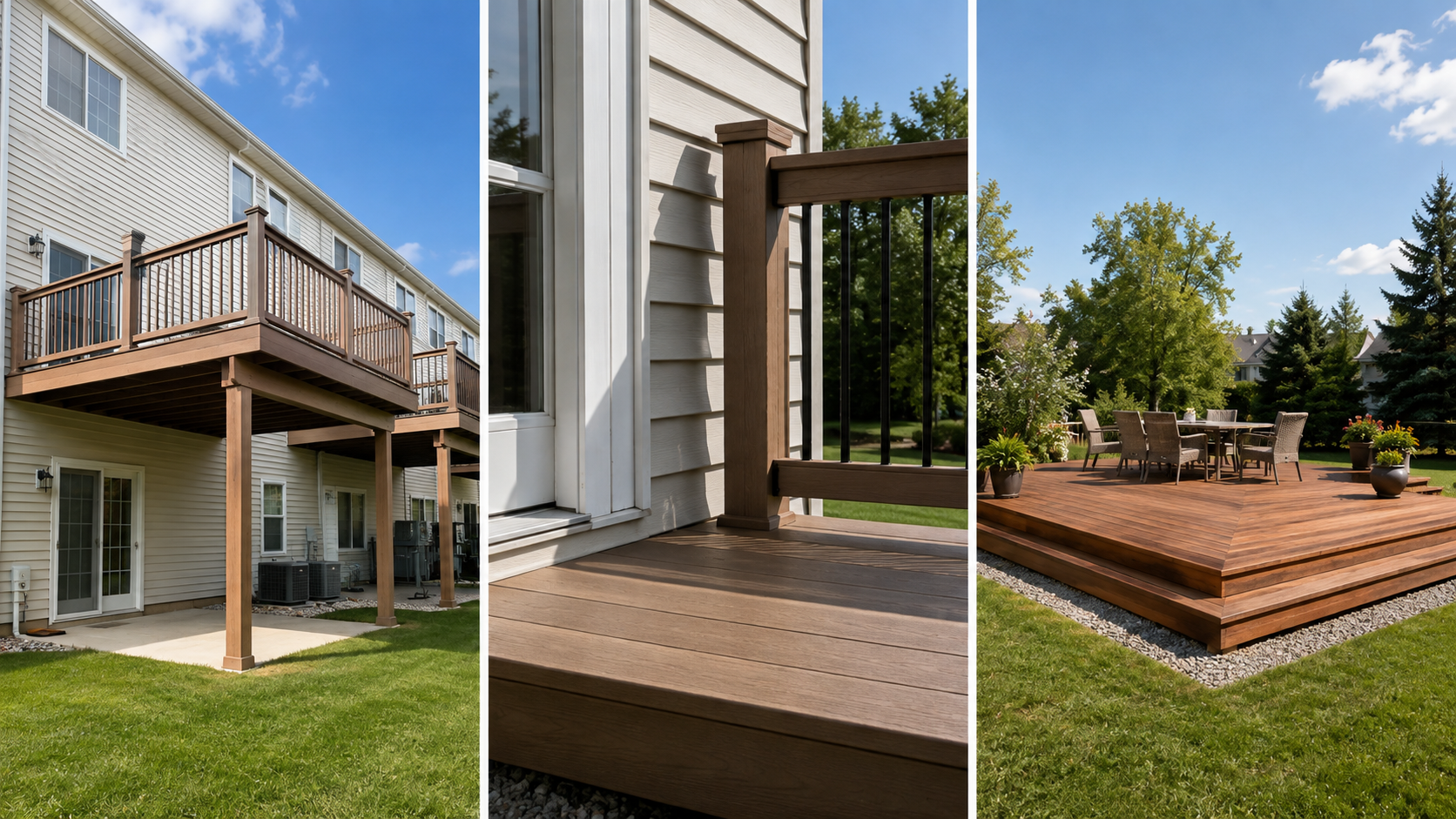
Consider a second-story deck outside an apartment unit.
The platform may project beyond the exterior wall. It may be supported above grade. It may have guardrails, stairs, or other exterior construction. None of those facts, standing alone, means the deck is 15-year land improvements.
Under the ATG residential rental fact pattern, the key described condition is that the deck is attached to the residence or other building. That attached condition is classified as 27.5-year residential rental property.
Now compare that with a freestanding deck located elsewhere on the property. If it is inherently permanent but is not attached to a building, the ATG residential matrix places the described condition in Asset Class 00.3, 15-year land improvements.
This is why engineering asset classification requires more than identifying construction materials. Similar decking boards, railings, posts, and finishes do not establish the same tax treatment when the physical configurations differ.
The classification boundary is not wood versus composite, elevated versus ground-level, or expensive versus inexpensive.
For the ATG residential deck distinction discussed here, attachment to the building is central.
Why Exterior Does Not Automatically Mean 15 Years
Exterior assets can be deceptive in cost segregation.
It is tempting to treat everything outside the building envelope as a site improvement. ATG 2025 does not support that shortcut.
Its residential rental guidance defines land improvements as depreciable improvements directly to or added to land, while excluding buildings and structural components. Examples can include sidewalks, roads, drainage facilities, fences, landscaping, bridges, and other qualifying site improvements. Asset Class 00.3 land improvements are recovered over 15 years.
But the same residential matrix separately identifies several exterior conditions that remain associated with the building.
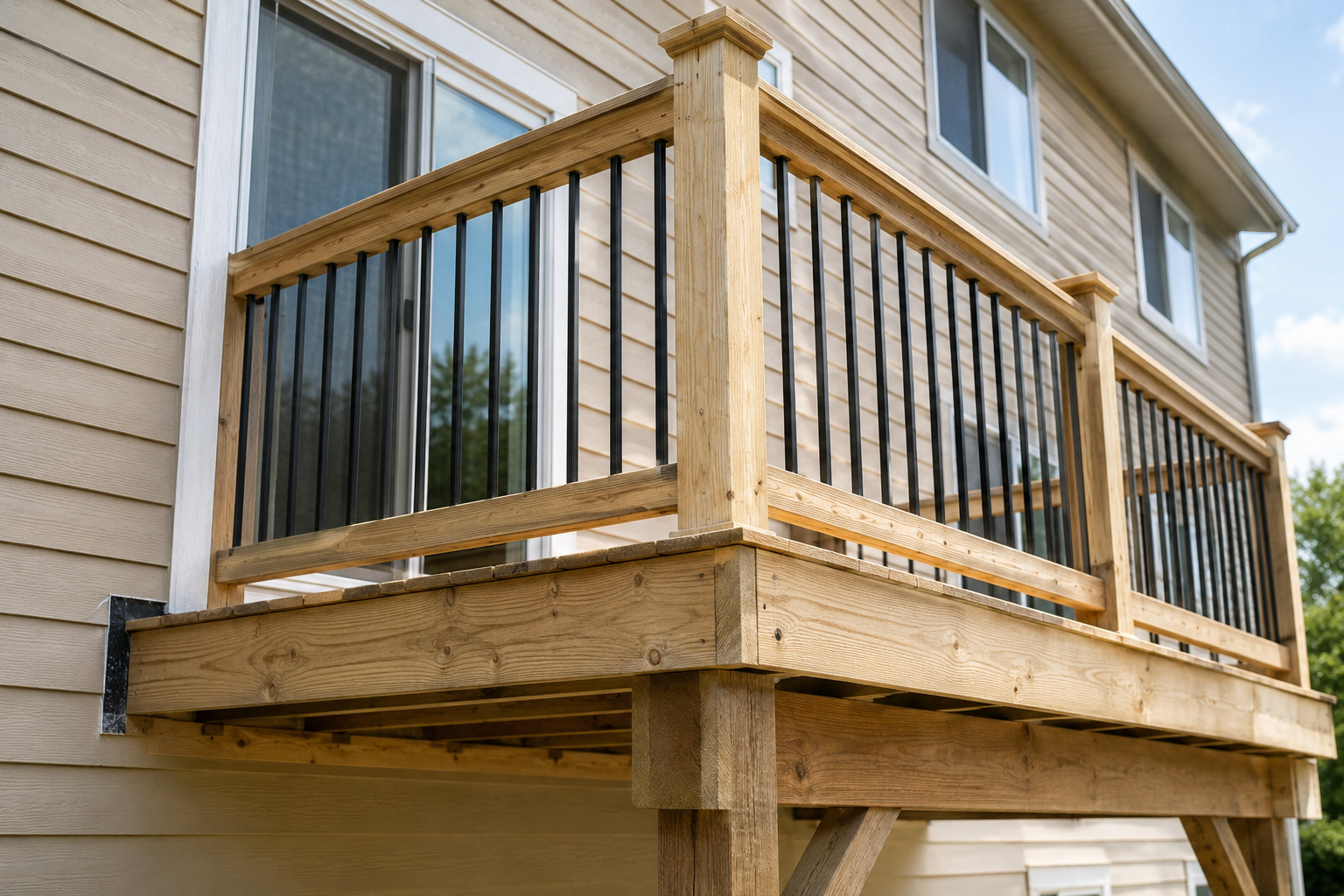
A balcony, for example, is described as a platform typically on the outside of a building with access from an upper-floor door or window, and the matrix identifies it as 27.5-year residential rental property.
An attached deck is also 27.5-year residential rental property under its described fact pattern. A freestanding deck, by contrast, is identified as 15-year land improvements.
The lesson is straightforward: location outside the exterior wall is not enough.
Engineers need to determine whether the physical asset belongs with the building or exists as a separate site improvement.
Second-Story Decks, Stairs, Freestanding Decks, and Patios
Several residential conditions help make the distinction easier to see.
Second-Story Attached Deck
A second-story deck attached to an apartment or other residential rental building falls squarely within the type of attached deck condition described by the residential rental matrix. Under that ATG fact pattern, it is 27.5-year residential rental property.
Its elevation does not convert it into a land improvement.
Stairs From an Attached Deck
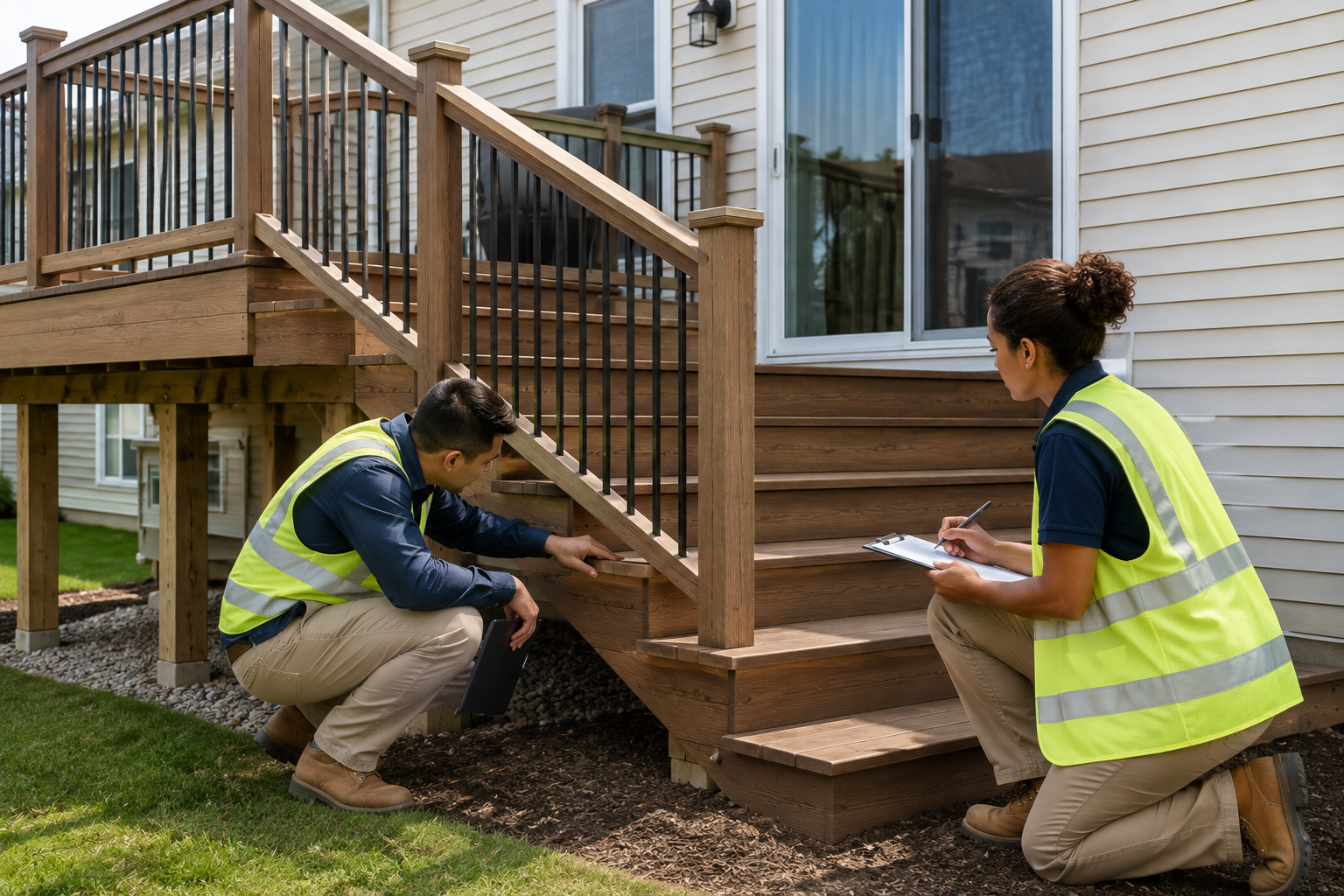
The deck description itself recognizes that attached decks often contain stairs or ramps from building-floor level to ground level. ATG 2025 also separately identifies stairs leading from one floor or level to another and related to the operation or maintenance of a residential building as 27.5-year residential rental property.
That means an engineer should not automatically carve the stairs off an attached residential deck and call them 15-year land improvements merely because the stairs eventually reach the ground.
The physical and functional relationship to the building needs to be respected.
Freestanding Deck
Move the outdoor platform away from the building and the analysis can change.
ATG 2025 identifies an inherently permanent deck that is not attached to a building as Asset Class 00.3, 15-year land improvements.
This is the cleanest contrast with the attached deck.
Ground-Level Patio
A patio provides another useful comparison. The residential matrix describes a patio as a ground-level paved outdoor area adjoining a residence or other building, typically constructed of concrete, stone, brick, or pavers. That condition is identified as Asset Class 00.3, 15-year land improvements.
So even adjacency to the building does not automatically make an exterior surface part of the building.
The actual asset and the applicable ATG category matter.
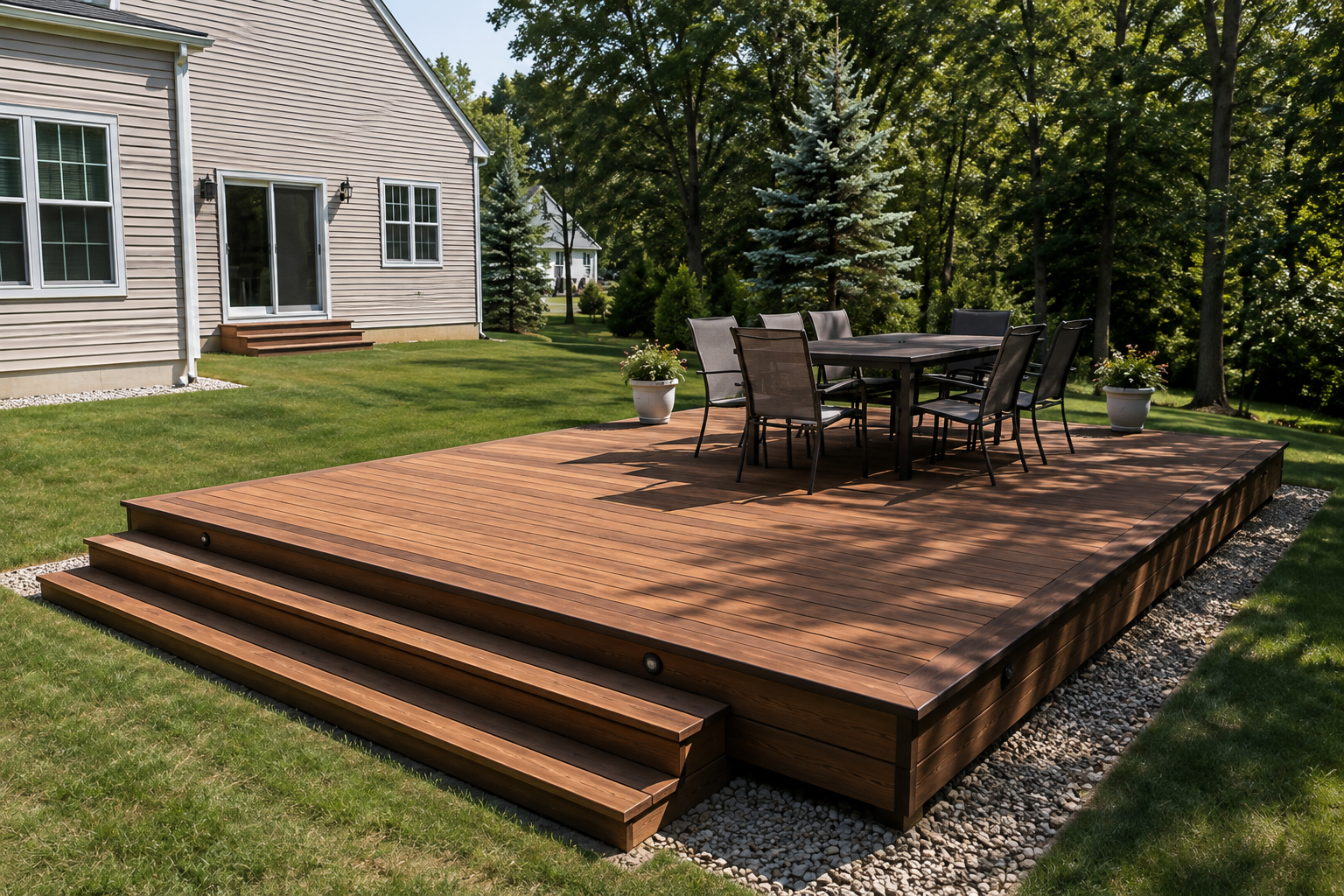
Document the Relationship, Not Just the Deck
For a cost segregation study, labeling an asset “exterior deck” is not enough.
CostSegRx engineers should identify the physical condition that supports the classification. Relevant observations can include whether the deck is attached to the building, whether it is freestanding, how it relates to building access, whether stairs or ramps form part of the building-related condition, and which supporting construction belongs to the deck being evaluated.
This is consistent with the engineering principle that cost segregation audit readiness depends on being able to explain why an asset received its classification.
Photographs can be particularly useful here. An image showing a second-story deck physically connected to an apartment building communicates a materially different condition from a freestanding platform located separately on the property.
Construction documents, site plans, architectural drawings, and field observations can provide additional support when the relationship is not obvious.
The objective is not to call as many decks as possible 15-year land improvements. It is to identify the actual physical condition and apply the recovery period supported by the applicable authority.
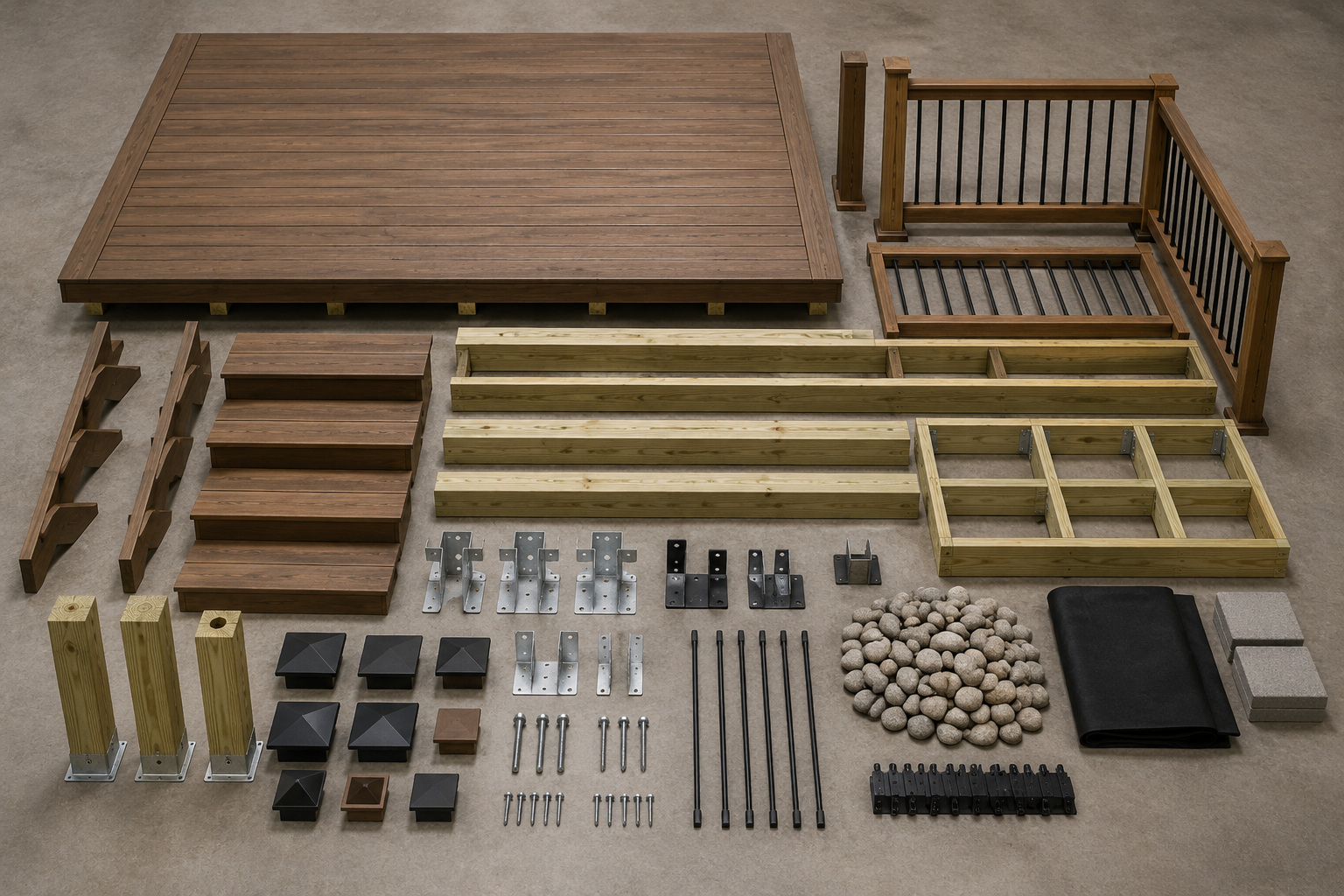
Example: Two Decks, Two Recovery Periods
Consider a residential rental property containing two outdoor decks.
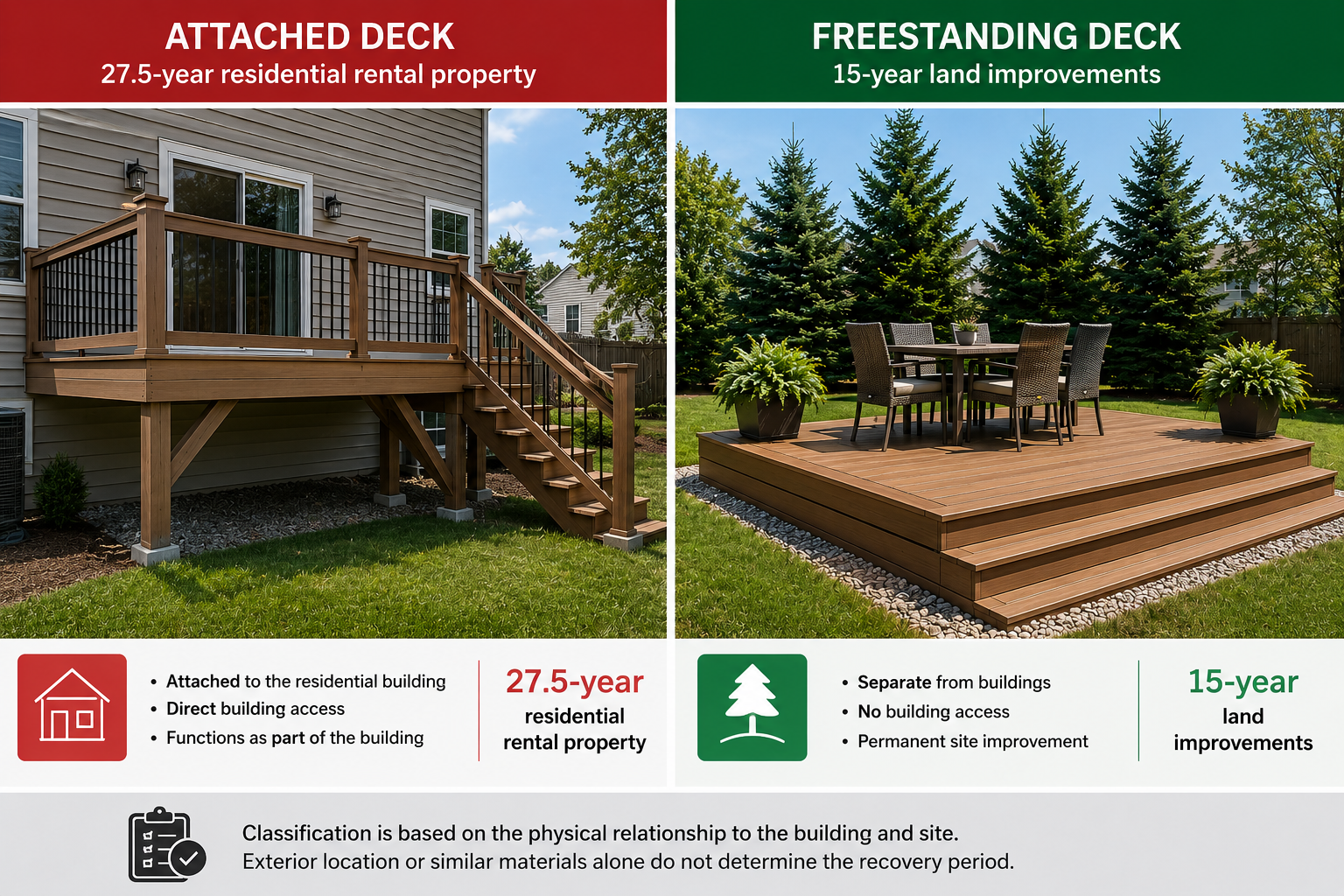
The first deck projects from a second-story apartment unit and is attached to the residential building. Residents enter it directly from the building, and the physical condition fits the attached-deck description in the ATG residential rental matrix.
Under that fact pattern, the deck is § 1250 27.5-year residential rental property.
Elsewhere on the same property is another permanent outdoor deck. It is physically separate from the residential building and is not attached to another building. Assume its construction fits the ATG description of an inherently permanent freestanding deck.
Under that fact pattern, the second deck falls within Asset Class 00.3, 15-year land improvements.
Both may use similar decking materials. Both may have railings. Both may provide outdoor space for residents.
But one is physically attached to the residential building and the other is freestanding.
That difference changes the classification under the ATG residential rental guidance.
The Word “Deck” Does Not Determine the Recovery Period
Decks are a strong example of why cost segregation requires physical engineering analysis.
An attached residential rental deck can be 27.5-year residential rental property. An inherently permanent freestanding deck not attached to a building can be 15-year land improvements. Related stairs can remain part of the building-related condition, while a ground-level patio can present a separate 15-year land improvement condition.
The classification does not come from the material, appearance, elevation, or the simple fact that the asset is outdoors.
It comes from identifying what was actually constructed and how that physical asset relates to the building and site.
That is exactly the kind of boundary CostSegRx engineers look for when similar-looking property can legitimately fall into different recovery periods.
Do you have a question about Cost Segregation?
Let us know how we can help
Your information is secure. We only use your details to answer your direct inquiry.