
Interior Door Assemblies: When QIP 15-Year Property Applies
Oct 27, 2026Interior doors can look like one of the simplest components in a commercial renovation. An old door comes out, a new door goes in, and the surrounding room may look almost exactly the same. But that simple physical change raises an important cost segregation question: can replacing an interior door assembly itself qualify as QIP 15-year property, or does QIP require a larger interior buildout? The answer should begin with the actual improvement, not with the assumption that every new interior door receives the same treatment. For CostSegRx engineers, that means identifying what was replaced or constructed, where the work occurred, when the building and improvement were placed in service, and whether the improvement falls within the QIP definition and its exclusions.
Wondering how much tax you could save with cost segregation? Let’s find out. Schedule a Cost Segregation Strategy Call today.
Key Takeaways
- An interior door assembly is a physical building improvement that should be evaluated based on the actual work performed.
- QIP analysis does not require assuming that an entire room or tenant space must be rebuilt.
- A replacement door in an otherwise unchanged area can still require a separate QIP analysis.
- New buildout doors and replacement doors can appear in the same renovation project.
- Engineering documentation helps establish which doors were improved and how each scope relates to the existing building.
- Two groups of new doors in the same building can reach the QIP question through different construction scopes.
- The door's location and new appearance do not determine QIP treatment by themselves.
What Exactly Is the Interior Door Improvement?
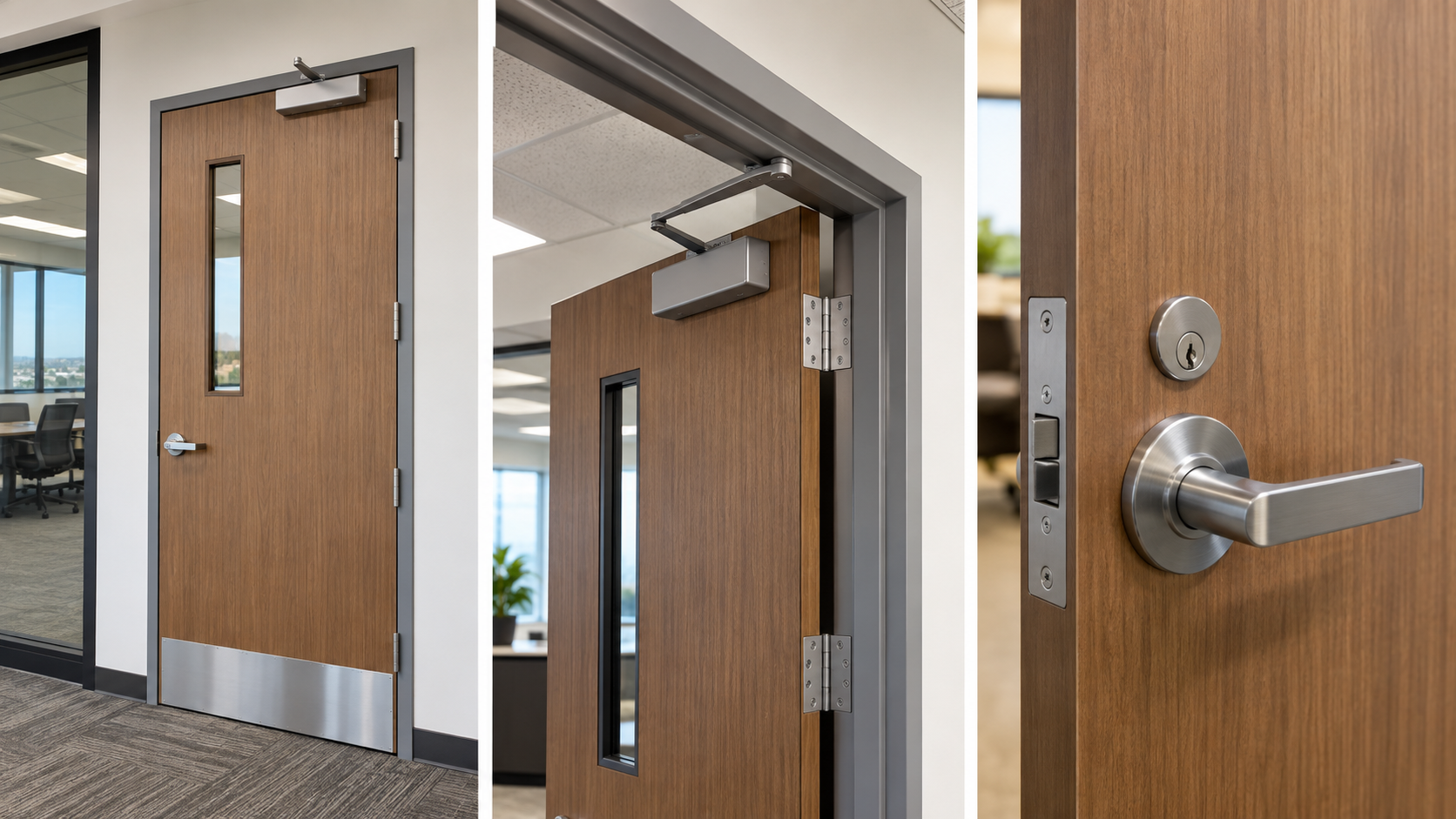
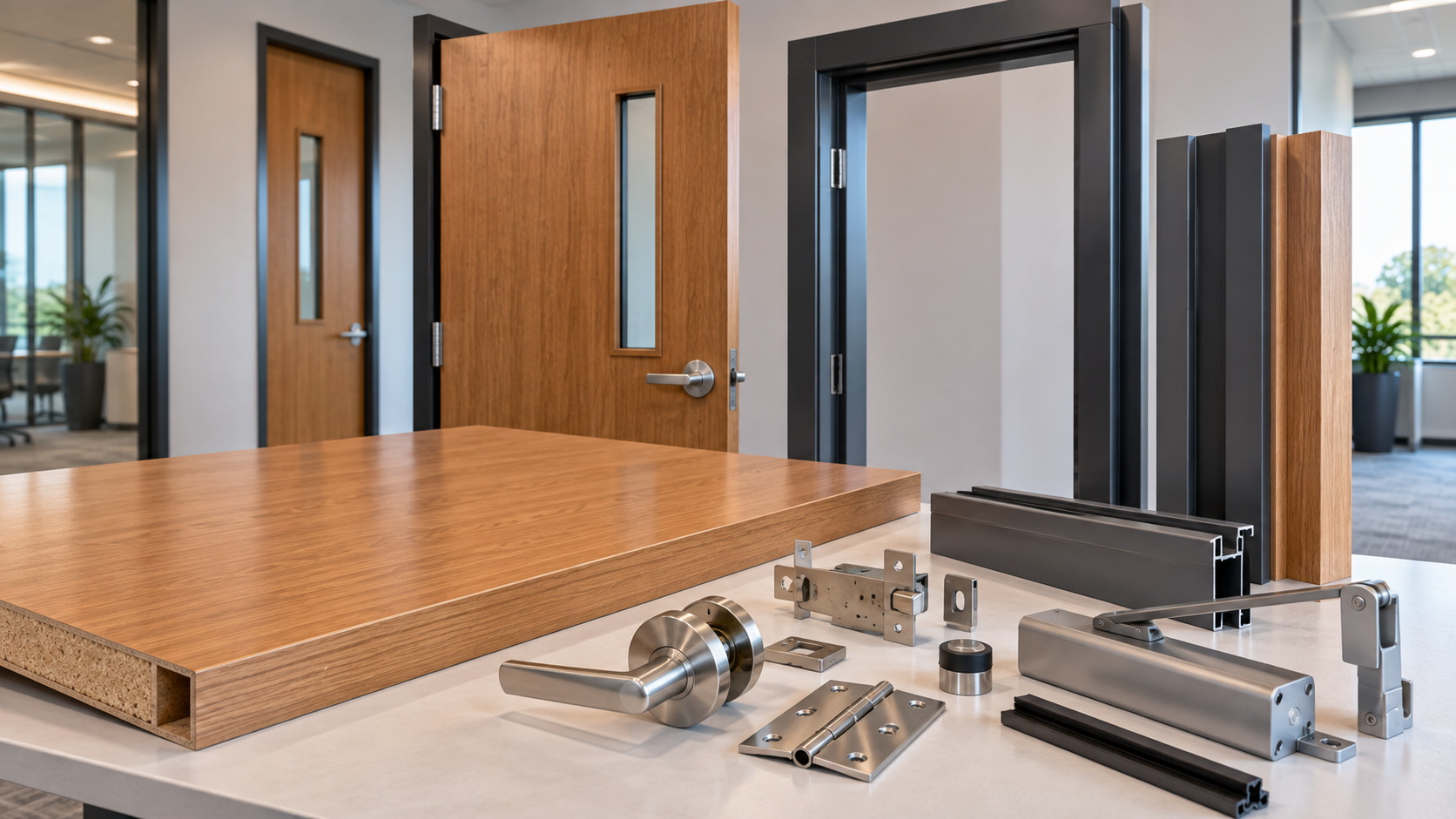
An interior door assembly is more than the visible door leaf. Depending on the actual construction scope, a project may involve a door, frame, hinges, closer, lockset, handles, kick plates, automatic opener, or other associated hardware. The IRS Cost Segregation Audit Technique Guide, or ATG, includes doors and related door hardware among building components in several industry-specific asset matrices. For example, its auto dealership matrix describes interior and exterior doors and related hardware as §1250 building or building components with a 39-year recovery period.
That is an important starting point, but it does not answer the QIP question.
QIP is a separate analysis concerning an improvement to the interior portion of an existing nonresidential building. The ATG describes QIP as an improvement to an interior portion of a building when the improvement is placed in service after the building was first placed in service, and it notes that the CARES Act clarified that the improvement must be made by the taxpayer. It also identifies statutory exclusions for enlargement of the building, elevators or escalators, and the building's internal structural framework.
This distinction is why calling something a "door" does not finish the analysis. A door may ordinarily be a building component, while an improvement involving that building component may still need to be evaluated under the QIP rules.
For a broader explanation of those rules, see What Is Qualified Improvement Property (QIP)? Tax Strategy for Commercial Renovations.
How Replacement Doors Enter the QIP Analysis
Consider an existing office building that has already been placed in service. Years later, the taxpayer undertakes an interior renovation.
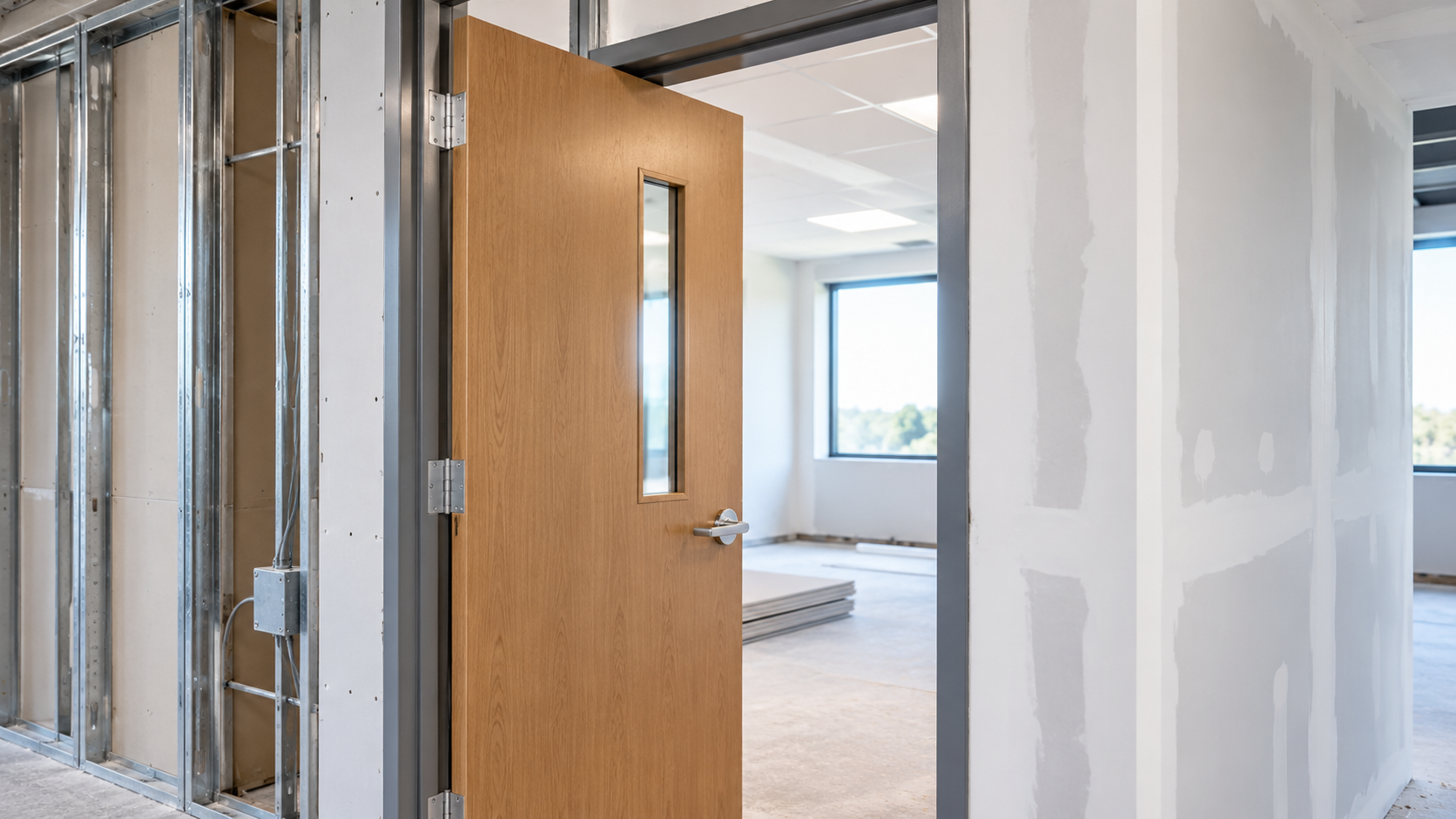
One portion of the project is a complete interior buildout. New partitions are constructed, openings are created, and new interior door assemblies are installed.
Elsewhere in the same building, the layout does not change. Existing walls remain. Existing rooms remain. The taxpayer simply removes existing interior door assemblies and installs new ones.
It can be tempting to treat those two scopes differently based only on how extensive they look. The buildout feels like an "improvement," while the door replacement feels like maintenance of an existing building.
That visual distinction is not enough.
The QIP definition described in the ATG does not state that the taxpayer must rebuild an entire room, relocate partitions, or complete a full tenant buildout before an interior improvement can qualify. It focuses instead on an improvement to an interior portion of an existing building, subject to the timing, taxpayer, and exclusion requirements.
That means the replacement-door scope should be examined on its own facts. The engineering question is not simply, "Did the surrounding walls change?" It is, "What improvement did the taxpayer actually make?"
This distinction also illustrates why an engineering cost segregation process starts with the physical work rather than assigning a recovery period based on an asset name.
Why an Unchanged Room Does Not End the Analysis
Suppose a commercial property owner replaces every interior door in an existing building, but only one portion of the building receives a larger buildout.
The new doors installed in the buildout are easy to associate visually with a renovation. The replacement doors throughout the unchanged areas are less obvious because the walls, corridors, and room layouts surrounding them remain intact.
But the unchanged surrounding construction does not mean that no improvement occurred. The door replacement itself is physical work performed on the building's interior. The correct question is whether that work satisfies the applicable requirements for QIP.
For QIP placed in service after December 31, 2017, the ATG identifies a 15-year GDS recovery period and a 20-year ADS recovery period. It also explains that the CARES Act retroactively changed the GDS recovery period from 39 years to 15 years.
So the distinction can matter materially to depreciation treatment even when the physical construction seems routine.
It is equally important not to reverse the logic and conclude that every replaced interior door is automatically QIP. Being new is not enough. Being inside the building is not enough. Being part of a renovation is not enough by itself. The actual improvement must satisfy the applicable requirements.
That is why commercial renovation tax planning benefits from identifying individual improvement scopes rather than treating the entire renovation as one undifferentiated construction project.

Where This Appears in Commercial Properties
The issue can arise anywhere an existing nonresidential building undergoes interior work.
An office owner might renovate one tenant suite while replacing worn doors throughout common corridors. A retail property could receive a new tenant buildout while other existing interior doors are replaced elsewhere. A medical office building could undergo room renovations along with a broader door replacement program. A hotel, warehouse office area, or other nonresidential property could present similar construction scopes.
The property type does not resolve the classification. Neither does the fact that the project is called a remodel, tenant improvement, refresh, or capital improvement.
The physical scope matters.
CostSegRx engineers may need to distinguish new doors installed with new partitions from replacement doors installed in existing openings. Construction drawings, invoices, photographs, project scopes, schedules, and field observations can help establish what actually occurred.
The analysis can become especially important in leased commercial spaces, where buildout scopes can contain several different types of property and improvements. Our article on cost segregation for tenant build-outs in leased spaces discusses that broader setting.
Document the Improvement Before Classifying It
A defensible analysis should not begin by creating a list called "QIP doors."
Begin with the construction.
Which doors existed before the project? Which were removed? Which openings remained unchanged? Which openings were newly constructed? Were frames replaced along with the doors? What associated hardware was included in the scope? Was the work performed on the interior portion of an existing nonresidential building? When was the building first placed in service, and when was the improvement placed in service? Was the improvement made by the taxpayer? Does one of the statutory exclusions apply?
Not every question will require an engineer to make a tax determination. But the engineering documentation should establish the physical facts that allow the classification to be supported.
This is also why a quality cost segregation study needs more than a spreadsheet of asset names. The ATG identifies appropriate documentation, engineering take-offs, asset organization, and explanation of legal analysis among the principal elements considered in a quality cost segregation study.
For door replacements, the objective is not to find a reason to move every door into QIP 15-year property. It is to document the actual improvement and determine which treatment the facts and applicable authority support.
Example: New Buildout Doors and Replacement Doors in the Same Building
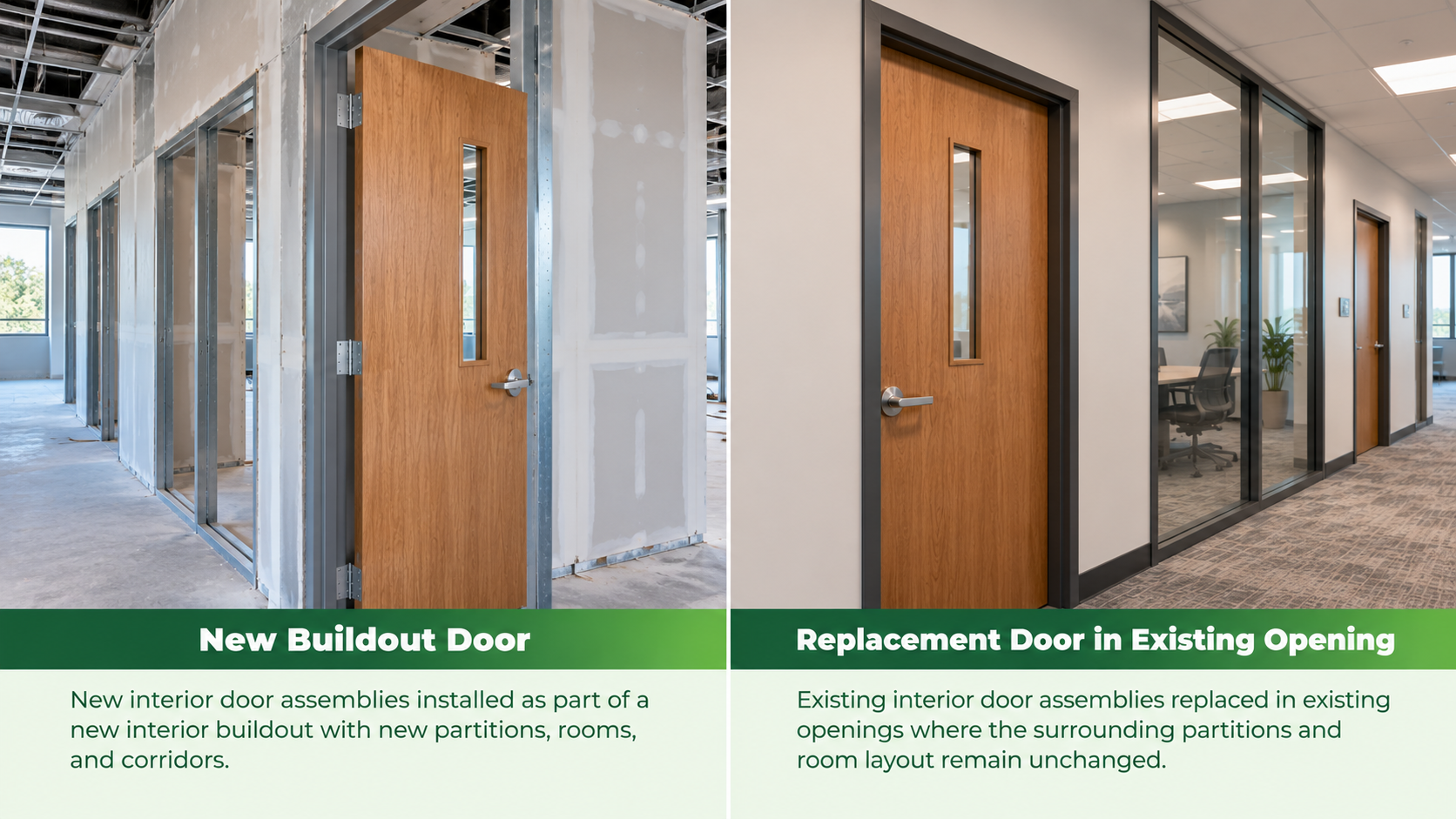
Consider an existing nonresidential building that was placed in service before the current renovation. The taxpayer later completes one renovation project containing two door scopes.
Scope A: New buildout doors
One area receives a new interior buildout. New partitions create rooms and corridors, and new interior door assemblies are installed within that new interior construction.
Those doors are part of a larger improvement to the building's interior. The QIP analysis asks whether the improvement satisfies the applicable definition, including the placed-in-service sequence, taxpayer requirement, and statutory exclusions.
Scope B: Replacement doors in unchanged areas
Elsewhere in the same building, the existing partitions and room layouts remain. The taxpayer removes existing interior door assemblies from existing openings and installs new interior door assemblies.
There is no need to pretend that the surrounding walls were reconstructed. They were not.
Instead, the replacement of the door assemblies is the physical improvement being examined. The absence of a larger buildout does not, by itself, answer whether that improvement is QIP. The replacement scope should be tested against the same applicable QIP requirements.
If the requirements are satisfied and no exclusion applies, the fact that Scope B did not include new walls does not by itself prevent the door improvement from being QIP 15-year property. Conversely, neither Scope A nor Scope B should be classified as QIP merely because the doors are new and located inside the building.
That is the central engineering lesson.
The amount of surrounding construction is not the classification test. The actual improvement and the applicable QIP requirements control the analysis.
Start With the Door, Then Follow the Improvement
Interior door assemblies demonstrate why cost segregation classification cannot be reduced to a list of construction names.
A door may be a building component. A taxpayer may later improve that component. When the work occurs inside an existing nonresidential building, that improvement can raise a separate QIP question.
The right approach is to document what physically changed, establish the relevant placed-in-service facts, determine who made the improvement, consider the statutory exclusions, and then apply the appropriate classification. That process may support QIP 15-year property for an eligible interior door improvement, or it may support 39-year nonresidential real property when the QIP requirements are not met.
For commercial real estate investors, the practical lesson is simple: do not assume that replacement doors are excluded from QIP because the surrounding room stayed the same, and do not assume they qualify merely because they are new interior components.
CostSegRx engineers start with the physical improvement and build the classification analysis from there.