Cost Segregation vs Bonus Depreciation: Unlocking Cash Flow Gains
Apr 23, 2026Cash flow is the primary driver of real estate investment performance, yet many investors overlook how depreciation strategy directly impacts it. Cost segregation and bonus depreciation are often discussed separately, creating confusion about which delivers better results. The reality is that they are not competing tools but complementary strategies that amplify each other when used correctly. Understanding how they interact can significantly accelerate tax savings in the early years of ownership. For investors focused on maximizing after-tax returns, the distinction is not optional.
Key Takeaways
- Cost segregation reclassifies assets into shorter recovery periods
- Bonus depreciation accelerates deductions on eligible assets
- The two strategies are designed to work together
- Early-year cash flow improves significantly when combined
- Timing and ownership structure influence outcomes
- Not all assets qualify for bonus depreciation
- Improper classification can create audit risk
- Strategic planning determines the magnitude of tax savings
- Investor profile impacts overall benefit
What Is Cost Segregation vs Bonus Depreciation
Cost segregation is an engineering-based analysis that identifies and reclassifies components of a property into shorter depreciation lives. Instead of depreciating an entire building over 27.5 or 39 years, specific elements are separated into categories like personal property or land improvements. This allows investors to accelerate depreciation deductions on qualifying components.
Bonus depreciation is a tax incentive that allows investors to immediately expense a large percentage of qualified assets in the year they are placed in service. It applies to assets with shorter recovery periods, typically identified through a cost segregation study. Without cost segregation, most of a building does not qualify for bonus depreciation.
The key distinction is simple: cost segregation creates the opportunity, while bonus depreciation executes the acceleration. Investors evaluating whether cost segregation is worth it often miss that its full value is unlocked when paired with bonus depreciation.

How the Strategies Work Together
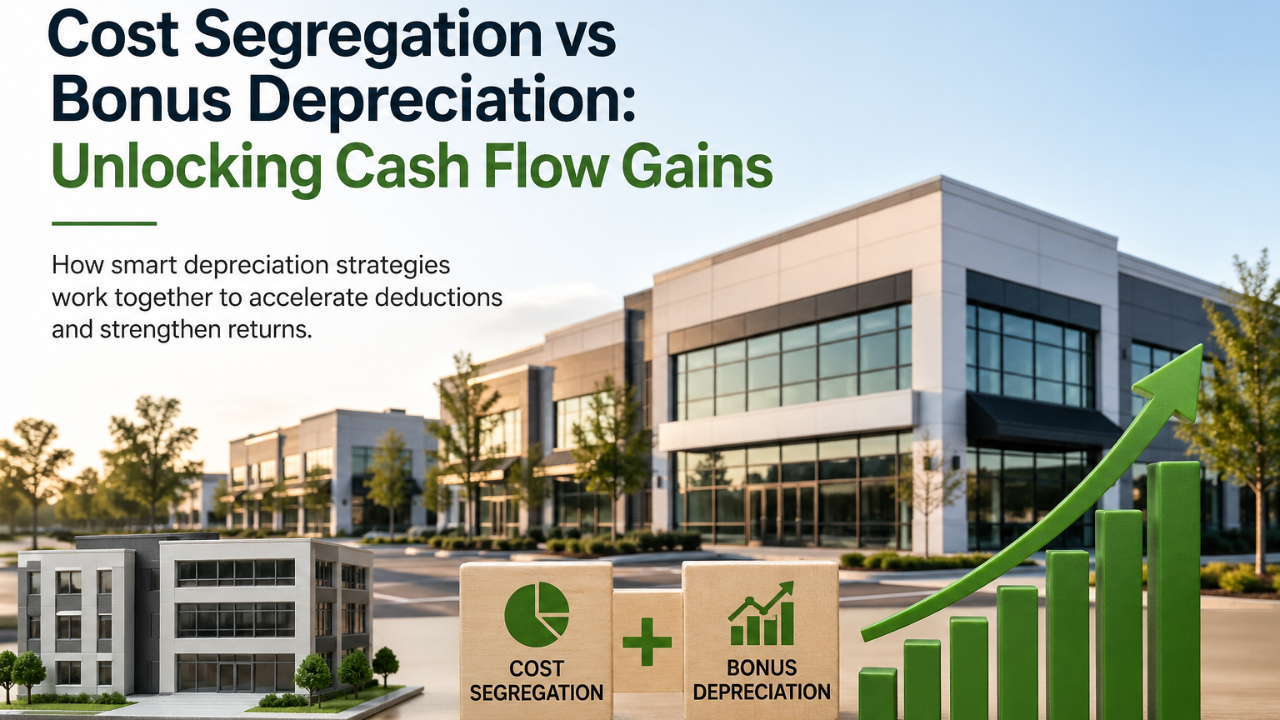
The real advantage emerges when both strategies are applied in tandem. Cost segregation identifies assets eligible for accelerated depreciation, while bonus depreciation allows those assets to be written off immediately.
A typical property without cost segregation is depreciated evenly over decades, limiting annual deductions. By contrast, a cost segregation study reallocates a portion of the purchase price into shorter-life categories such as 5-year property and 15-year property. These categories often qualify for bonus depreciation, enabling immediate expensing.
This interaction transforms the depreciation timeline. Instead of waiting years to recover capital, investors can front-load deductions into the first year or early ownership period. The result is a substantial reduction in taxable income, which directly improves liquidity.
Understanding bonus depreciation and cost segregation as a combined strategy is essential for investors seeking to optimize returns rather than simply reduce taxes incrementally.

Why This Matters for Investor Cash Flow
Early-year tax savings have a disproportionate impact on investment performance. Reducing taxable income in the first few years increases available capital that can be reinvested, used to service debt, or deployed into additional acquisitions.
When cost segregation and bonus depreciation are combined, investors often see a significant portion of the property’s basis deducted upfront. This creates a timing advantage, shifting tax liability into future years while preserving current liquidity.
From a portfolio perspective, this strategy compounds. Increased cash flow enables faster scaling, better debt coverage ratios, and improved internal rates of return. Investors focused on long-term growth recognize that timing of deductions can be just as important as the total amount.
For those aiming to reduce taxes and increase cash flow, the integration of these two strategies is often a foundational component of their tax planning approach.

Applications Across Property Types
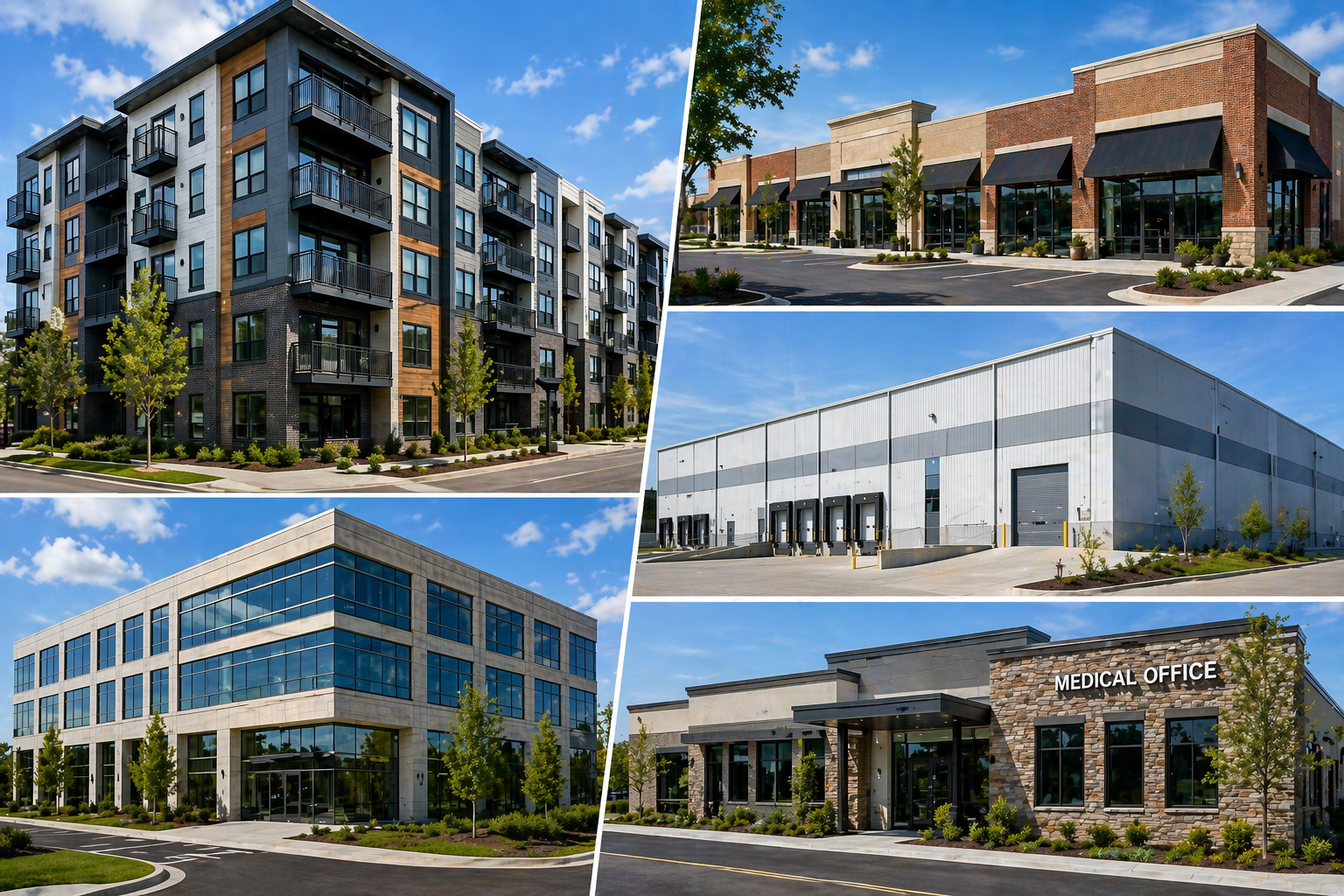
Different asset classes benefit from this strategy in distinct ways. Commercial properties often present significant opportunities due to complex systems and higher construction costs. Elements such as specialized electrical systems, interior finishes, and site improvements can be reclassified and accelerated.
In renovation scenarios, understanding how improvements are categorized is critical. Strategies involving Qualified Improvement Property can further enhance deductions when combined with cost segregation.
Short-term rentals, multifamily properties, and industrial facilities each offer unique opportunities depending on their asset composition. However, the underlying principle remains consistent: the more components that qualify for shorter recovery periods, the greater the potential benefit from bonus depreciation.
Strategic Considerations for Maximizing Benefits
Maximizing the benefits of cost segregation and bonus depreciation requires more than simply ordering a study. Timing plays a critical role. Performing a study early in ownership ensures that deductions are captured when they have the greatest impact. Investors often evaluate when to perform a cost segregation study as part of broader tax planning.
Accuracy is equally important. Overly aggressive classifications can increase audit risk and potentially reverse tax benefits. Investors should be aware of the risks of overestimating short-life assets and ensure studies are supported by proper engineering analysis.
Additionally, bonus depreciation percentages are subject to legislative phase-down schedules. Strategic timing around acquisition and placement in service dates can materially affect outcomes.

Accelerating $1M in Depreciation Benefits
Consider a $5 million commercial property acquisition. Without cost segregation, the building is depreciated over 39 years, resulting in approximately $128,000 in annual depreciation.
With a cost segregation study, assume 25 percent of the property is reclassified into shorter-life assets. This equates to $1.25 million eligible for accelerated depreciation.
If bonus depreciation is applied, a significant portion of that $1.25 million can be deducted in the first year. Instead of spreading deductions over decades, the investor captures a large upfront tax benefit.
This shift can translate into hundreds of thousands in immediate tax savings, depending on the investor’s tax bracket. The liquidity created can be reinvested into additional assets, accelerating portfolio growth.

Turning Tax Strategy Into Investment Leverage
Depreciation strategy is not just a tax consideration. It is a capital allocation tool that influences how quickly an investor can scale a portfolio. Cost segregation and bonus depreciation, when used together, convert long-term deductions into immediate financial leverage.
Investors who treat these strategies as isolated concepts often leave value on the table. Those who integrate them into a broader investment strategy gain a measurable advantage in both cash flow and growth potential.
The key is execution. Proper analysis, timing, and compliance determine whether the strategy delivers maximum value or introduces unnecessary risk.
Request a Cost Segregation Study to evaluate how much accelerated depreciation your property can generate.
Do you have a question about Cost Segregation?
Let us know how we can help
Your information is secure. We only use your details to answer your direct inquiry.