
Commercial Flooring: Installation and Use Matter
Sep 10, 2026Walk through a commercial property and flooring can seem like one of the simplest assets to identify. Carpet is carpet, tile is tile, and concrete is concrete, right? For cost segregation, the engineering analysis can be more nuanced because the material name alone may not determine the treatment. Installation method, permanence, function, property activity, and the relationship between the covering and the underlying floor can all matter. CostSegRx engineers therefore look below the surface before reaching a classification conclusion.
Wondering how much tax you could save with cost segregation? Let’s find out. Schedule a Cost Segregation Strategy Call today.
Key Takeaways
- The word flooring can describe several physically and functionally different assets.
- Engineers evaluate material, installation, permanence, function, and property facts.
- Permanent and readily removable floor coverings can receive different treatment.
- Carpet, VCT, sheet vinyl, tile, wood, coatings, and concrete illustrate the distinctions.
- Owners should document flooring materials and installation methods during renovations.
- Similar-looking flooring can lead to different engineering questions.
- Flooring classification starts below the finished surface.
What Commercial Flooring Really Includes
"Flooring" sounds like a single asset category, but a commercial property can contain several layers and types of property.
There is the structural floor itself, such as a concrete slab. There may be treatments applied directly to that floor. Above it can sit a finished floor covering such as carpet, vinyl composition tile, sheet vinyl, ceramic tile, stone, or wood.
Those physical differences matter.
ATG 2025 provides examples across several industry matrices. In its retail guidance, floor coverings affixed with permanent adhesive, nailed, or screwed in place include ceramic or quarry tile, marble, paving brick, coverings cemented, mudded, or grouted to the floor, epoxy or sealers, and wood flooring. That matrix treats those permanent coverings as 39-year nonresidential real property.
The same retail matrix separately addresses floor coverings installed using strippable adhesives. It states that VCT, sheet vinyl, and carpeting are treated there as not permanently attached and not intended to be permanent, with 5-year property treatment under the applicable activity category.
This illustrates a broader principle behind engineering asset classification: engineers classify the actual asset and its facts, not simply the name printed on a finish schedule.
How Engineers Look Below the Finished Surface
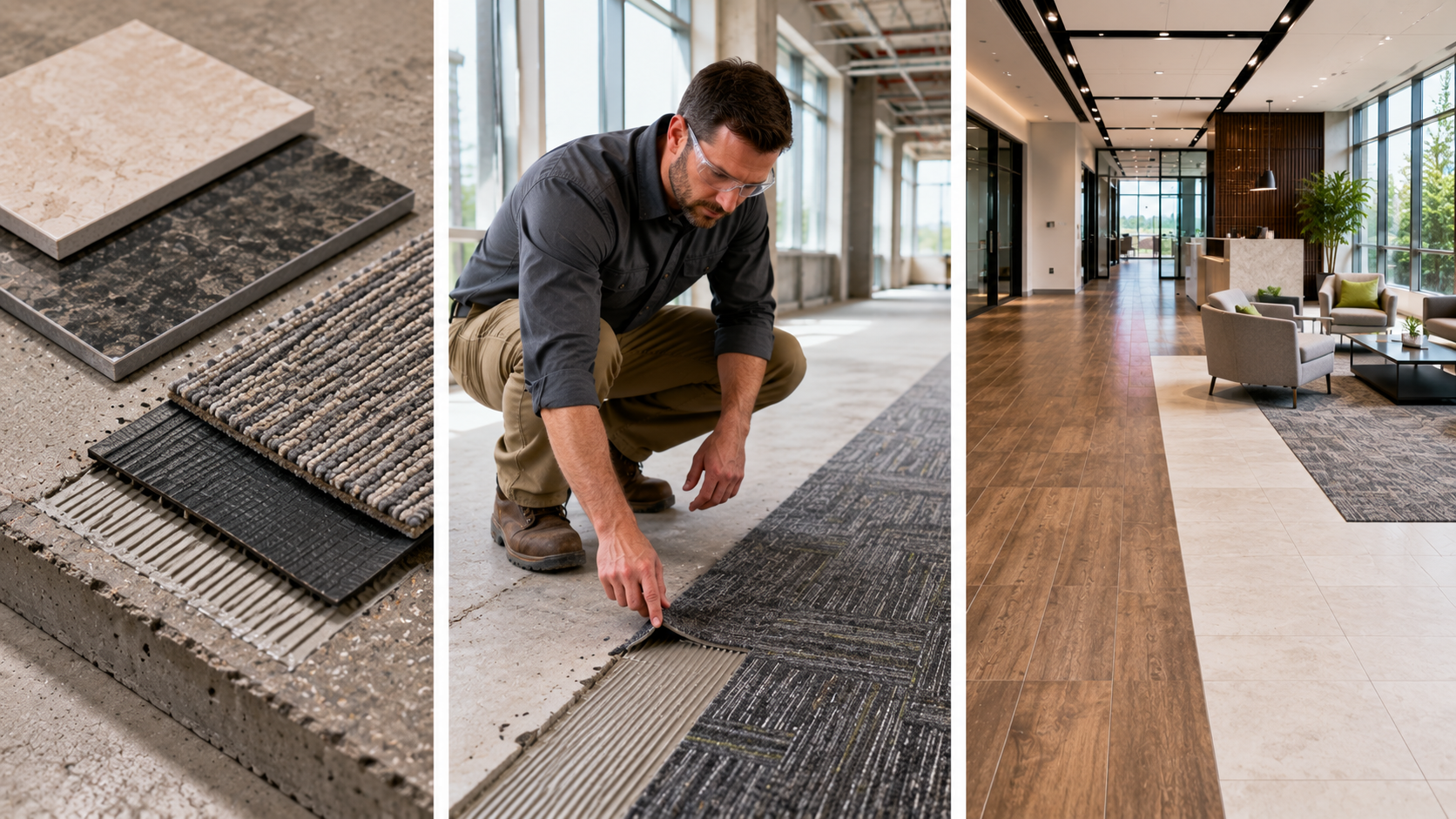
A flooring investigation begins with more than identifying color and material.
CostSegRx engineers may ask:
- What is the finished floor covering?
- How is it attached?
- Can it be removed without materially damaging the underlying floor?
- Is it intended to remain permanently in place?
- Is there a structural floor or permanent treatment beneath it?
- Does the property's applicable activity category affect the analysis?
- Does the flooring serve a specialized equipment or operational function?
- What drawings, specifications, invoices, photographs, or field observations support the conclusion?
That process separates several concepts that can easily be combined under one contractor line item.
Consider a concrete slab with a permanent coating. The structural floor and a treatment made a permanent part of it are not the same engineering condition as carpeting installed over the floor in a removable manner. ATG 2025's retail guidance places concrete slabs and permanent floor treatments with the building, while separately identifying qualifying readily removable floor coverings.
This is where the broader engineering cost segregation process becomes important. A site inspection does not stop when the engineer sees "carpet" or "tile." The installation and physical relationship to the building help tell the classification story.
Why Installation and Use Matter
Imagine two commercial spaces with flooring that appears similar during a quick walkthrough.
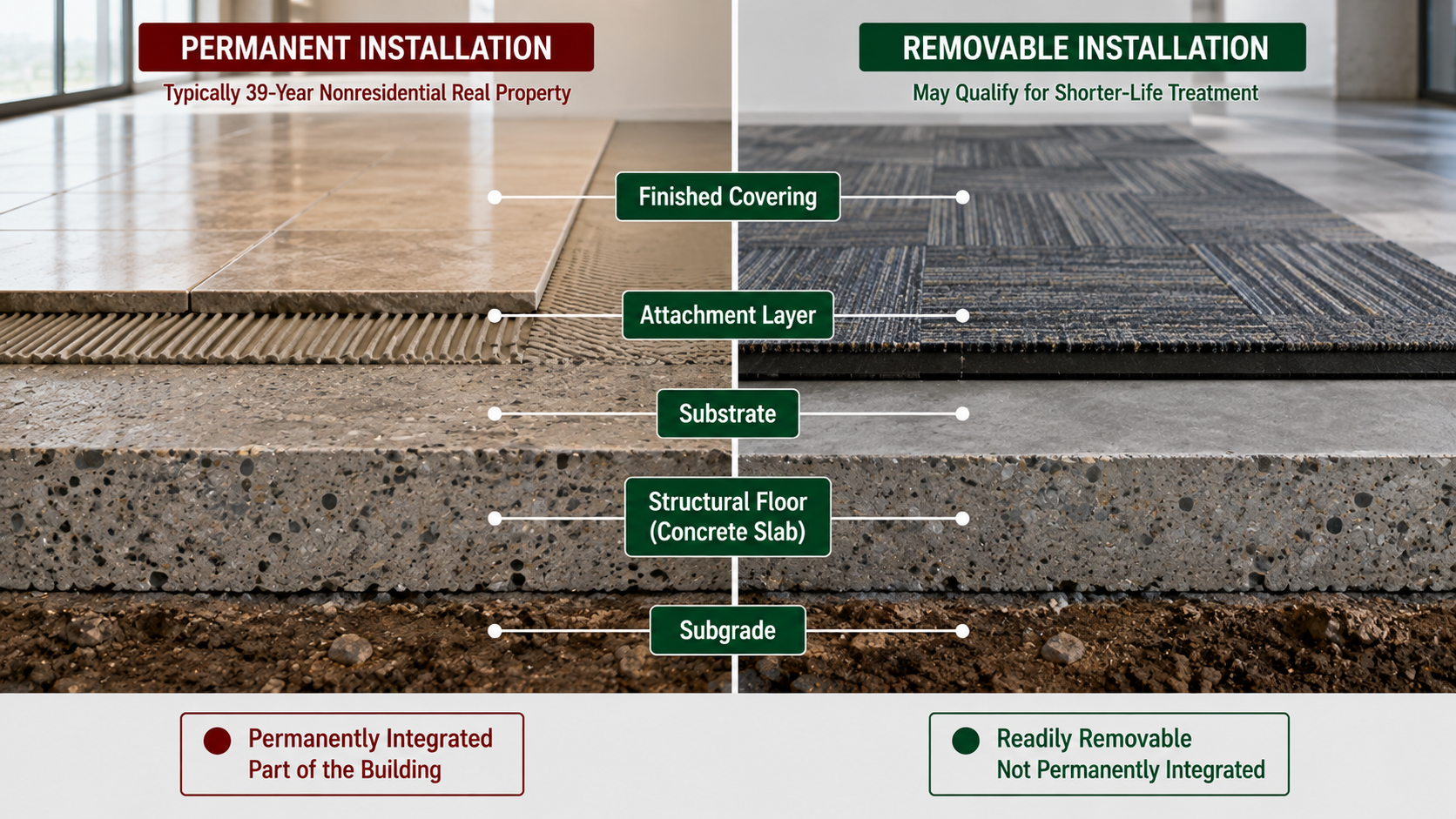
One floor covering is intended to remain permanently integrated with the building. Another is installed so that it can be removed while remaining substantially intact.
Visually, the difference may not be obvious.
Technically, it can matter.
ATG 2025 repeatedly distinguishes permanent floor coverings from floor coverings that are not permanently attached and not intended to be permanent. In the auto dealership matrix, for example, ceramic or quarry tile, marble, paving brick, grouted coverings, epoxy or sealers, and wood flooring are identified with the building, while VCT, sheet vinyl, and carpeting are treated in that industry guidance as not permanently attached and not intended to be permanent.
But investors should not turn that distinction into a universal material checklist.
ATG 2025's auto manufacturing guidance illustrates why. It describes permanent floor coverings based on how they are affixed, including VCT, sheet vinyl, carpeting, or wood when attached with permanent adhesive, nails, or screws. It separately identifies readily removable coverings installed with strippable adhesives.
The lesson is bigger than carpet versus tile.
Installation matters.
Permanence matters.
Property use and the applicable authority matter.

Where Flooring Classifications Can Differ
Carpet
Carpet is a good example of why an engineer should not classify solely from the material name.
Applicable ATG industry guidance recognizes carpeting that is not permanently attached and not intended to be permanent. Other guidance also makes clear that installation method is important when evaluating permanence.
The engineering question is therefore not simply, "Is this carpet?"
It is, "How is this particular floor covering installed, and what facts support its treatment?"
VCT and Sheet Vinyl
Vinyl composition tile and sheet vinyl provide a similar lesson.
ATG 2025's retail and auto dealership matrices treat VCT and sheet vinyl as readily removable in the circumstances described by those industry guidelines.
Yet ATG 2025's auto manufacturing guidance specifically includes VCT and sheet vinyl among permanent coverings when attached using permanent adhesive.
The material name alone is therefore not enough.
Ceramic Tile, Stone, and Wood
Ceramic tile, quarry tile, marble, stone, and other coverings cemented, mudded, or grouted to the floor are examples ATG 2025 commonly identifies as permanent floor coverings in applicable commercial matrices. Wood flooring affixed with permanent adhesive, nails, or screws is likewise included in permanent floor-covering examples.
For a nonresidential property under those applicable facts, these examples remain associated with 39-year nonresidential real property.
Epoxy, Sealers, and Floor Coatings
A coating can look like a finish applied after construction, but appearance does not determine whether it is separate personal property.
ATG 2025 includes epoxy, sealers, paint, and certain coatings directly applied to floors among permanent floor coverings or permanent floor treatments in applicable industry matrices.
That is an important warning against assuming every finish installed during a renovation becomes shorter-life property.
Specialized Access Flooring
Some flooring situations are driven by function rather than ordinary finish selection.
ATG 2025's auto manufacturing matrix, for example, separately identifies raised false floors installed in limited areas over an existing floor to accommodate specific equipment. The guidance ties those floors to the installation and operation of that equipment and notes their removability without extensive renovation or loss of building functionality.
That is a specialized fact pattern, not a blanket rule for raised floors. But it demonstrates why function can become just as important as material and attachment.

Build Flooring Documentation Into the Renovation Strategy
Flooring is easiest to understand while the work is happening.
During a renovation or tenant build-out, owners should preserve flooring specifications, finish schedules, contractor scopes, invoices, product information, photographs, and installation details when available. If the documentation identifies the adhesive or installation system, preserve that information too.
This is especially useful because the finished property may hide the installation method. Months or years later, an engineer walking across a completed floor may be able to identify the material but not necessarily determine every concealed installation detail from appearance alone.
For investors planning interior work, tenant build-out cost segregation can involve several different asset categories within the same renovation. Flooring should be evaluated as one component of that larger engineering analysis rather than automatically grouped with every other interior improvement.
The same caution applies to Qualified Improvement Property. The fact that flooring work occurs inside an existing commercial building does not, by itself, establish QIP 15-year property treatment for every flooring component. The specific asset and applicable eligibility requirements still matter.
Good ownership records preserve those facts while they are easy to document.
Example: Same Renovation Budget, Different Flooring Questions
Consider two hypothetical commercial renovations.
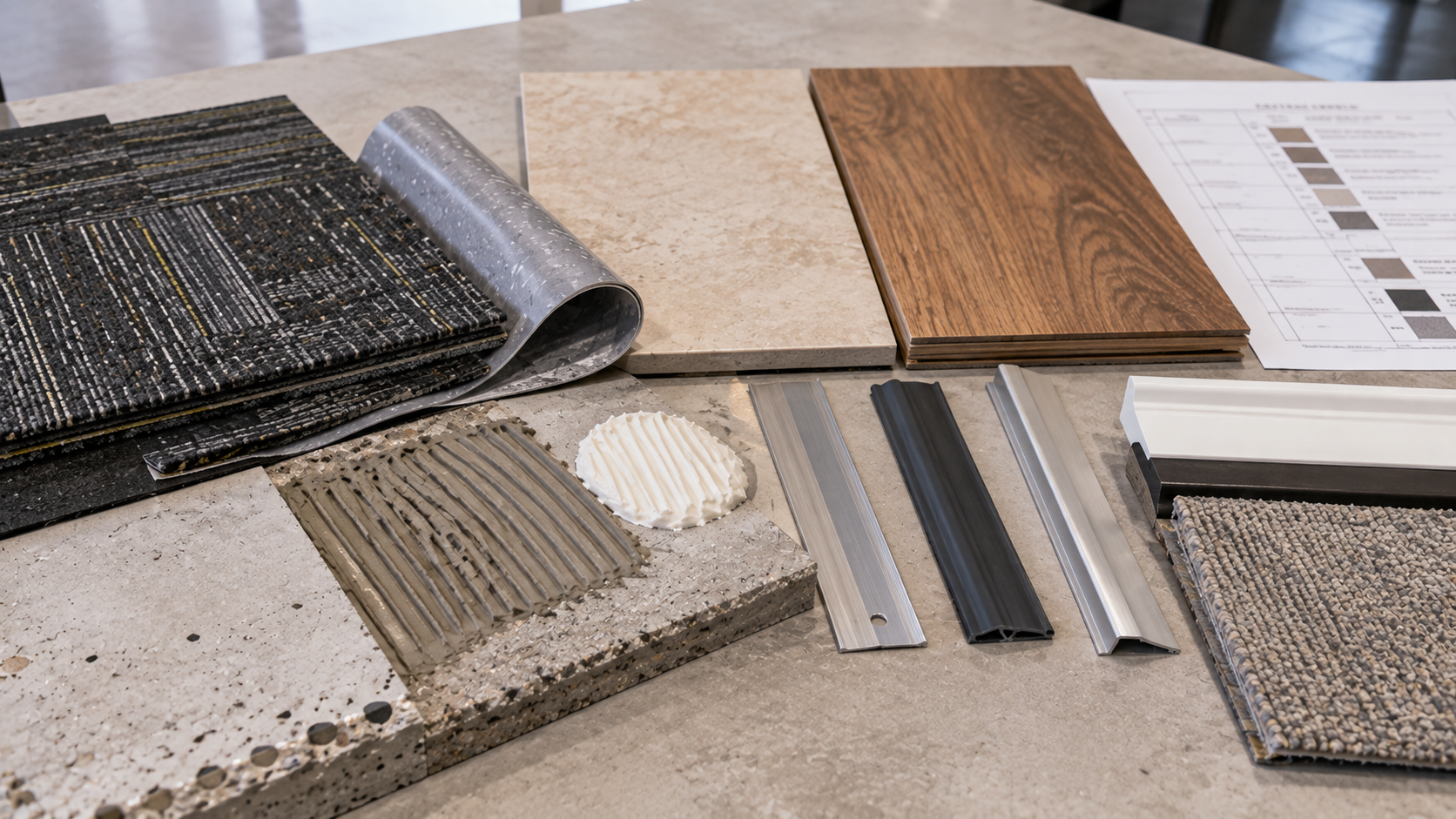
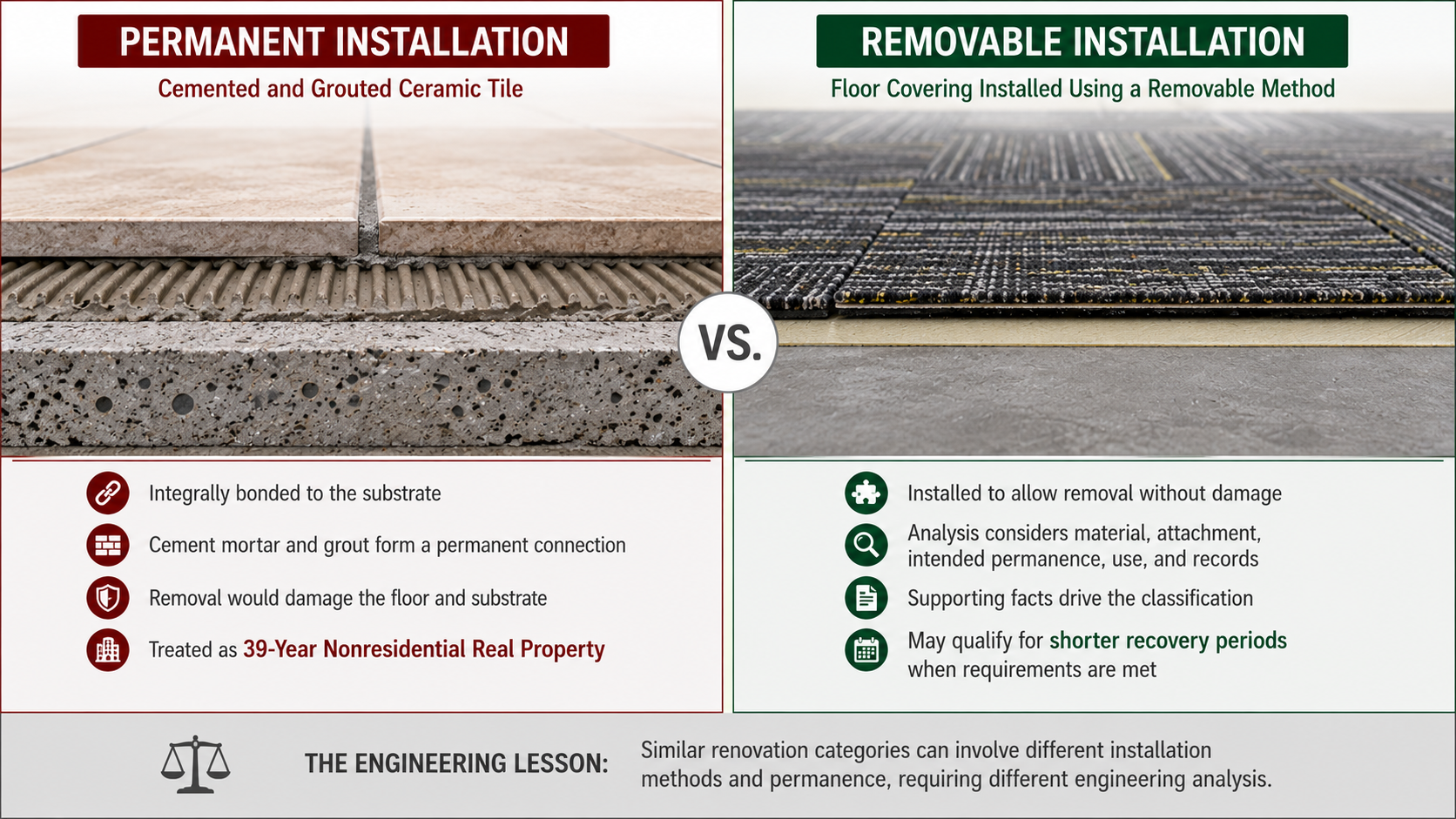
Property A installs ceramic tile that is cemented and grouted to the floor. The engineering analysis identifies a permanent floor covering integrated with the building. Under applicable ATG commercial guidance, this type of condition is associated with 39-year nonresidential real property.
Property B installs a floor covering using a removable installation method that fits the applicable facts for readily removable property. The engineer documents the material, installation method, intended permanence, property activity, and supporting records before determining the appropriate classification.
The lesson is not that one particular flooring product always receives one recovery period.
The lesson is that a finish schedule saying "flooring" does not answer the classification question.
An engineer needs to understand what was installed, how it was installed, whether it is permanent, what function it serves, and which authority applies to that property.
Flooring Classification Starts Below the Surface
Commercial flooring cost segregation is a good example of why engineering details matter.
A finished floor may contain a structural slab, permanent treatments, permanent coverings, readily removable coverings, or specialized systems associated with a particular function. Those components should not be collapsed into one classification simply because they all appear under the flooring trade.
ATG 2025 provides multiple examples where installation and permanence affect the treatment of floor coverings, while specialized industry circumstances can introduce additional functional considerations.
CostSegRx engineers look below the visible finish.
Material matters. Installation matters. Function matters. Documentation matters.
That is how a floor becomes an engineering story instead of a line item.