

Why L.L. Bean Lost the Warehouse Mezzanine Case
Aug 20, 2026Warehouse investors often assume that a mezzanine is automatically 5-year property because it appears removable or supports warehouse operations. The L.L. Bean case proves that assumption can be costly. Rather than focusing on what the mezzanine was called, the court examined how it functioned within the building and whether it had become part of the structure itself. The decision remains one of the most important reminders that engineering-based cost segregation depends on facts, function, and documentation rather than appearances.
Wondering how much tax you could save with cost segregation? Let’s find out. Schedule a Cost Segregation Strategy Call today.
Key Takeaways
- Why the L.L. Bean case still matters today
- How the court evaluated the warehouse mezzanine
- Why function determines classification
- Where warehouse mezzanines are evaluated today
- How investors should approach mezzanine documentation
- A practical warehouse ownership example
- The lesson every warehouse investor should remember
What the L.L. Bean Case Teaches
The L.L. Bean case is frequently discussed because it demonstrates that an asset’s appearance does not determine its depreciation classification.
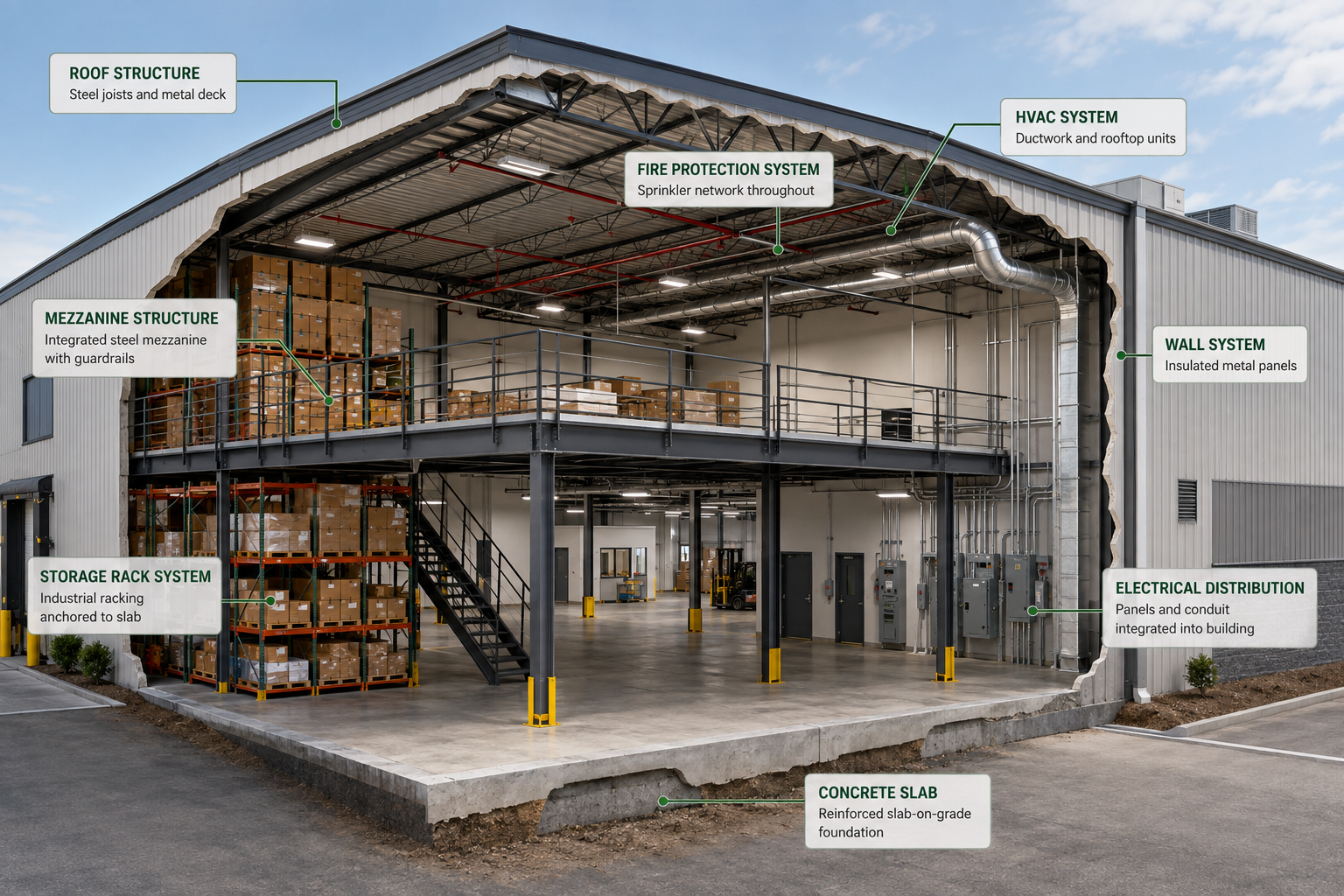
In this case, the taxpayer argued that its warehouse mezzanine system and related warehouse infrastructure should receive treatment similar to tangible personal property. The court disagreed. It concluded that the mezzanine system had become part of the building and therefore remained §1250 property, along with the storage rack system, concrete slab, roof and wall panels, electrical system, HVAC system, and fire protection system. The decision illustrates that engineering analysis begins with the property’s facts rather than assumptions about removable construction. The IRS Cost Segregation Audit Technique Guide continues to reference this case as part of the legal framework for evaluating asset classifications.
As discussed in What Makes an Asset §1245 Property? The Four Questions Engineers Ask, engineers evaluate every asset independently before determining its classification.
How the Court Evaluated the Mezzanine
The court did not simply ask whether the mezzanine could be removed.
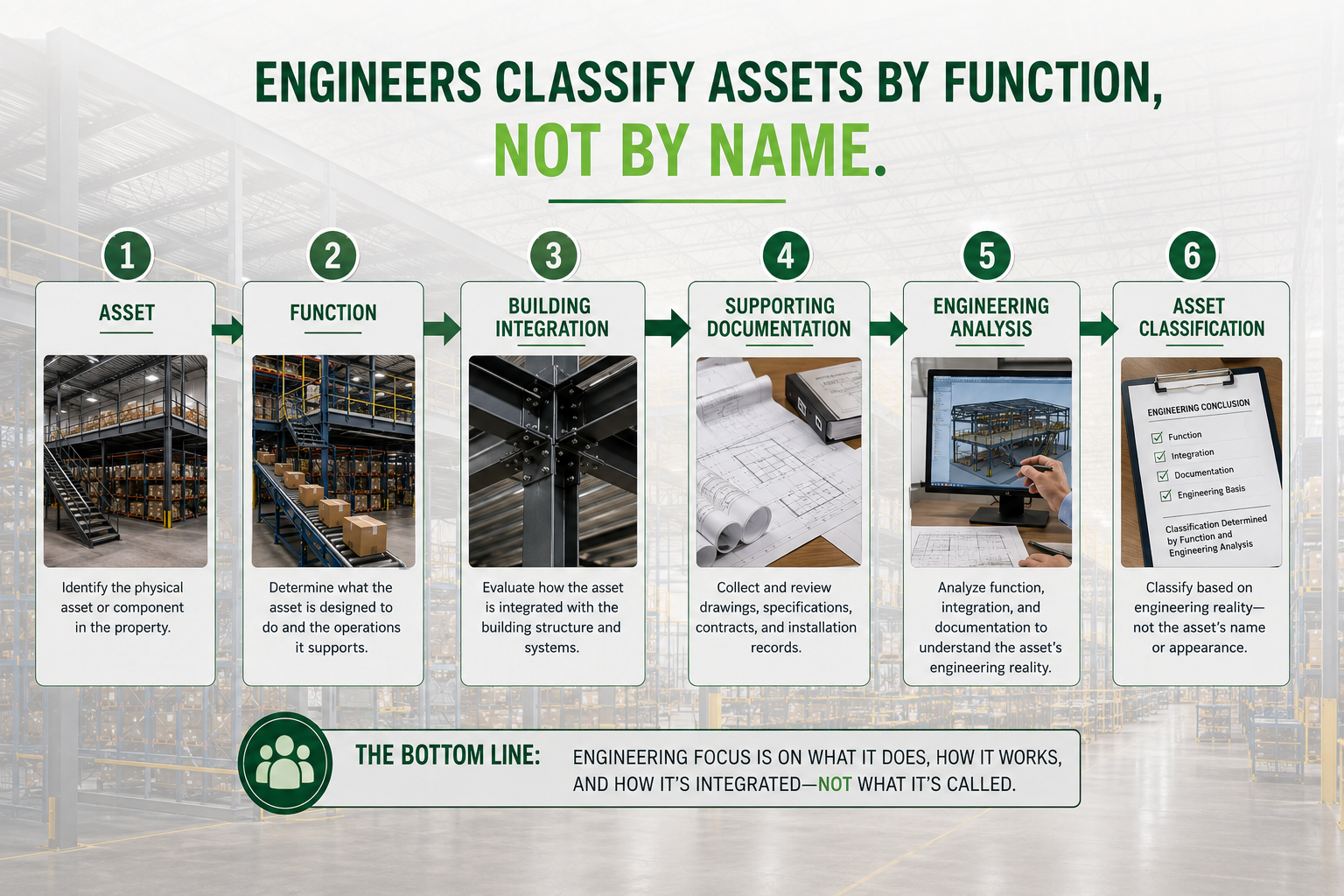
Instead, it evaluated how the mezzanine functioned within the warehouse, how it was integrated into the building, and whether it served the building itself or a specific business operation.
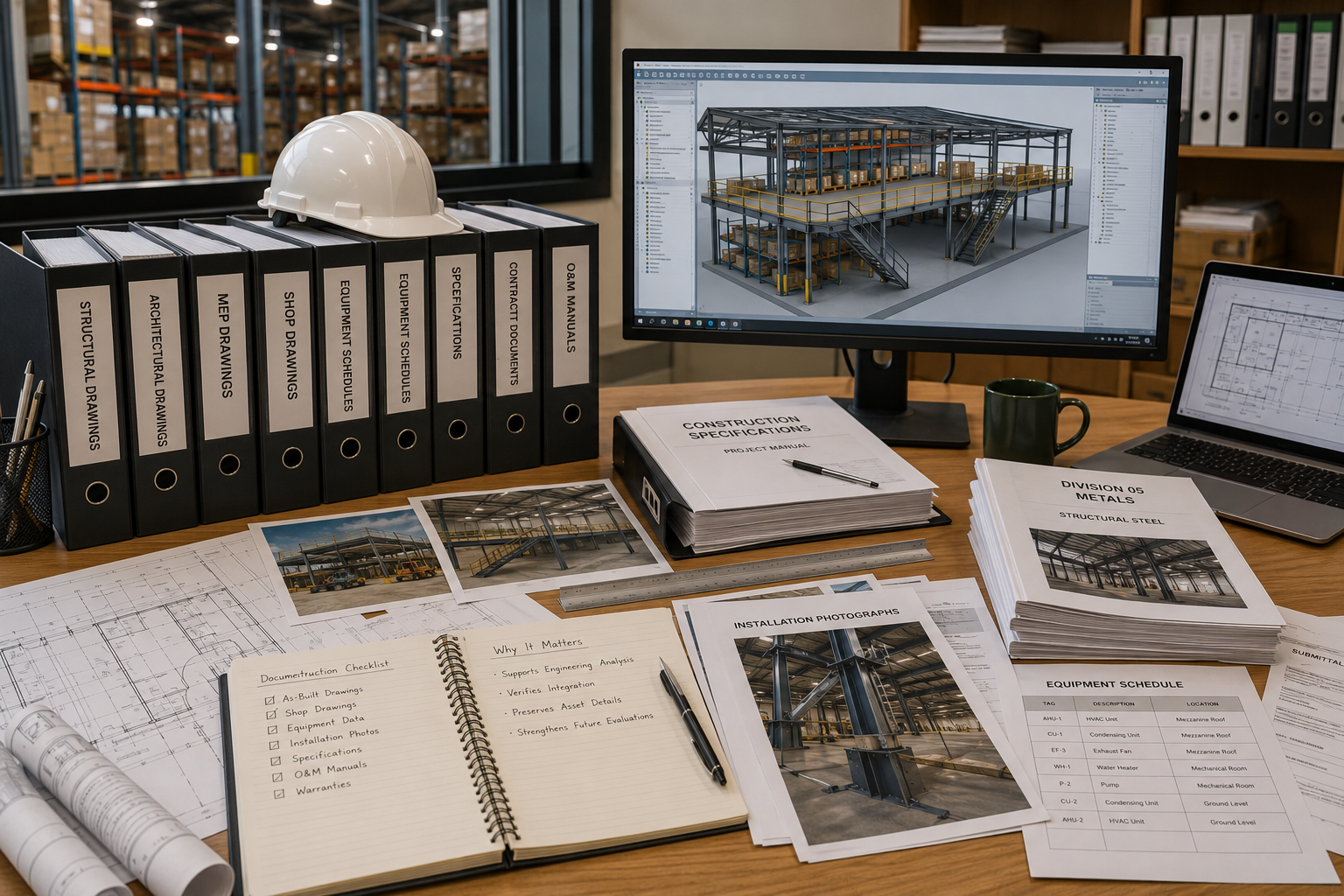
That engineering mindset mirrors how quality cost segregation studies are performed today. Engineers review construction drawings, structural details, equipment layouts, site observations, and supporting documentation before reaching a conclusion. The classification follows the engineering analysis rather than leading it.
The IRS Cost Segregation Audit Technique Guide later reinforces this principle by distinguishing between different types of mezzanines. A mezzanine providing general building access or working space generally remains 39-year nonresidential real property, while a catwalk or mezzanine constructed solely to inspect, repair, or operate specific machinery or equipment may instead be classified as §1245 property under the applicable asset class. Function, not terminology, drives the conclusion.

Why Function Matters More Than Names
The biggest lesson from L.L. Bean extends far beyond warehouse mezzanines.
Investors often ask whether a particular asset qualifies for a shorter recovery period. Engineers ask a different question:
What does this asset support?
That difference changes the entire analysis.
Two assets with nearly identical appearances may receive different depreciation treatment because they serve completely different purposes. One may support the operation of the building itself, while another may exist solely to support specialized business equipment.
That is why engineering-based cost segregation focuses on function before classification rather than relying on construction trade, appearance, or industry assumptions.
Where This Applies Today
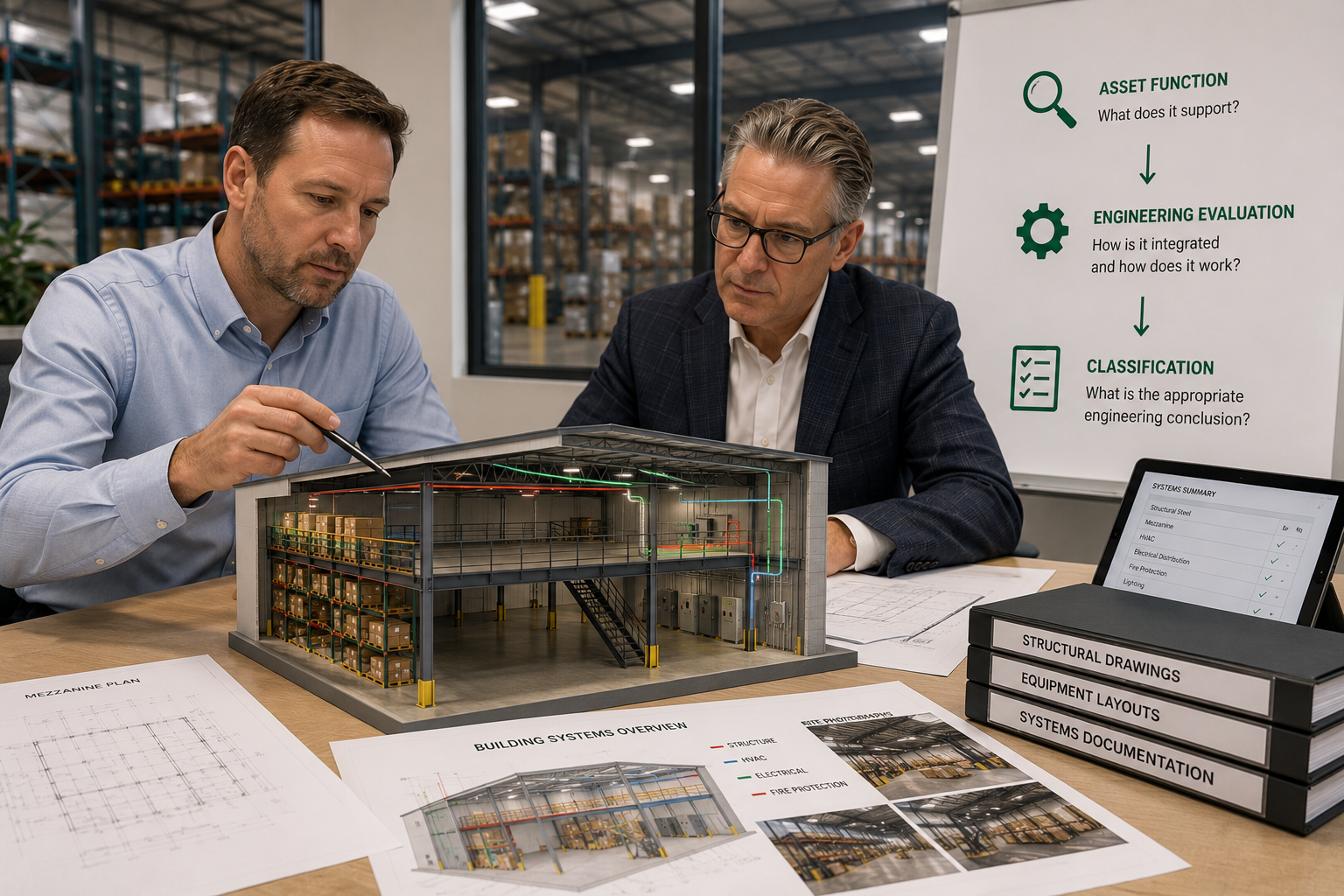
Warehouse investors encounter these issues in many modern facilities.
Examples include:
- Multi-level storage systems
- Equipment access platforms
- Conveyor support structures
- Maintenance catwalks
- Elevated operator platforms
- Distribution infrastructure
- Specialized production access systems
Each installation requires its own engineering evaluation. A warehouse mezzanine is not automatically 5-year property, nor is every elevated structure automatically 39-year nonresidential real property. The property’s design, documentation, installation, and operational purpose determine the appropriate classification.
Ownership Strategy Begins With Documentation
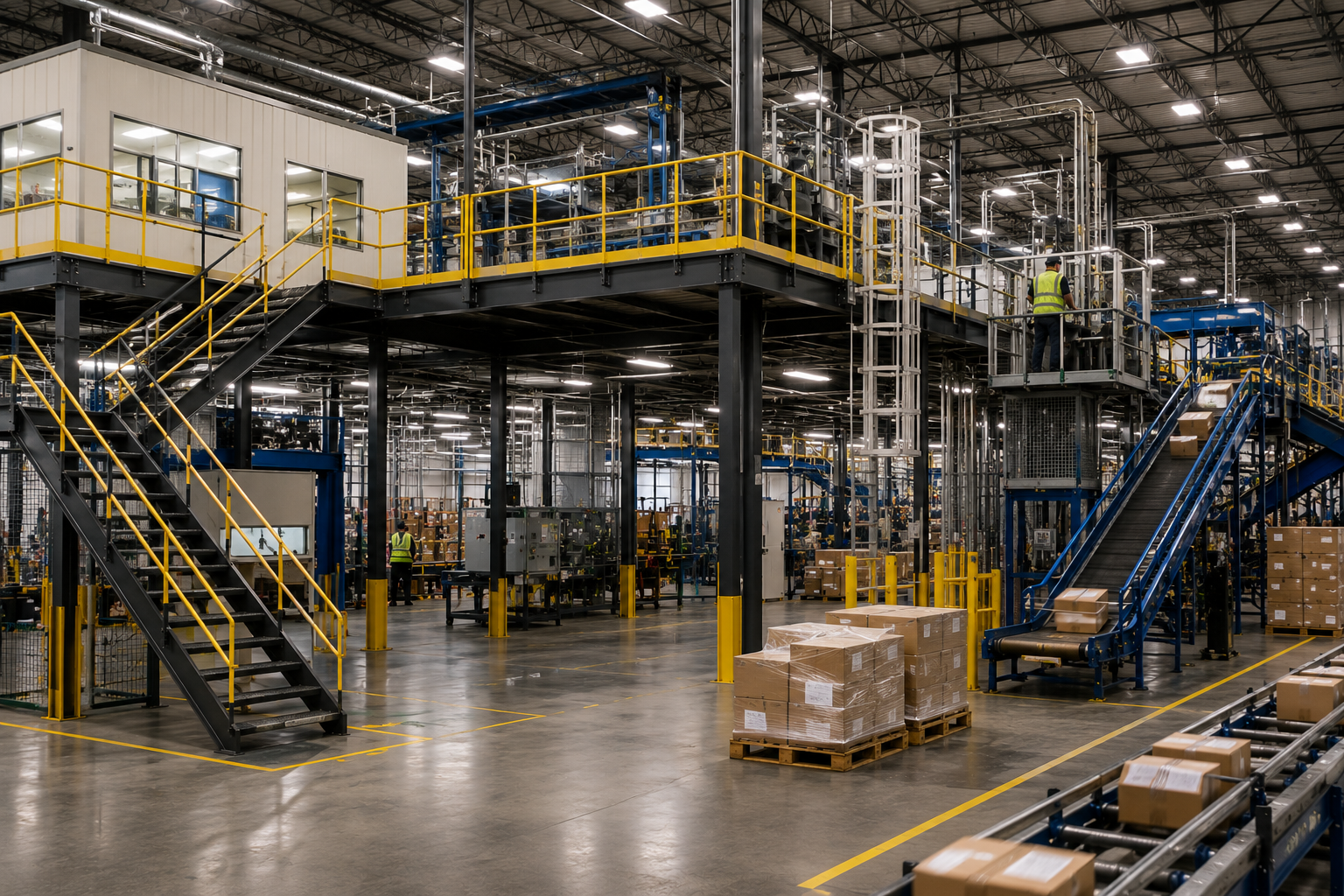
The best time to support a future engineering analysis is during construction or renovation.
Warehouse owners should preserve:
- Structural drawings
- Equipment layouts
- Shop drawings
- Construction specifications
- Change orders
- Equipment schedules
- Contractor documentation
- Photographs during installation
These records help engineers understand how each component functions within the warehouse and support well-documented conclusions if a cost segregation study is later performed.
Maintaining complete documentation also strengthens cost segregation audit readiness by preserving the property’s engineering history.
A Practical Warehouse Ownership Example
Illustrative example only. Figures shown are estimated for demonstrative purposes only. Actual land allocations, asset classifications, depreciation, and tax results depend on the specific property, supporting documentation, engineering analysis, and taxpayer circumstances.
Two investors each purchase nearly identical distribution warehouses.
Investor A assumes every mezzanine qualifies for 5-year property because it appears removable.
Investor B commissions an engineering-based cost segregation study. Engineers review the construction drawings, equipment layouts, and operational purpose of the elevated structures. Some components remain 39-year nonresidential real property, while others that provide dedicated access to specialized equipment are evaluated separately based on their documented function.
The difference is not aggressive tax planning. It is better engineering supported by better documentation.
The Lesson Every Warehouse Investor Should Remember
The L.L. Bean decision remains one of the clearest examples of why engineering comes before tax treatment. A mezzanine does not receive its depreciation classification because of its name, appearance, or construction method. It receives its classification because engineers evaluate what it supports, how it functions, and what the documentation proves. Every warehouse tells an engineering story, and the most accurate cost segregation studies begin by understanding that story before assigning a depreciation class.
Do you have a question about Cost Segregation?
Let us know how we can help
Your information is secure. We only use your details to answer your direct inquiry.