
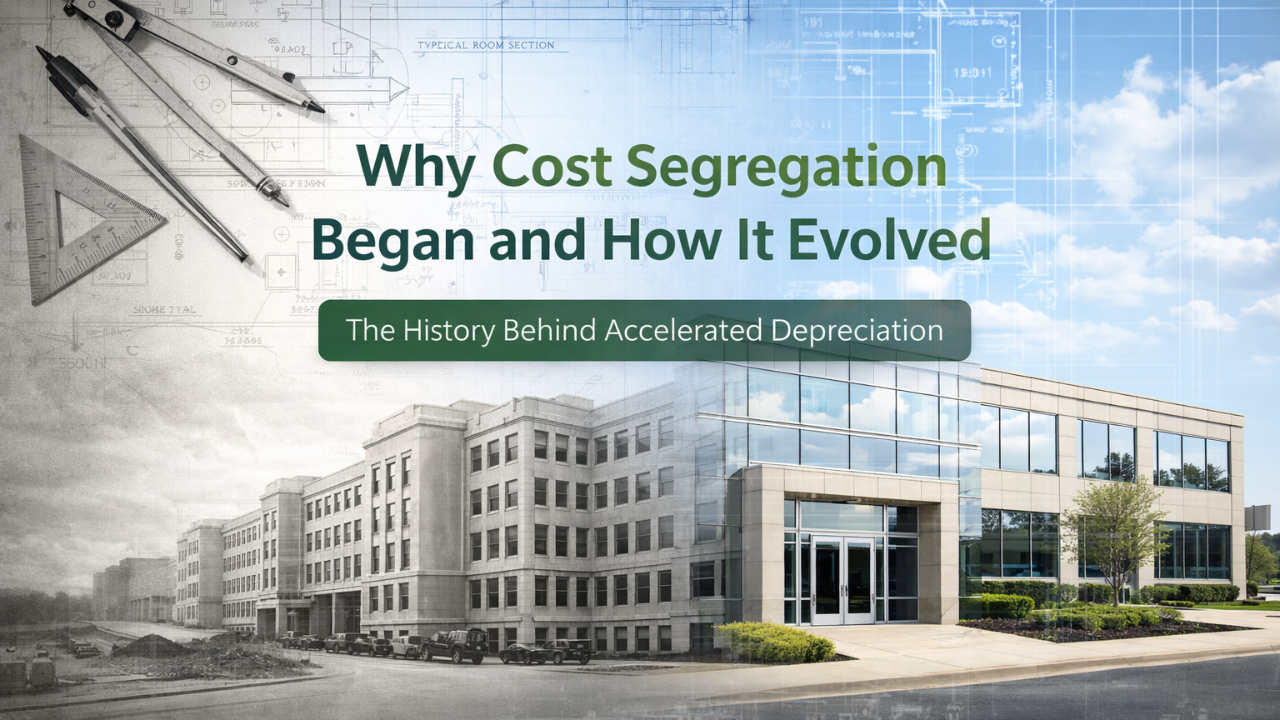
Why Cost Segregation Began: The History Behind Accelerated Depreciation
Mar 25, 2026Commercial real estate has always been a powerful tax shelter, but the ability to accelerate depreciation did not appear overnight. Cost segregation emerged as a response to evolving tax law, court decisions, and the need for more precise asset classification. Understanding why it began helps investors see why it remains one of the most effective tax strategies today.
- Early Depreciation Rules Created Flexibility
- Tax Law Changes Drove Asset Classification
- The Investment Tax Credit Created a Breakthrough
- Court Cases Formalized Cost Segregation
- Why Cost Segregation Exists Today
Early Depreciation Rules Created Flexibility
In the early years of the U.S. tax system, depreciation was loosely defined. Beginning in 1913, taxpayers were allowed a reasonable allowance for wear and tear on property used in a business. There were few standardized rules, and taxpayers had significant discretion in determining how quickly assets could be written off.
This flexibility created inconsistency. By 1934, the IRS shifted the burden of proof to taxpayers, requiring detailed support for depreciation schedules. Over time, guidance like Bulletin F introduced standardized asset lives, but it still allowed for component-based thinking. Buildings could be broken into parts such as plumbing, wiring, and equipment, each with different useful lives.
This concept laid the foundation for what would later become cost segregation.
Tax Law Changes Drove Asset Classification
As tax law evolved, depreciation systems became more structured. The introduction of systems like ADR, ACRS, and eventually MACRS created defined recovery periods for different types of property.
One critical shift was the distinction between real property and personal property. Buildings were assigned long recovery periods, typically 39 years for commercial property, while equipment and certain components qualified for much shorter lives.
This created a clear incentive. The shorter the recovery period, the larger the annual deduction. Taxpayers began looking for ways to allocate more costs into shorter-life categories.
Today, this is the core principle behind bonus depreciation and cost segregation, where reclassification can significantly accelerate deductions.
The Investment Tax Credit Created a Breakthrough
The real turning point came with the Investment Tax Credit under Section 48. This credit applied to tangible personal property but excluded buildings and structural components.
To claim the credit, taxpayers had to determine which parts of a property qualified as personal property rather than structural components. This forced a deeper level of analysis and gave rise to formal asset classification methodologies.
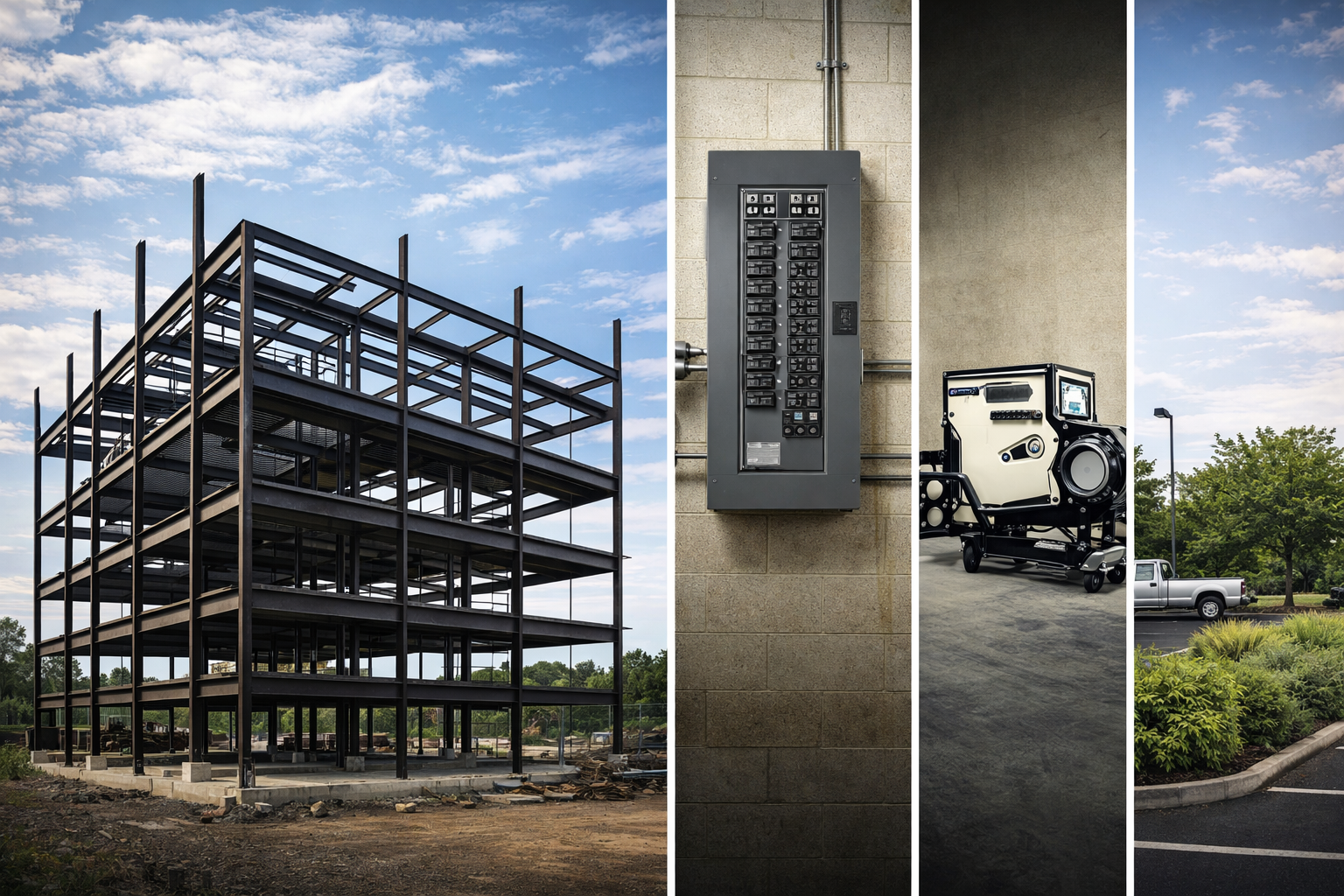
Items such as specialty electrical systems, process equipment, and certain interior components began to be separated from the building structure. These classifications directly influenced how depreciation was calculated.
This process of identifying and allocating costs is essentially what we now call a cost segregation study.

Court Cases Formalized Cost Segregation
While tax law created the opportunity, court cases solidified the practice. One of the most important cases was Hospital Corporation of America v. Commissioner.
The court ruled that assets qualifying as tangible personal property should be treated as such for depreciation purposes, even when they are part of a larger building. It also confirmed that rules originally developed for the Investment Tax Credit could be applied to depreciation classification.
This decision reinforced the ability to break buildings into components and assign shorter recovery periods where appropriate.
However, the process is highly fact-specific. Misclassification can create audit risk, which is why understanding the risks of overestimating short-life assets is critical for compliance.

Why Cost Segregation Exists Today
Cost segregation exists today because of one simple reality. Not all parts of a building wear out at the same rate.
A commercial property includes electrical systems, flooring, millwork, land improvements, and specialized equipment. Treating all of these as a single 39-year asset does not reflect economic reality or tax law intent.
By separating these components into categories like 5-year property and 15-year property, investors can accelerate depreciation and improve cash flow.
This is why cost segregation continues to be widely used. It aligns tax treatment with how assets are actually used and consumed, while unlocking significant upfront tax savings. For many investors, the real question is not whether the strategy works, but is cost segregation worth it for their specific property.
Cost segregation did not begin as a loophole. It evolved from decades of tax law, engineering analysis, and court validation. Today, it remains one of the most powerful tools for commercial real estate investors who want to take control of their depreciation strategy.

Do you have a question about Cost Segregation?
Let us know how we can help
We hate SPAM. We will never sell your information, for any reason.

