
Build Smarter, Depreciate Faster: Design-Build Cost Seg Strategy
May 06, 2026The design-build model has transformed how commercial real estate projects are executed, creating alignment between design, engineering, and construction teams. However, tax strategy is often excluded from this integrated process. Cost segregation, when introduced during the design-build phase, allows for precise asset classification and stronger documentation. This results in accelerated depreciation and improved after-tax returns. Aligning tax strategy with construction decisions creates a measurable financial advantage for investors and developers.
Key Takeaways
- Design-build cost segregation integrates tax planning into construction execution
- Engineering-driven asset identification improves classification accuracy
- Early planning enhances accelerated depreciation outcomes
- Design-build projects benefit from real-time cost tracking and allocation
- Coordinating teams reduces audit risk and documentation gaps
- Asset classification determines eligibility for shorter recovery periods
- Electrical and system-level decisions impact classification outcomes
- Integration supports broader bonus depreciation strategies
What Is Design-Build Cost Segregation
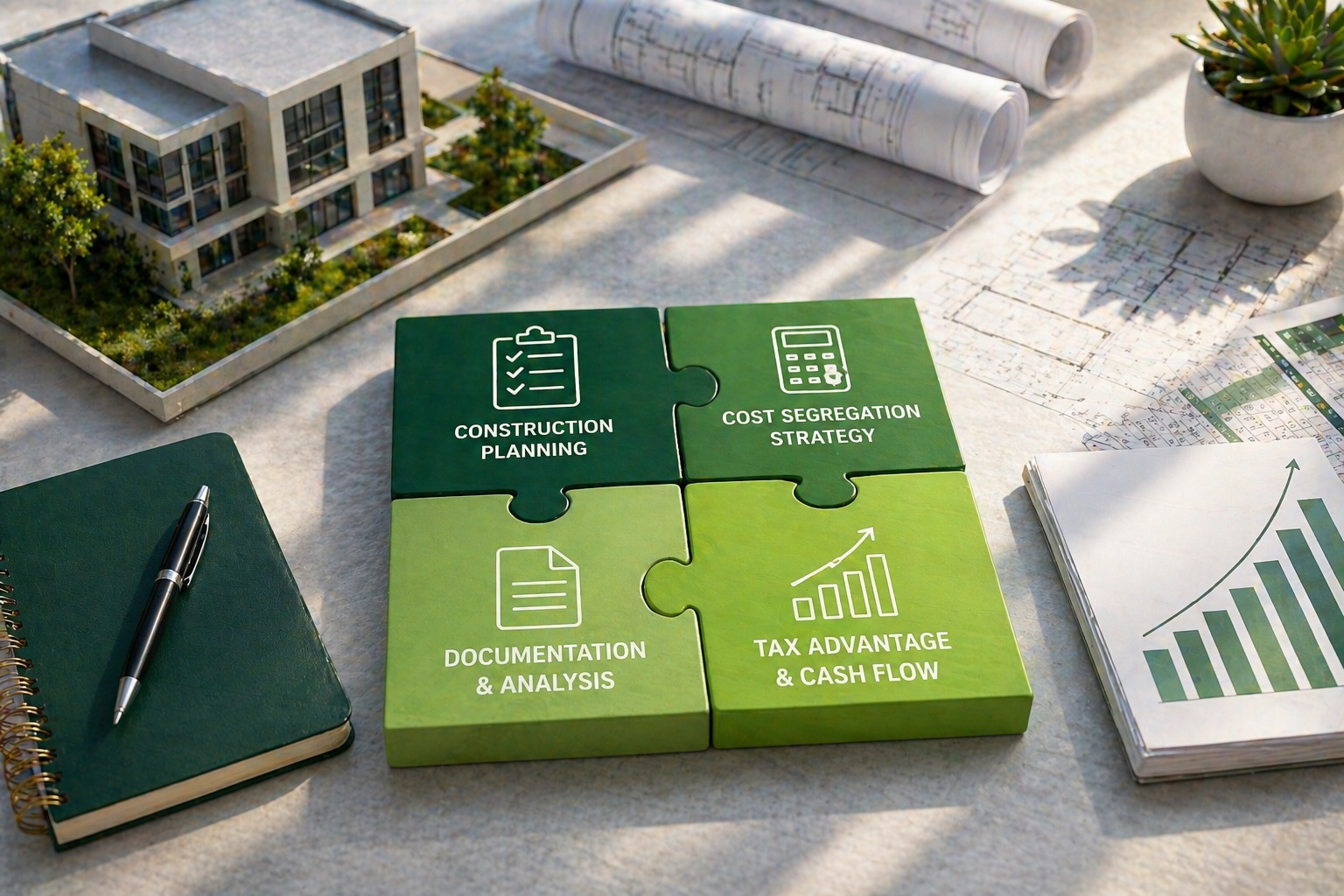
Design-build cost segregation is the process of incorporating asset classification and depreciation strategy into the construction lifecycle. Rather than performing a study after project completion, the analysis begins during planning, design, and construction phases. This approach aligns engineering data, contractor inputs, and financial objectives.
Traditional cost segregation studies rely on retrospective analysis. In contrast, the design-build approach leverages real-time construction data, including drawings, specifications, and contractor cost breakdowns. By embedding this process early, developers gain greater control over how assets are classified between §1245 and §1250 property, directly influencing depreciation schedules.
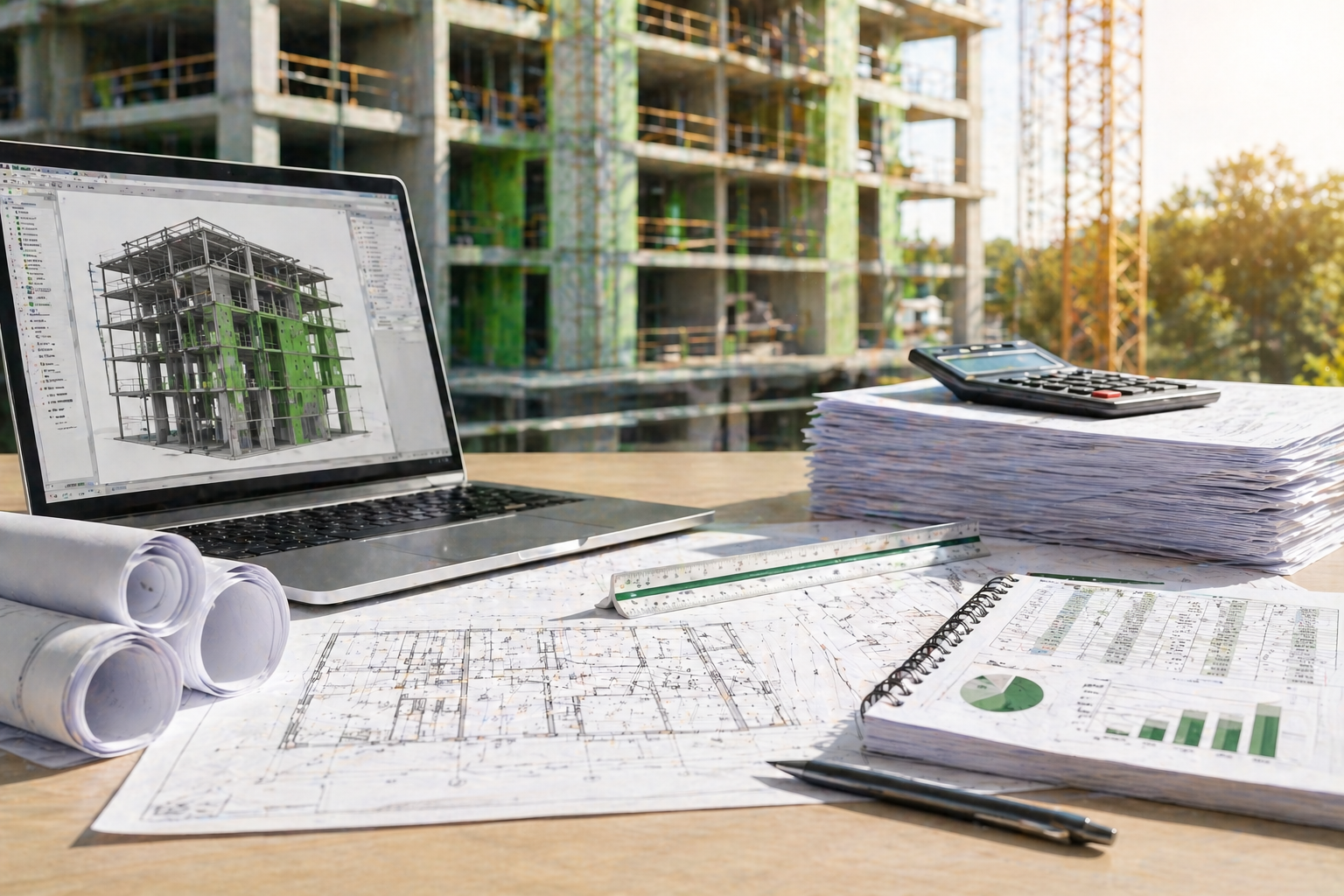
How Design-Build Integration Improves Cost Seg Accuracy
The design-build model enables collaboration between architects, engineers, contractors, and tax specialists. This collaboration produces higher-quality data inputs, which are critical for accurate cost segregation.
Engineering-based approaches, particularly those using actual cost records, are among the most reliable ways to allocate project costs. These approaches utilize construction documents, invoices, and contractor data to determine unit costs and allocate expenses precisely.
- Direct access to construction drawings and specifications
- Real-time identification of short-life assets
- Accurate allocation of indirect costs
- Reduced reliance on estimation models
This level of precision improves classification decisions, particularly for complex systems like electrical distribution, plumbing, and specialized equipment.

Why Early Integration Drives Financial Performance
Depreciation outcomes are heavily influenced by how assets are classified during a cost segregation study. Integrating this process during design-build allows investors to maximize allocations to shorter recovery periods.
Short-life assets such as equipment, specialty finishes, and certain building components can qualify for accelerated depreciation. This directly impacts cash flow by increasing early-year deductions.
- First-year tax savings
- Cash flow timing
- Long-term ROI
For a deeper comparison of depreciation strategies, see cost segregation vs straight-line depreciation.

Where Design-Build Cost Segregation Creates Value
This approach is particularly effective across several project types:
- Ground-up commercial construction
- Industrial and manufacturing facilities
- Multi-family developments
- Large-scale renovations and improvements
Design-build projects generate detailed cost data, making them ideal for engineering-based studies. These projects also benefit from early classification decisions related to systems, finishes, and infrastructure.
For projects involving interior improvements, integrating Qualified Improvement Property planning ensures alignment with depreciation incentives and compliance requirements.

Strategic Advantages for Developers and Design-Build Teams
The strategic value of design-build cost segregation extends beyond tax savings. It enhances project coordination and reduces compliance risk.
- Improved documentation for IRS defensibility
- Alignment between construction and tax objectives
- Reduced rework and post-construction adjustments
- Greater transparency in cost allocation
A quality cost segregation study must include detailed methodology, documentation, and reconciliation of costs. Integrating these requirements during construction ensures that the final study meets compliance standards without requiring extensive reconstruction of data.
Real-World Financial Impact of Design-Build Integration
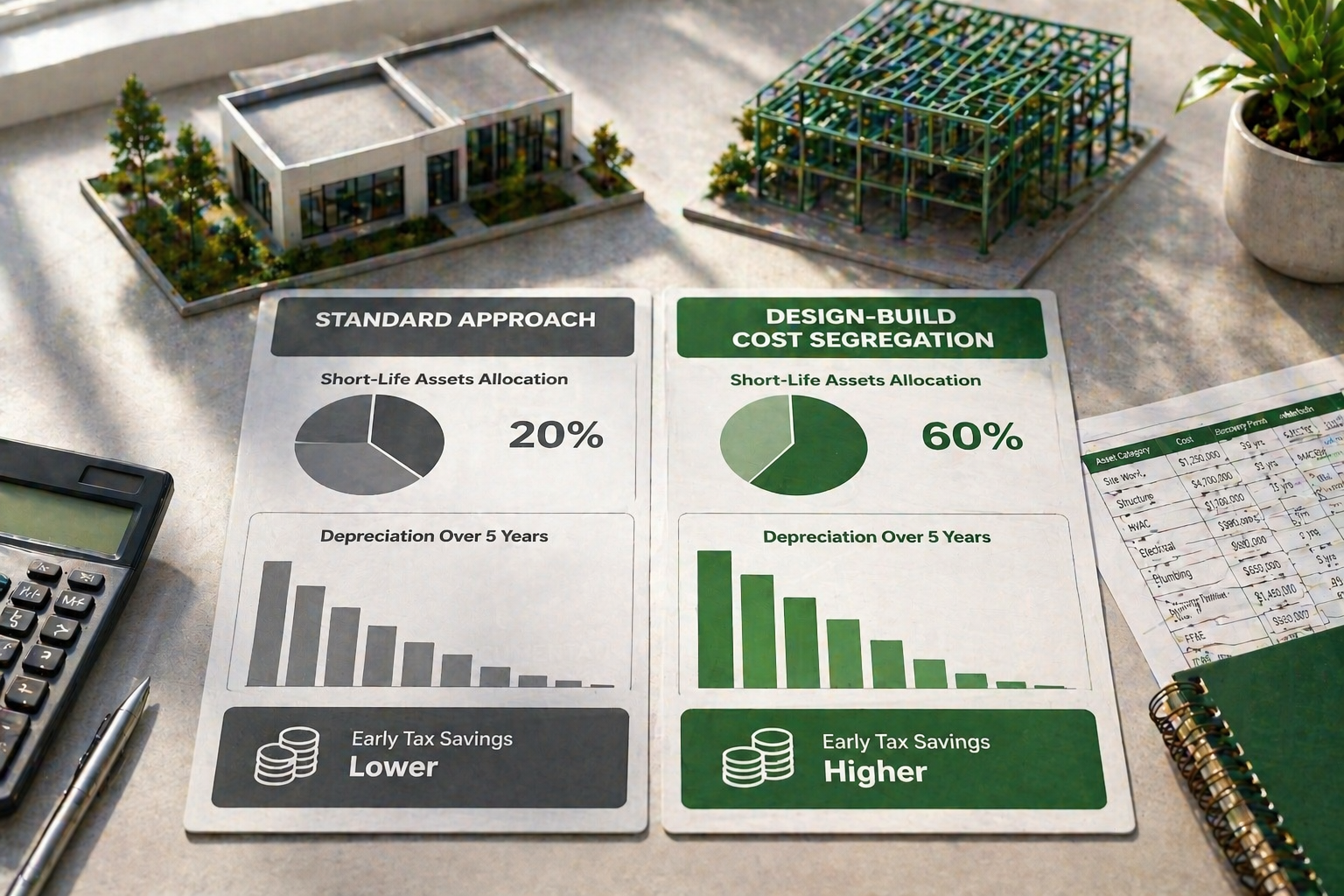
Consider a $10 million ground-up commercial project using a traditional post-construction cost segregation study. Typically, 20% to 30% of costs may be reclassified into shorter-life assets.
With design-build integration, improved documentation and engineering precision can increase that allocation to 30% to 40%. Assuming 35% reclassified into 5, 7, and 15-year property, the accelerated depreciation benefit significantly increases first-year deductions.
This shift can generate hundreds of thousands in additional tax deferral, improving investor liquidity and reinvestment capacity.
Design-Build Execution as a Competitive Tax Strategy
Design-build cost segregation transforms tax planning from a reactive process into a proactive strategy. By aligning engineering, construction, and tax objectives, developers can unlock greater depreciation benefits while maintaining compliance.
Projects that incorporate cost segregation early benefit from stronger documentation, more accurate classifications, and improved financial outcomes. As cost segregation continues to evolve, integrating it into the design-build process positions investors for long-term efficiency and reduced audit exposure.
Do you have a question about Cost Segregation?
Let us know how we can help
Your information is secure. We only use your details to answer your direct inquiry.