
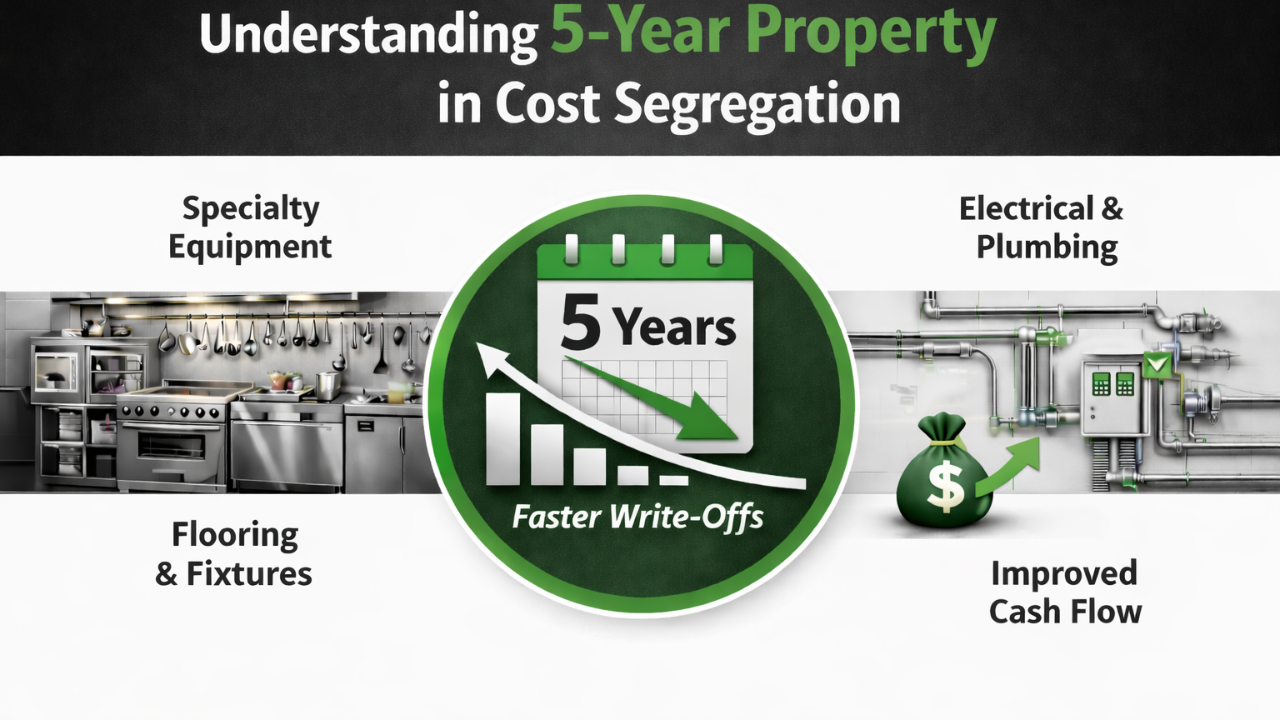
What Is 5-Year Property in Cost Segregation?
Feb 02, 2026When people hear “5-year property” in a cost segregation study, it can sound complicated. In reality, it simply refers to certain parts of a building that wear out faster than the building itself. Instead of being depreciated over 27.5 or 39 years, these items qualify for a much shorter recovery period, which means tax deductions happen sooner.
5-year property generally includes items that are considered personal property rather than permanent parts of the structure. Think of components that support business operations rather than the building’s basic function. Examples often include specialized electrical, plumbing, and mechanical systems that serve equipment, along with certain finishes and fixtures that are not permanently built into the structure.
Why does this matter? Because depreciation timing matters. The IRS allows taxpayers to recover the cost of these assets faster due to their shorter useful life. A cost segregation study identifies and documents these items so they can be depreciated correctly under the tax code. The IRS Cost Segregation Audit Technique Guide explains that proper classification must be supported by facts, documentation, and a clear understanding of how each asset functions within the property.
From a client perspective, 5-year property is one of the main drivers of value in a cost segregation study. Reclassifying eligible components into shorter lives accelerates depreciation and improves near-term cash flow. This can free up capital for reinvestment, expansion, or debt reduction without changing how the property is used or operated.
It is important to note that not everything qualifies. The IRS looks closely at whether an asset is truly personal property or part of the building’s structural system. That is why site inspections, construction documents, and engineering analysis are so important. A quality study clearly shows what was identified, where it is located, and why it qualifies, which helps reduce audit risk and supports the tax position if questions arise later.
In short, 5-year property is about identifying the right assets, classifying them properly, and documenting them correctly. When done right, it turns depreciation rules into a powerful planning tool that benefits property owners without creating unnecessary complexity.
Key Takeaways
• Shorter Depreciation Timeline: 5-year property allows faster write-offs compared to standard building depreciation
• Operational Assets Matter: Items that support business operations often qualify
• Cash Flow Advantage: Accelerated depreciation can improve near-term cash flow
• IRS Documentation Is Critical: Proper support helps defend classifications
• Core Value Driver: 5-year property is often the biggest benefit in a cost segregation study
Do you have a question about Cost Segregation?
Let us know how we can help
We hate SPAM. We will never sell your information, for any reason.

